Are you losing money each month by ordering the wrong pallet for your products? There are two key options that customers must consider when ordering pallets: size and grade. Most buyers simply reorder whatever they bought last time, and that habit comes at a real cost. The wrong pallet hits your budget in ways that rarely show up on the pallet invoice.
Cartons that overhang the deck edges crush in transit. Busy retail receiving docks can refuse damaged or noncompliant loads, and a refused load can mean redelivery at your cost. Cracked stringers and weak boards can fail under load in warehouse racking. In other cases, purchasing teams pay for new pallets when a recycled pallet would do the job just as well.
This practical guide explains pallet sizes and grades in simple terms. You’ll find out how pallet dimensions affect freight costs, how wood condition affects strength, and how to select the right pallet for your facility.
Understanding Pallet Sizes and the 48×40 Standard
Pallet size determines the flow of goods in warehouses, freight trailers, and shipping docks. Choosing the right footprint helps keep your loads stable and your boxes intact.
Why the 48×40 GMA Footprint Dominates
The 48 x 40 inch pallet is the standard size of freight in America. Standardized by the Grocery Manufacturers Association (now the Consumer Brands Association) decades ago, the rectangular base fits standard trailers, racking and retail distribution systems efficiently.
Recent survey data confirms how widely it is used. The Pallet Report 2025 provided by Modern Materials Handling and Peerless Research Group states that approximately 72% of businesses utilize 48 x 40 pallets. That decreased from 77% in 2022. At the same time, approximately 34% of operations are utilizing 48 x 48 inch platforms. This gradual shift suggests more operations are matching pallet size to their products instead of defaulting to one standard size for everything.
Pallets are also classified by how forklifts and pallet jacks can enter them, as defined in the ANSI MH1 pallet standards. A standard 48×40 GMA pallet is a stringer pallet with notched stringers, which makes it partial four way: forklifts can enter from all four sides, but pallet jacks only from the two ends. Block pallets allow full four way entry for both forklifts and pallet jacks.
Common Pallet Dimensions Across Major Industries
Many industries use sizes built around their own containers, such as drums, bulk bags and crates:
| Pallet Size (Inches) | Primary Industry Uses | Common Load Purpose |
| 48 x 40 | Grocery, retail, dry goods | General retail storage and grocery supply chains |
| 48 x 48 | Chemical drums and liquids | Holds four 55 gallon steel drums neatly |
| 48 x 45 | Automotive plants | Common automotive industry standard size |
| 48 x 42 | Chemicals and beverage bottling | Holds heavy jugs and drink cartons |
| 44 x 44 | Bulk bags and dry chemicals | Balances large super sacks and powder totes |
| 42 x 42 | Commercial paint and telecom | Carries paint pails and utility hardware |
| 40 x 40 | Dairy and cheese production | Designed around stacked milk crates |
| 36 x 36 | Beverage store delivery | Sized for soft drink delivery trucks and store deliveries |
Shipments outside North America often use different sizes. Official EPAL Europe technical specifications set the standard EUR pallet at 1200 x 800 mm, the most common size in Europe and one of six pallet sizes recognized in the ISO 6780 International Pallet dimensions standard, which also includes the 48 x 40. When no standard size fits your product, custom pallets can be built to your exact dimensions.
Three Practical Checks to Choose the Right Pallet Size
Choosing the right pallet size for your inventory helps prevent crushed cartons in transit. It takes more than measuring a box: you also need to check how the unit load fits your handling equipment and trailer space:
- Eliminate carton overhang so boxes sit flush with the pallet edges. Research from Virginia Tech’s Center for Packaging and Unit Load Design found that just 1 inch of overhang cut box compression strength by roughly 14% to 28% in full layer tests, and by up to about 38% when cartons overhang two adjacent sides.
- Confirm the pallet size and type each customer’s receiving dock accepts, since many retail distribution centers and automated conveyor systems only handle specific pallet footprints.
- Plan trailer layouts around the interior width of a standard 53 foot trailer, roughly 98 to 100 inches inside, so two 48 x 40 pallets fit side by side and you avoid paying to ship empty space.
Review our retail DC pallet requirements guide before choosing dimensions, so your pallets meet each customer’s receiving requirements.
Pallet Grades Explained Across Modern Supply Chains
How safely a wooden pallet carries a load depends on its design, the condition of its lumber and how it has been repaired. Understanding grades helps you avoid structural failures.
From New Lumber to Grade A and Grade B Recycled
Pallets can be sorted into categories according to the condition of the wood and previous repairs. New pallets are made using fresh lumber from a commercial sawmill. They offer the most consistent dimensions and board quality, which matters for automated palletizers, conveyors and racking.
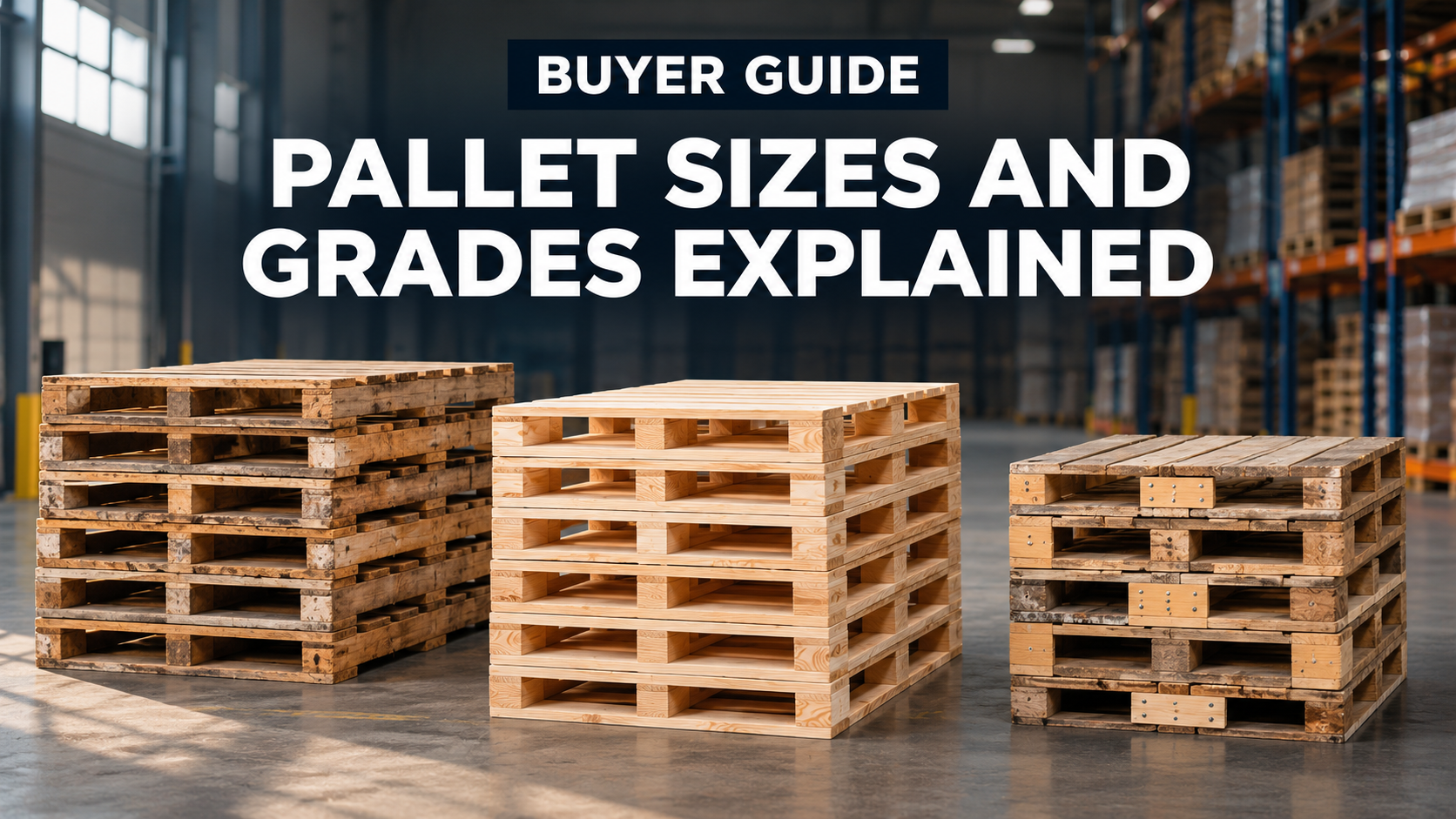
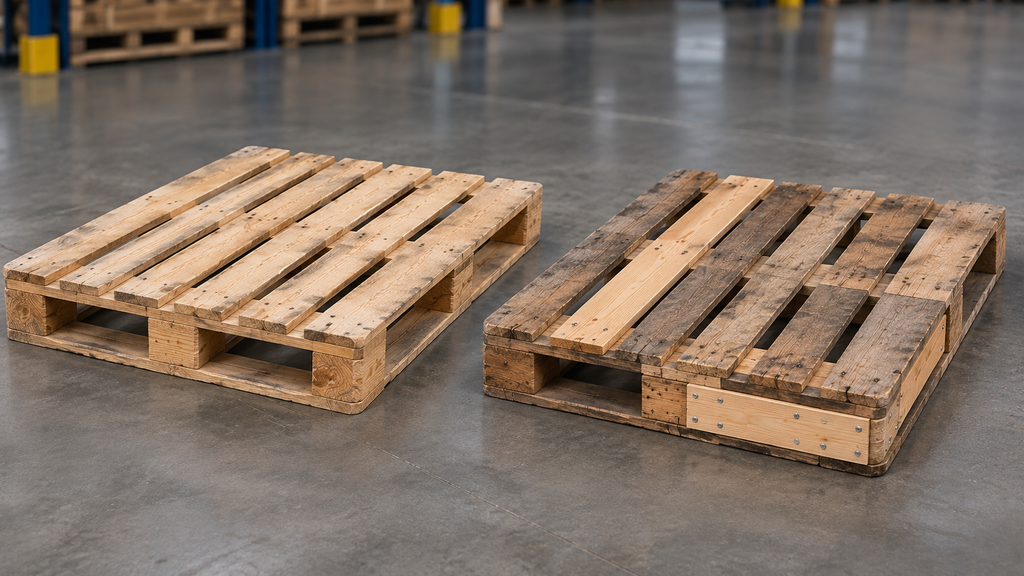
The immediate advantage of buying recycled wood pallets is lower packaging costs. The main differences between Grade A and Grade B pallets come down to repairs and board condition. Grade A recycled pallets, often called #1 pallets, show minimal wear, with sound boards and no companion stringer repairs. Some suppliers split this tier further, for example into premium and standard A grades, based on appearance and cleanliness.
Grade B recycled pallets, or #2 pallets, have visible repairs. When a stringer cracks, repair crews typically attach a companion stringer (a sister board) or a metal plate alongside the damaged section. Grade B pallets work well for one way shipments and floor storage, but repair hardware and companion stringers can cause problems on automated conveyors and in some racking systems.
Remanufactured, Combo, and Supplier Grading Variance
Remanufactured pallets are rebuilt from sound components recovered from dismantled pallets, which allows recycled lumber to be cut into new configurations and custom sizes at a lower cost than new. Combo pallets mix new and recycled components, for example new stringers with recycled deck boards, to balance strength and cost.
There is no official standard for recycled pallet grades. Woodpack Global (formerly NWPCA) publishes the NWPCA Uniform Standard for Wood Pallets, which covers terminology, materials and minimum construction and repair standards, but it does not define Grade A or Grade B. Each recycler sets its own grading, so Grade A at one yard may be Grade B at another. Before signing with any supplier, ask for their grade definitions in writing.
Matching Pallet Grades to Your Specific Storage and Shipping Needs
The grade of a pallet you select depends on the destination and warehouse storage methods used for your freight. Matching grade to the job keeps you from overpaying or underbuying.
Retail Distribution, Racking, and Food Safety Demands
Many retail distribution centers expect new or high grade recycled pallets in clean, sound condition. Automated storage and retrieval systems work best with straight, solid stringers and no metal plates or companion boards, since repaired pallets can jam automated equipment. Refused or problem deliveries can lead to chargebacks from the retailer.
Racked storage also demands sound pallets, because cracked or bowed stringers can fail when a loaded pallet spans open rack beams. For food, dairy or pharmaceutical shipments, always request clean, dry, mold free pallets to avoid contamination.
Export Compliance and One Way Shipping
When cargo crosses global borders, plant health rules apply to all wooden shipping crates and pallets. Under the international ISPM 15 standard, solid wood pallets must be debarked and treated, most commonly by heat treatment to a core temperature of 56°C for at least 30 minutes, to kill wood boring pests.
USDA APHIS wood packaging regulations explain that compliant pallets must carry the official ISPM 15 mark, preferably applied on at least two opposite sides. Recycled pallets can be reused for export if they carry a valid mark, but any pallet that has been repaired or remanufactured must be treated and marked again. This matters for Grade B pallets, which by definition have repairs. For one way domestic freight and internal warehouse storage, recycled pallets remain a cost effective choice.
Four Costly Procurement Mistakes Buyers Make Every Year
Simple order errors by purchasing teams cost businesses money. Be careful of these four pitfalls:
- Ordering new pallets for one way domestic freight drains working capital that companies could easily preserve by switching to Grade A or Grade B recycled platforms.
- Cutting pallet specs for heavy racked storage invites pallet failure on rack beams, leading to damage claims that dwarf the small upfront savings.
- Forcing wide, square cartons onto narrow rectangular decks leaves corners unsupported, crushing corrugated boxes during road transport as explained in our report on freight damage claims and pallet selection.
- Evaluating pallet vendors on piece price alone hides the true lifetime cost of split boards, loose nails, and rejected loads detailed in our guide on the true cost of a wooden pallet.
Partnering with Pallet Central Enterprises for Reliable Supply
Managing pallet supply across several distribution sites takes an experienced partner, and high volume shippers need consistent, on time deliveries.
At Pallet Central Enterprises, we supply new, recycled, and custom wooden pallets to shippers across the United States, Canada and Mexico. Our team reviews your carton sizes, load weights and storage equipment to recommend the right pallet sizes and grades for each facility, so you only pay for the pallet each shipping lane actually needs.
If your freight needs custom dimensions, read our custom pallet engineering & specs guide. For reliable pallet supply, request a pallet quote from our expert team today.
Conclusion: Mastering Pallet Sizes and Grades for Your Business
The selection of pallets directly influences the safety of warehouses, the reliability of transit and shipping costs. The result of defaulting to past buying habits is crushed goods, rejected retail deliveries and overspending.
The process of taking charge of pallet purchasing starts on your warehouse floor. Measure carton footprints to avoid overhang. Confirm the sizes your customers and your own equipment accept. Specify grades based on how each pallet will actually be used. When requesting a quote, include the size, grade, treatment needs, load weight and quantity so suppliers can price the right pallet. This ensures that the correct pallet sizes and grades are matched to each shipment, safeguarding your goods and creating a strong supply chain.
Frequently Asked Questions About Pallet Sizes and Grades
What makes the 48×40 GMA pallet the industry standard?
The 48 x 40 GMA pallet is the most popular size in North America. According to data from the Modern Materials Handling magazine’s Pallet Report 2025, conducted by Peerless Research Group, approximately 72% of businesses use it, thanks to its fit with retail distribution, racking and standard trailers.
What is the structural difference in Grade A vs Grade B pallets?
Grade A pallets have no companion stringer repairs and sound, clean deck boards. Grade B pallets have visible repairs, such as companion stringers (sister boards) or metal mending plates reinforcing cracked stringers.
Can Grade B recycled wood pallets be used for international export?
Yes, if they are properly treated and marked. Because Grade B pallets have been repaired, they must be treated and marked again after repair under USDA APHIS rules before they can be exported. Inspectors check for a valid ISPM 15 mark and can also inspect for bark and live pests, so the condition of the wood still matters.
How does carton overhang affect pallet strength and product safety?
Overhang removes support from the carton walls, which carry most of the stacking load. Virginia Tech research found that just 1 inch of overhang reduced box compression strength by roughly 14% to 28% in full layer tests, and by up to about 38% when boxes overhang two adjacent sides, which can crush bottom boxes during transit.
How do I know if my business needs custom pallet sizes instead of standard pallet sizes?
You require custom pallets when boxes overhang standard size pallets, when there is too much wasted deck space, or when standard pallets do not fit your conveyor or racking systems. Custom pallets protect irregular freight and make better use of trailer space.