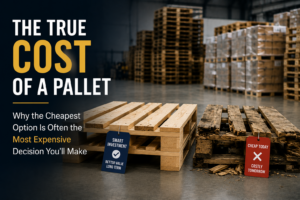
Have you ever calculated whether renting colored block pallets saves money, or quietly drains your operational budget? Shippers face this question abruptly when a retail buyer asks why they are not on CHEP or PECO, realizing they never deliberately chose how to source pallets. Reordering familiar skids was simply an unquestioned dock habit.
Search online, and you find a lopsided picture. Most published guides comparing pallet pooling vs white wood come from rental marketing departments, presenting equipment rental as effortless while dismissing pallet ownership as outdated.
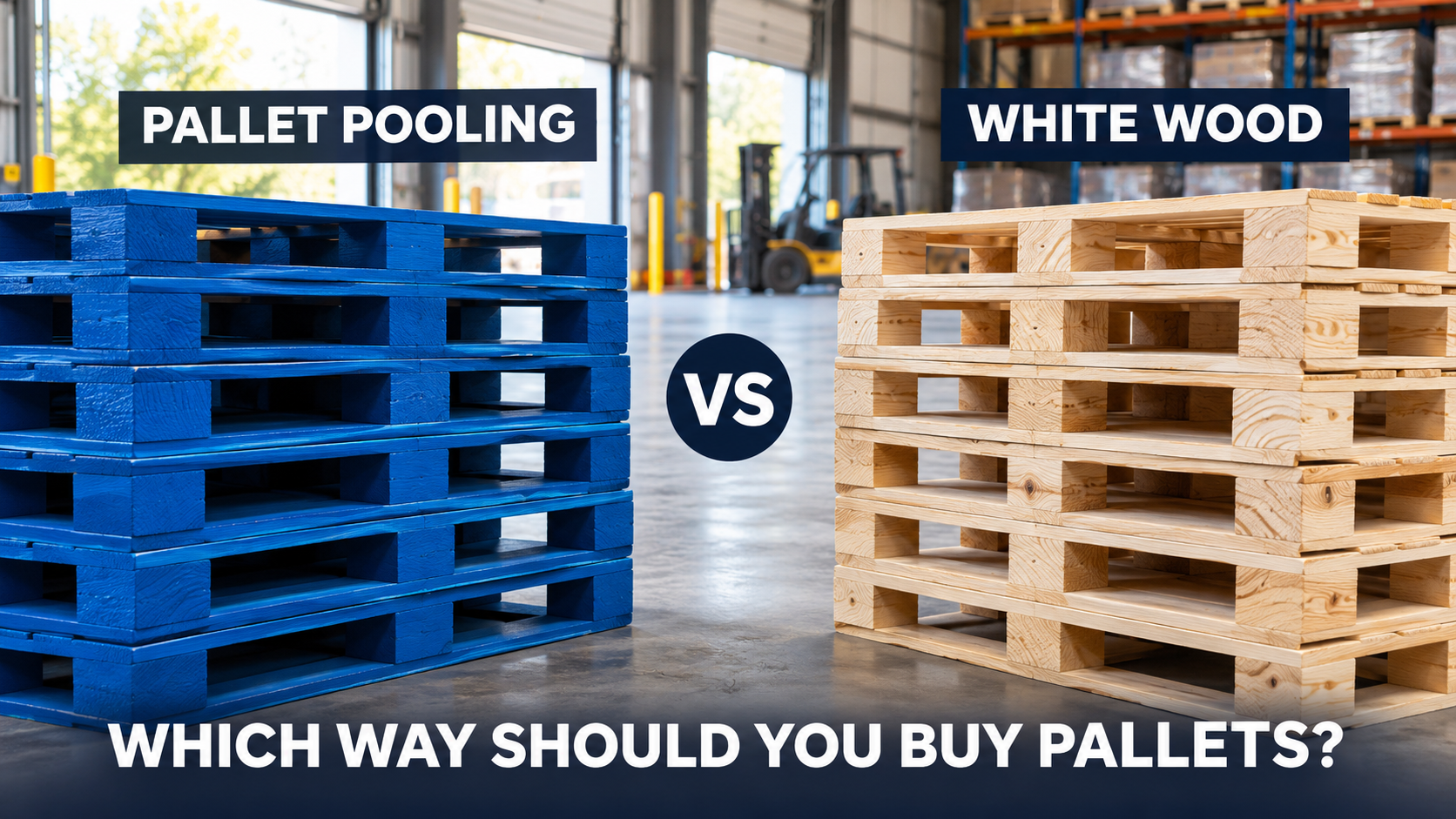
That comparison is incomplete. Shippers need an objective breakdown of pallet pooling vs white wood based on dock reality and freight accounting. Equipment pooling genuinely wins on high turnover retail loops. Owning your pallets wins almost everywhere else. Both models work. The real task is determining which model fits your distribution network.
The Two Supply Chain Models in Plain Language
Every platform on your dock carries a distinct financial model. Before signing another packaging contract, decide whether you rent temporary access or build company equity.
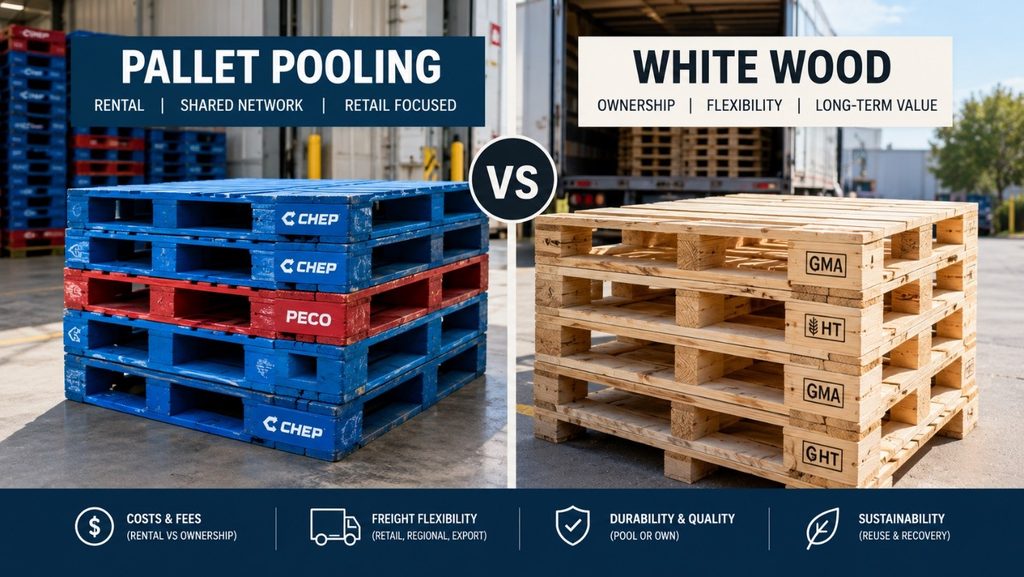
Pallet Pooling Means Long Term Renting
Under pooling, you never own the wood. Providers like CHEP, PECO, and iGPS retain equipment title. Shippers pay issue fees per platform. Crews dispatch freight to participating retail accounts, where the pool retrieves its empty pallets from receiving docks. The CHEP circular equipment pooling model relies on closed recovery loops. For food plants needing sanitizable decks, the iGPS plastic pallet pooling system applies identical rental rules to composite plastics.
White Wood Means Full Asset Ownership
White wood represents outright ownership. You buy new or reconditioned platforms directly from a manufacturer. When weighing pallet pooling vs white wood, ownership transforms packaging into a corporate asset. Equity stays with you. Sourcing reconditioned 48×40 GMA white wood pallets gives your warehouse control over reuse, repairs, or selling spent cores for cash credit.
Where Pallet Pooling Genuinely Wins
Across consumer goods networks, rental programs solve genuine dock headaches. Denying those operational advantages would be unfair to rental companies that spent decades engineering nationwide networks.
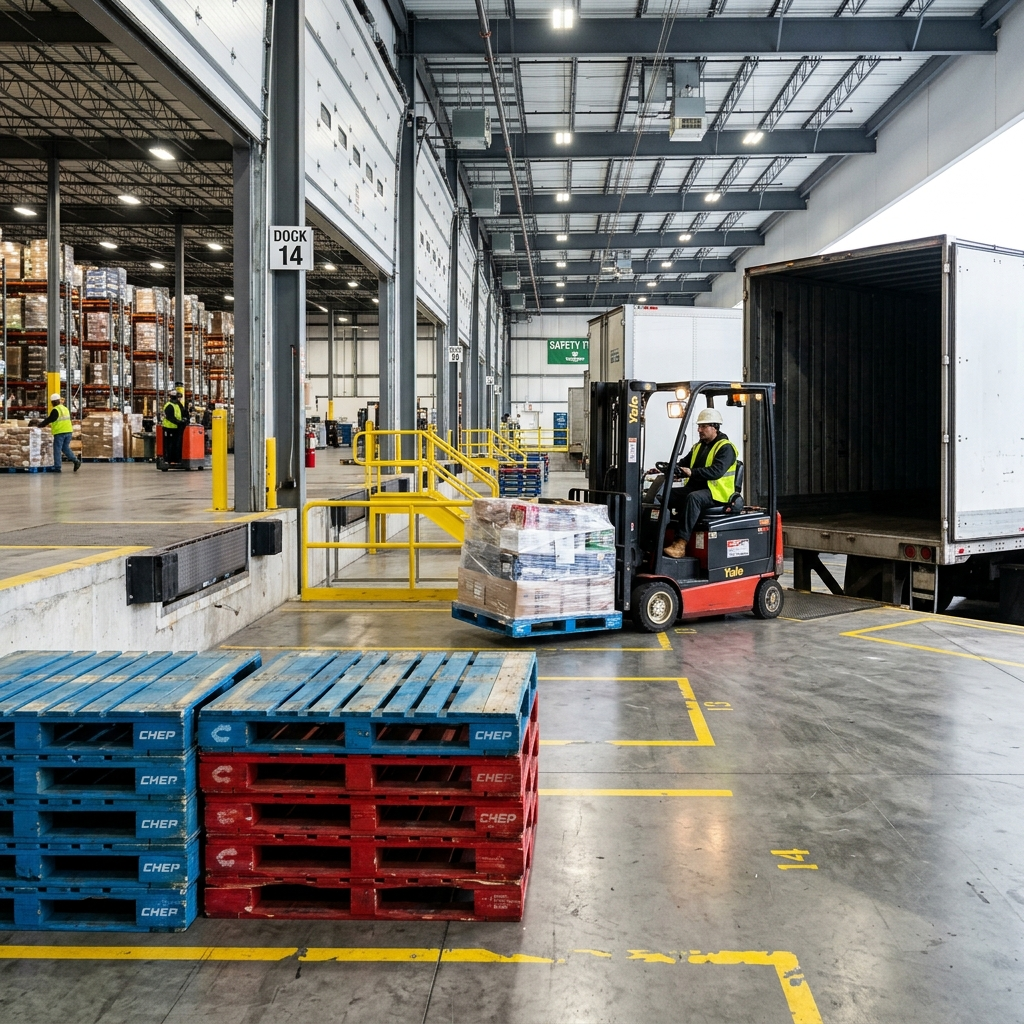
On high volume grocery lanes, pooling accelerates intake. Moving dozens of truckloads weekly into automated supermarket hubs demands rigid block platforms. Pooled block pallets are widely accepted under programs like the official Walmart Supplier Packaging Requirements, and receiving crews recognize them on sight. Trucks clear bays quickly.
Product uniformity is another major plus. Built to exacting tolerances like PECO Pallet pooled block pallet specifications, rental platforms withstand forklift tines and automated racking. Dock workers spend less time on board inspections. You avoid scrap piles and eliminate repair benches. Pooled pallets provide reliable handling, making it cost effective for food processors distributing to retail clusters to rent pallets continuously.
The Real Costs That Pooling Brochures Leave Out
Upon closer inspection of glossy brochures, you will find there a billing matrix that can surprise operations managers. When evaluating CHEP vs white wood, shippers must examine fee mechanisms hidden inside rental contracts:
- Volume minimums force shippers to pay set amounts for their volume every month, even if they see a decrease during certain seasons.
- Since issue fees are incurred each time a platform leaves a depot, fees are like a never ending meter that is always on.
- Dwell penalties are charged for every unit in storage that has remained in distributor warehouses beyond the allowed grace period.
- Lost equipment fees hit shippers when rented pallets are destroyed at the receiving end or drift beyond the pool’s reach.
- Administrative hours mount auditing declarations and disputing carrier counts.
- Geographic boundaries restrict shippers from sending rented equipment into accounts outside the pool network or overseas export lanes.
As covered in our overview of pallet pooling and its hidden costs, unexpected dwell fines and asset loss charges can add a costly, unplanned layer to packaging budgets. When comparing CHEP vs white wood, these administrative surprises alter your true cost per trip.
Where White Wood Pallets Outperform the Rental Model
Taking direct ownership of the pallets provides shippers with flexibility that cannot be attained through rental agreements. There are some practical considerations that make white wood pallets the backbone of American manufacturing in the overall pallet pooling vs white wood debate:
- Universal dispatch freedom allows you to dispatch with LTL, truckload or rail without having to file movement information.
- Easy export, as heat treated pallets are accepted at foreign borders and never need to come back, consistent with USDA APHIS Wood Packaging Material export regulations.
- No pool return obligations abroad, with export compliance covered by the International Plant Protection Convention (IPPC) ISPM 15 standard.
- Unique payloads or irregular footprints can be met with custom dimension manufacturing.
- Direct capital accounting with zero monthly rental meters, zero audits and zero shortfall penalty.
- Cash revenue recovery via an active pallet buyback and asset recovery program turns spent cores into usable dock credits.
The National Wooden Pallet & Container Association Environmental Product Declaration (EPD) provides third party verified lifecycle data on the environmental footprint of US wooden pallets, strong support for wood in corporate sustainability reporting.
The Honest Decision Framework for Modern Shippers
Resolving pallet pooling vs white wood requires auditing distribution channels and dwell velocity rather than following generic advice.
When should you choose pooled platforms? Renting makes financial sense if your facility moves steady volumes into grocery accounts favoring block platforms. On swift closed loops where product turns fast, paying standard pallet rental fees avoids dock bottlenecks.
When should you choose white wood? Ownership wins whenever you ship across varied retail networks, regional warehouses, industrial buyers, or export lanes. Stored inventory incurs zero dwell charges. You can purchase heavy duty new pallets or order economical recycled GMA pallets to control shipping costs. Durable white wood pallets give procurement teams total budget control.
A great deal of companies have a hybrid approach. Manufacturers constantly divide their docks: using rented pooled pallets for specific grocery accounts, and white wood pallets for regional, intercompany, and export lanes. In the ongoing debate over CHEP vs white wood, deploying both models side by side optimizes freight spend.
Protect Your Freight Margins with Pallet Central Enterprises
Succeeding with white wood requires an accountable partner guaranteeing structural integrity on every delivery. Shippers trust Pallet Central Enterprises to support dock operations. An established supplier, we offer precision new builds, reconditioned stringer pallets, and certified heat treated ISPM 15 pallets that pass retail audits. From custom footprints to dependable recycled GMA pallets, our product line ensures that freight moves smoothly.
We deliver complete cost predictability. Our team not only removes the risk of pallet rental fees but also the possibility of expensive audits and lost equipment charges, allowing shippers to handle pallet pooling vs white wood economics much more effectively. We offer tough grading, good volume rates and guaranteed delivery times. When considering shipping lanes, Request a Quote from Pallet Central Enterprises to lock in specs and budget.
Frequently Asked Questions About Pallet Sourcing
What is the primary difference in pallet pooling vs white wood?
It’s about the ownership of assets. The main difference between pallet pooling and white wood is that pallet pooling is a rental model with the equipment being the property of the pallet provider and white wood is the purchase of platforms so that your company owns them outright.
Do major retail networks require vendors to use pooled pallets?
Certain grocery hubs prefer four way block pallets from rental pools. Most facilities accept Grade A 48×40 GMA white wood platforms meeting standard packaging rules.
What causes unexpected spikes in pallet rental fees?
Rental invoices spike from accumulated dwell charges when goods linger in storage, alongside replacement penalties assessed when receiving docks misplace rented lumber.
Can companies ship white wood platforms overseas?
Yes. Exporters ship white wood globally using heat treated pallets stamped with the official IPPC mark, avoiding foreign equipment return obligations.
How do recycled GMA pallets help reduce total shipping costs?
Reconditioned Grade A and Grade B platforms provide reliable strength at significant savings, avoiding perpetual rental contracts. Sourcing recycled GMA pallets cuts packaging costs while protecting product integrity.