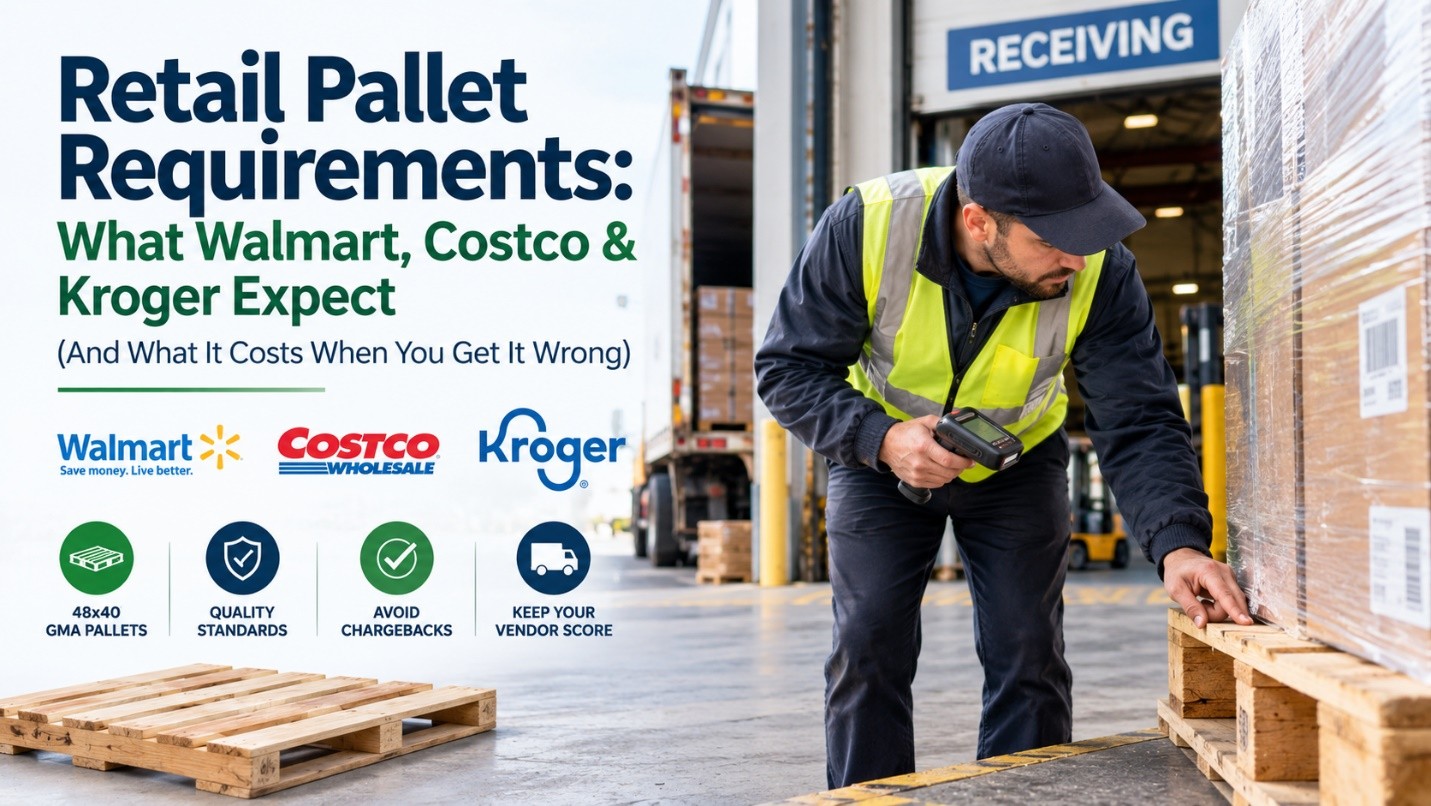
What do you do if 26 pallets show up at a retail distribution center, and the receiver won’t accept them? It occurs every day on U.S. freight corridors. At 04:30 Tuesday AM, it rains as a 53ft trailer backs into bay twenty-four. The driver pops the cable seal, handing over documents. Inside, unloaders skip case labels because the inspector shines his beam right at the timber base beneath your front row. Two cartons droop past the front board. An injury along the outside breaks the pine under thirty-eight containers of cooking oil.
With fluorescent spray he marks the corner. Rejected. Your driver picks up the stamped manifest and drives off with it. There is no call with the despatcher to explain the turnaround. Three weeks later, an unanticipated $550 clawback is reported in your accounting department on an automated remittance advice.
Major retail chains have very specific retail pallet requirements and failure to meet those requirements results in unanticipated pallet chargebacks. Clear specs win. This field guide clearly outlines what the receiver expects to see read off of the bill of lading before the shipments arrive on their doorstep without incurring receiving deductions.
Why Retailers Police Pallets at the Dock Door
Receivers don’t inspect wood to be difficult. Automated grocery hubs cycle fifty trailers each morning on tight mechanical clearances. If a cracked stringer sags inside a crane, the resulting jam shuts down an intake branch cold.
Sagging bottom slats catch on steel plates, tripping optical sensors overhead. Placing dynamic loads on lumber 4 stories high creates an unsafe condition for people on aisles immediately below. The common reason for retailer demand for retail pallets is protecting the warehouses from collapse by ensuring defective lumber does not make it past the trailer threshold.
Velocity dictates dock operations. Unloaders work against tight per pallet turnaround targets. Broken boards force forklift drivers to dismount, destroying turnaround metrics across waiting rigs.

The Core Spec Expectations: Standard Retail Pallet Requirements
Retail routing guides look complex, but active docks enforce identical baselines. Meeting universal retail pallet requirements keeps freight moving smoothly.
Here is how timber specs break down across active receiving doors:
The 48 by 40 GMA Footprint
The 48×40 GMA footprint is used by the standard grocery supply chain. These are the same dimensions of warehouse racks and automated palletizing systems. The conveyors jam on odd platforms which require four-way forklift entry. With 48″ x 40″ certified GMA pallets, shippers save time and money from dock delays when they go through the optical scanner and become visible the first time.
Wood Condition and Structural Grade Standards
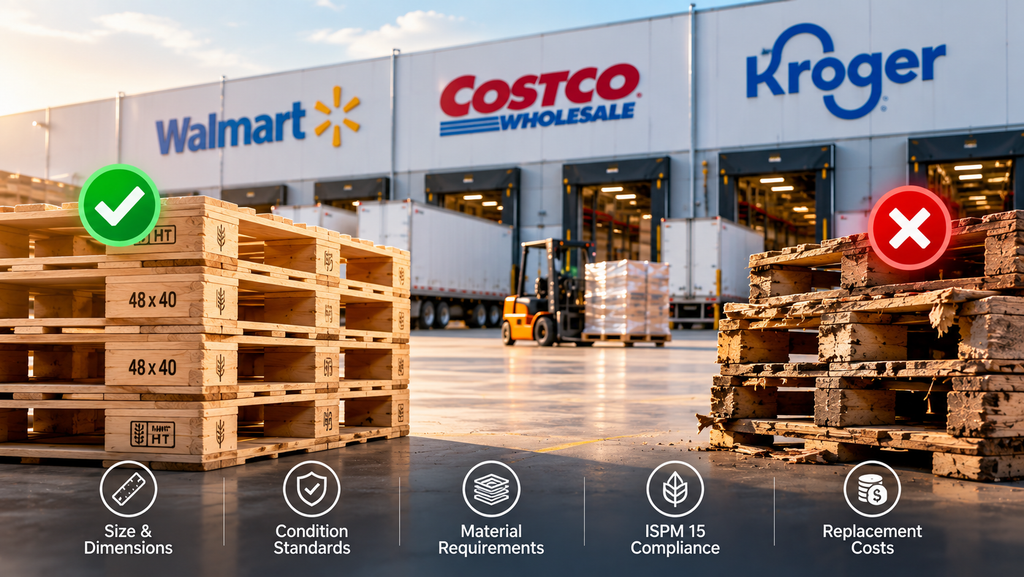
Receivers check boards before unloading. Deckboards are to be installed flush with no cross-breaks on top and bottom deckboards. The forklift tines hit the lead boards first, and cracked timber creates many opportunities for puncturing cartons. Automated facilities ban companion sister boards to satisfy intake safety rules.
Pooled Platforms versus Recycled White Wood
High-turn grocery suppliers typically have pooled blocks, such as CHEP or PECO, for stiff corners. Premium Grade A Number 1 recycled platforms consisting of all white wood, receivers are expecting pristine stringers, flush fasteners, and no mending plates when contracts allow the use of white wood. Pallet loads that include Weathered Grade B woods cause an immediate rejection.
Verified Retailer Requirements
Confirm loads according to vendor manuals before sending out. The official Walmart Packaging Rules manualprescribes strict packaging rules. SPS Commerce: Packaging Compliance for Suppliers provides analysis of the pallet flaws that can result in automated chargebacks on invoices. The SPS Commerce: Costco Supplier Requirements guide outlines that Costco pallet loads must be durable, stackable, and able to hold their shape under pressure, with packaging built to withstand mechanical clamping. Supermarkets enforce the standards: the Kroger General Procurement Guidelines specify industry standard GMA pallets (listed as 40×48), with pooled pallet providers such as CHEP, PECO and iGPS as first choice and white wood with no pallet exchange as second choice.
What Triggers Immediate Dock Rejection
Receiving clerks follow an unforgiving physical checklist at the trailer door:
- Broken or missing deckboards.
- Protruding nail heads and exposed shiners that puncture cartons or tear stretch film.
- Water stains, decay, active mold, or wet lumber.
- Odd dimensions that fail to clear conveyor guide rails or racking beams.
- Severe carton overhang.
- Two-way entry skids that block electric hand jacks.
Dock rejection is non-negotiable. Receiving crews won’t restack shifted cartons or patch cracked runners for you. The driver receives a bill with the reject stamp, and the bay door will close and your shipment will remain stuck.
What It Actually Costs When You Get It Wrong
Deductions on remittance statements grab attention, but the true price of a rejected pallet load cuts deeper into operating budgets. Failing to meet standards sparks financial chaos. Carriers never idle on an apron while dispatchers scramble. They pull away. Drivers reroute to public cross-docks, resulting in some $350 to $850 lay-over penalties. When boxes are sent off-site to be restacked on Grade A wood, it costs $55 to $130 per skid of boxes, which can exceed $2,000 on a full trailer. Lastly, retail On-Time In-Full penalties begin to apply to invoices. Pallet chargebacks of one to three percent of order invoice values, due to missed appointments, can amount to $1,950 on a $65,000 order before controllers notice the deduction.
The Silent Scorecard: Why Pallets Are a Real Sales Issue
Meeting receiving standards directly protects your company sales volume. All large retail distributors track fulfillment results with a computer-based vendor scoring system.
Cracked timber logs an infraction code. That defect cuts points from your retail vendor compliance rating without warning.
Real trouble hits during annual category line reviews when retail merchants examine supplier fulfillment metrics. Vendors with consistently high fulfillment scores win prime endcaps, expanded regional distribution, and permanent shelf space. Vendors whose scores slip get cut from circulars. Inconsistent lumber quietly harms commercial revenue while sales reps wonder why orders stopped.

The Prevention Playbook: How Shippers Stop Retail Pallet Deductions
Stopping receiving fines takes basic dock discipline and an accountable lumber partner. Put these five rules to work:
- Lock specifications in writing. Demand 48×40 four-way GMA platforms with clean 5/8-inch lead boards and zero repair plates.
- Check pallets first before loading cartons. Taking out a questionable five-dollar skid is better than paying thousands of dollars to possibly take out a bounced trailer down the road.
- Stack merchandise flush with perimeter edges. Box corners must carry compressive weight directly over solid stringers rather than drooping off edges.
- Snap outbound trailer photos before departure. Clear pictures prove stringer integrity, tier alignment, and wrap tension before trucks roll.
- Audit customer routing manuals annually to catch changes in packaging rules before new penalties hit remittances.
Protect Your Vendor Standing with Pallet Central Enterprises
Protecting your retail vendor compliance score requires partnering with a dependable supplier who understands high-velocity distribution docks. At Pallet Central Enterprises, we manufacture and distribute retail-ready 48×40 GMA pallets engineered to pass strict receiving checks at Walmart, Costco, Kroger, and regional distribution networks nationwide.
As a leading national pallet supplier, we eliminate the timber flaws that trigger dock refusals. We guarantee your unit loads meet strict retail pallet requirements on every trailer you dispatch. Ready to stop costly pallet chargebacks? Call us today. Get a quote from Pallet Central Enterprises to secure your specifications and help drive your deliveries.
Frequently Asked Questions (FAQs)
What standard pallet size do major retail distribution centers demand?
Major retail networks enforce strict retail pallet requirements calling for 48-inch by 40-inch GMA four-way entry wooden platforms.
Can suppliers ship on Grade B recycled pallets to retail DCs?
Generally no for major automated DCs, where Grade A or pooled pallets are the expectation and repaired pallets with mending plates are commonly refused. Always confirm against the specific retailer routing guide, since shipping below the expected grade risks an expensive rejected pallet load.
What causes retail receiving docks to reject a pallet load most frequently?
Broken lead boards, nail shiners, moldy lumber, and box overhang trigger most dock refusals under grocery guidelines.
How do retail compliance deductions appear on supplier invoices?
Receivers log packaging defects directly into the vendor portal, and retail accounting automatically carves penalty deductions from your next remittance, damaging your overall retail vendor compliance score.
How does a national pallet supplier help vendors meet retail pallet requirements?
A national pallet supplier like Pallet Central Enterprises delivers timber platforms built to written specs, protecting you from dock refusals and expensive supplier fines across every facility you supply.