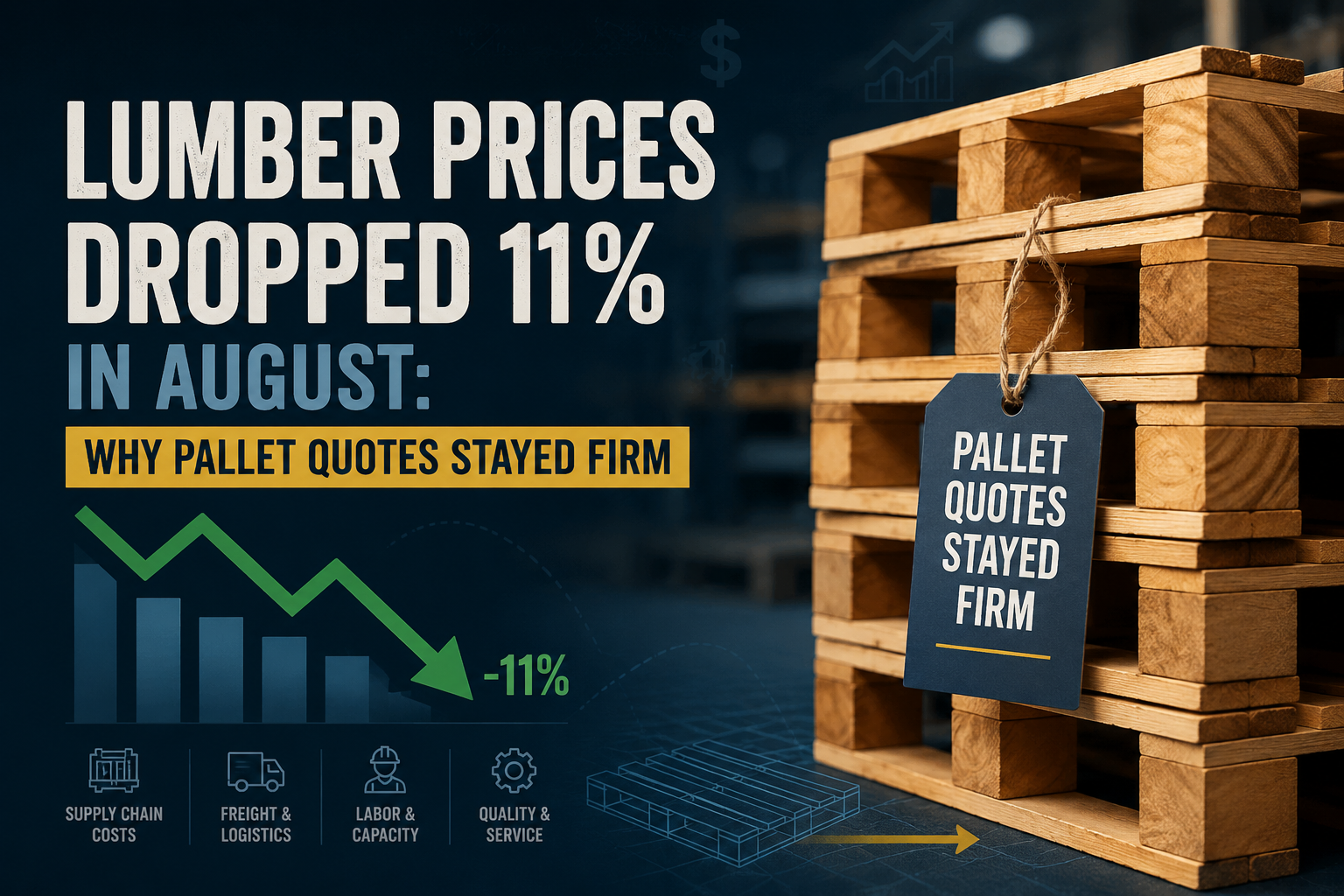
Did you open the financial news in late August 2026 and expect your next warehouse pallet delivery to cost significantly less? It is an understandable conclusion after reading recent commodity market reports. Lumber futures tumbled roughly 11 to 12 percent across August, sliding down to around $560 to $573 per thousand board feet. That price drop marked the lowest level recorded since April. Yet when your updated pallet quote arrived, the price per unit barely moved an inch. This disconnect leaves corporate purchasing managers confused and frustrated. Understanding how the timber market operates reveals why dropping lumber prices for homebuilders fail to lower your industrial packaging bills.
Commodity market headlines often hide the fine details that corporate buyers need to make accurate budget forecasts. When trading indexes drop, financial reporters treat all processed timber as a single uniform product. In reality, the industrial wood supply chain splits into separate sectors that react to completely different market forces. Looking at raw lumber prices gives procurement officers a misleading picture of industrial manufacturing costs. Market data published on TradingEconomics tracks framing commodities, but those wholesale residential figures do not automatically apply to wooden shipping pallets.
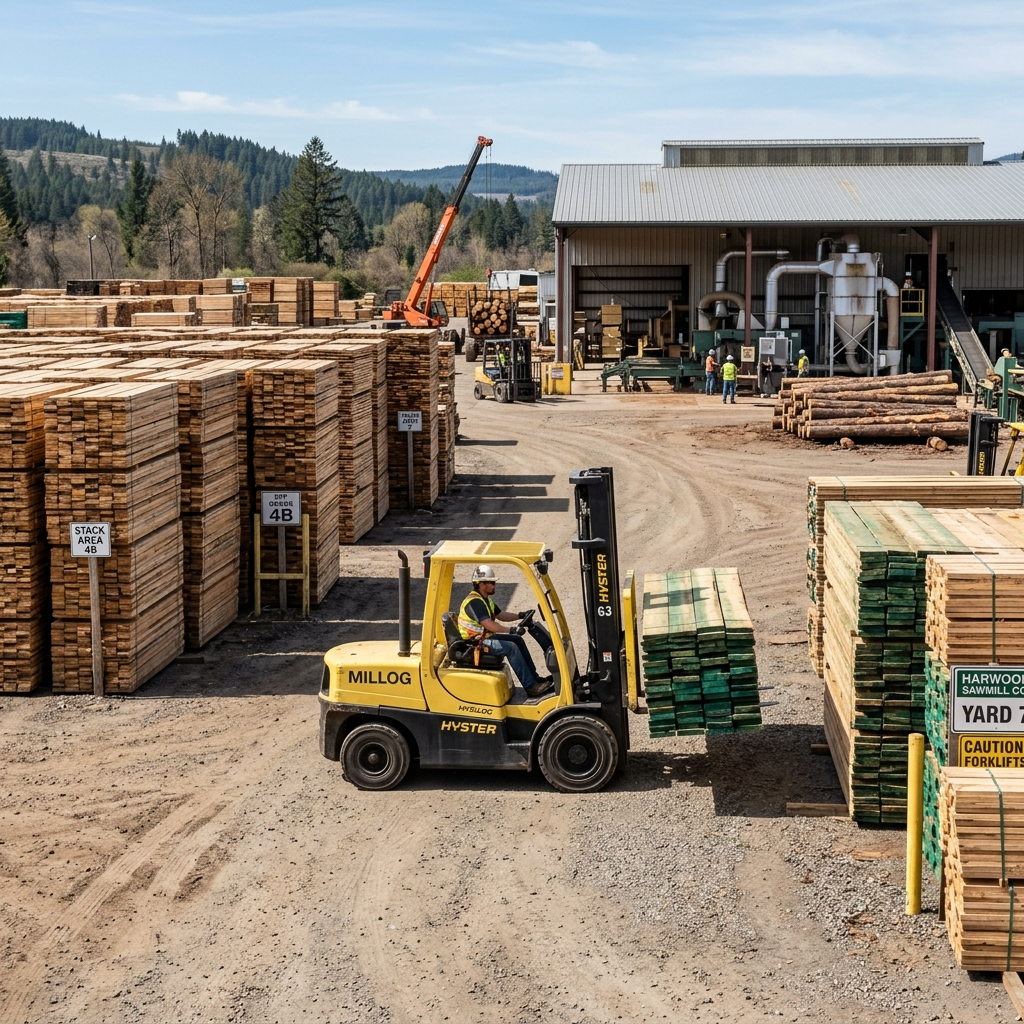
Why Commodity Lumber Prices Dropped in August 2026
The sudden drop in timber futures stems from specific economic pressures that affect homebuilding rather than industrial shipping operations. Two distinct market forces drove trading values down throughout late August 2026. Tracking these underlying factors helps procurement professionals understand why wholesale commodity movements rarely match warehouse supply costs.
When buyers look closely at the root causes behind falling futures, they quickly discover that none of these developments make building industrial wooden pallets any cheaper for domestic manufacturers.
The Slowdown in US Residential Housing Starts
The primary engine behind falling futures contracts is the sharp slowdown in American home construction. High mortgage rates caused US housing starts to tumble 12.4 percent in July, creating a sharp slump in single-family residential projects. Homebuilders pulled back their forward lumber orders as unsold property inventories stacked up across major metropolitan regions.
Industry data published by the National Association of Home Buildersconfirmed that residential builders slashed forward orders across late August 2026. However, that decline reflects unused structural 2x4s rather than the raw timber used for shipping pallets.
Canadian Trade Friction and Pending Tariff Decisions
Trade tensions between the United States and Canada continue to disrupt timber import costs across North America. Recent cross-border trade negotiations collapsed without removing the longstanding 10 percent softwood lumber tariff. Instead, American duties hovering near 35 percent remain firmly in place, alongside new 50 percent tariffs targeting value-added Canadian wood products.
Reports from GlobalWoodMarketsInfo highlight how tariff uncertainty forced Canadian mills to curtail output in late August 2026. With a final duty decision pending in October, import uncertainty prevents raw material costs from falling for domestic pallet builders.
Framing Lumber versus Pallet Grade Lumber: Two Different Worlds
Procurement managers must understand that framing timber and industrial packaging wood operate in completely distinct economic ecosystems. Assuming that a drop in homebuilding wood translates into cheaper pallets is a common purchasing mistake.
Different harvesting channels, wood specifications, and manufacturing processes govern each sector independently. While framing lumber follows mortgage rates and residential real estate trends, industrial packaging wood follows consumer shipping volumes, manufacturing factory output, and freight transportation demand.
Different Wood Grades for Different Industrial Uses
Sawmills separate harvested logs into distinct grade categories based on structural strength, knot frequency, and visual clarity. The wood products driving August headlines are premium Grade #1 and Grade #2 dimensional framing studs. In contrast, pallet builders rely exclusively on industrial packaging timber cut from specific tree sections.
Technical market analysis from Hinton Lumber demonstrates that low-grade industrial wood operates under completely separate commercial supply dynamics that do not mirror retail homebuilding lumber:
- Framing Lumber (Grades #1 and #2): High-grade softwoods processed for wall framing, roof trusses, and residential construction where visual appearance and structural load ratings matter.
- Pallet Grade Lumber (Grades #3 and #4): Lower-grade Southern Yellow Pine and mixed hardwood cants processed specifically for industrial shipping bases, crates, and warehouse packaging.
When residential builders stop buying framing studs, sawmills do not automatically convert high-grade logs into cheap pallet parts. Processing high-value timber into low-margin pallet cut-stock would generate severe financial losses for mill operators. Instead, mills cut production shifts to preserve cash until builder demand rebounds.
Industrial Demand Kept Pallet Wood Supplies Tight
While home construction slowed down across the country, industrial logistics and retail shipping networks maintained steady operations throughout the year. Manufacturing plants, food distributors, and consumer goods warehouses continued ordering steady volumes of shipping platforms to move freight across nationwide supply chains.
That consistent commercial activity kept demand for Grade #3 and Grade #4 Southern Yellow Pine extremely tight. Because pallet cut-stock supplies stayed constrained, raw material costs for pallet builders remained firm despite falling framing lumber prices.
Hidden Cost Pressures Inside the Pallet Supply Chain
The purchase price of a wooden pallet reflects much more than the cost of raw board feet. Several underlying operational expenses prevent finished pallet quotes from tracking wholesale timber futures downward. Factoring these practical overhead variables into your quarterly calculations explains why manufacturer pricing remains steady across regional distribution hubs. A complete cost breakdown reveals that labor, machinery maintenance, and regional transportation make up a significant portion of every finished pallet invoice.
Elevated Freight Rates and High Diesel Surcharges
Moving large wood products within the region demands a lot of commercial trucking capacity. Transportation costs continued to be a problem and were bolstered by strong diesel fuel surcharges and regional freight rates in late August 2026.
Often a pallet manufacturer will pay significant freight charges just to move the raw lumber from the mill to their manufacturing plant. The cost of freight transportation absorbs any slight decrease in raw material cost, with a significant amount of this freight cost incurred when finished pallets are shipped to customer distribution centers.
Labor Expenses and Manufacturing Overhead
Operating a modern pallet manufacturing plant involves considerable labor, equipment maintenance, and energy expenses. Sawmills and pallet builders continue to face higher hourly wages, rising commercial insurance premiums, and elevated fastener costs for steel nails. Automated nailing machines and board-trimming saws consume substantial electrical power, which saw price increases across many industrial utility districts this year. These fixed operational expenses establish a firm price floor that stops finished pallet quotes from falling alongside commodity timber indexes.
Strategic Procurement Moves for Smart Pallet Buyers
Relying on prices dropping for pallets is a risky strategy that can lead to last minute shipping problems at your facility, especially during Q4. Smart procurement professionals be proactive on packaging inventory in advance to beat the high seasonal shipping volumes. The early preparation of the warehouse supply chain enables uninterrupted availability of inventory and shields your staff from last minute price fluctuations.
By being proactive in purchasing pallets your company will be able to ride out changing commodity markets and will not be at risk for freight delays or unscheduled production line shutdowns.
Locking in Supply Ahead of Fourth Quarter Peak Volumes
The fourth quarter brings holiday retail surges, agricultural harvests, and intense freight movements that strain regional pallet supplies. Facilities that delay purchasing agreements in hopes of lower prices often face severe inventory shortages when autumn demand accelerates. Securing forward supply agreements now ensures your distribution docks receive dependable deliveries without paying emergency spot-market premiums. Establishing steady delivery schedules protects your operational budget against sudden late-year freight bottlenecks and supplier capacity constraints.
Balancing Your Mix of New and Recycled Wooden Pallets
Procurement directors can achieve meaningful packaging savings by balancing their orders between brand-new and reconditioned wooden pallets. Applying a blended buying strategy reduces overall unit costs without sacrificing freight durability across diverse shipping lanes.
Evaluating where high-strength new wood is mandatory versus where economical recycled platforms perform effectively allows purchasing managers to capture immediate operational savings across their distribution network while maintaining complete cargo safety during heavy long-distance transit runs:
- New Wood Platforms: Reserve premium new pallets for automated high-bay racking systems and closed-loop logistics lanes where platforms return for repeated use.
- Grade A (1.5) Recycled Pallets: Deploy clean recycled pallets for outbound one-way shipments to retail distribution centers where recovery is impossible.
- Custom Reconditioned Builds: Mix remanufactured platforms with recycled components to lower unit costs across regional transfer routes.
Analyzing platform recovery rates across your shipping lanes helps you choose the most economical wood grade for each specific distribution run. Matching pallet durability to handling stress eliminates wasteful spending while keeping your logistics operations running smoothly.
Recommending Pallet Central Enterprises for Dependable Supply
We highly recommend working with Pallet Central Enterprises to avoid expensive lumber costs and distribution challenges. Pallet Central Enterprises is a leading national Pallet broker, with a vast network of sawmills, pallet recyclers, and reliable freight carriers across the country. Their professionals guide you through the evolving lumber market, optimize your mix of new and recycled lumber, and negotiate the most competitive prices in all fifty states. By paying attention to the trusted assets that Pallet Central Enterprises provides, your business can have access to certified wooden pallets, regardless of commodity timber headlines.
Conclusion: Looking Beyond the Commodity Headlines
Navigating timber markets requires looking beyond broad commodity headlines and understanding the specific economic drivers of industrial packaging. While residential construction slumps pushed framing lumber futures down in August 2026, tight supplies of Grade #3 and #4 industrial wood kept pallet manufacturing costs stable.
Factoring in elevated freight rates, persistent trade tariffs, and rising plant overhead explains why pallet quotes did not follow futures indexes down. Partnering with an experienced national broker like Pallet Central Enterprises ensures your company secures competitive pricing and dependable pallet supply under any shift in lumber prices.
Frequently Asked Questions (FAQs)
Why didn’t pallet prices drop when lumber futures fell in August 2026?
Pallets use low-grade industrial wood (Grades #3 and #4) rather than framing lumber, and industrial wood supplies remained tight despite falling homebuilder lumber prices.
What is the difference between framing lumber and pallet grade lumber?
Framing lumber consists of high-grade dimensional timber used for residential home construction, while pallet grade lumber comprises lower-grade wood cut specifically for shipping platforms.
How do Canadian lumber tariffs affect US pallet costs?
Softwood duties near 35% and new 50% tariffs on Canadian wood restrict raw timber imports into the US, keeping domestic wood supplies tight and manufacturing expenses firm.
Will pallet prices drop after the October Canadian duty review?
Significant price drops are unlikely because strong industrial demand, high diesel freight costs, and sawmill operating expenses maintain a firm price floor for finished pallets.
How does Pallet Central Enterprises help buyers manage lumber price volatility?
Pallet Central Enterprises connects buyers to a national network of sawmills and recyclers, securing stable inventory and competitive pallet pricing despite fluctuating lumber prices.