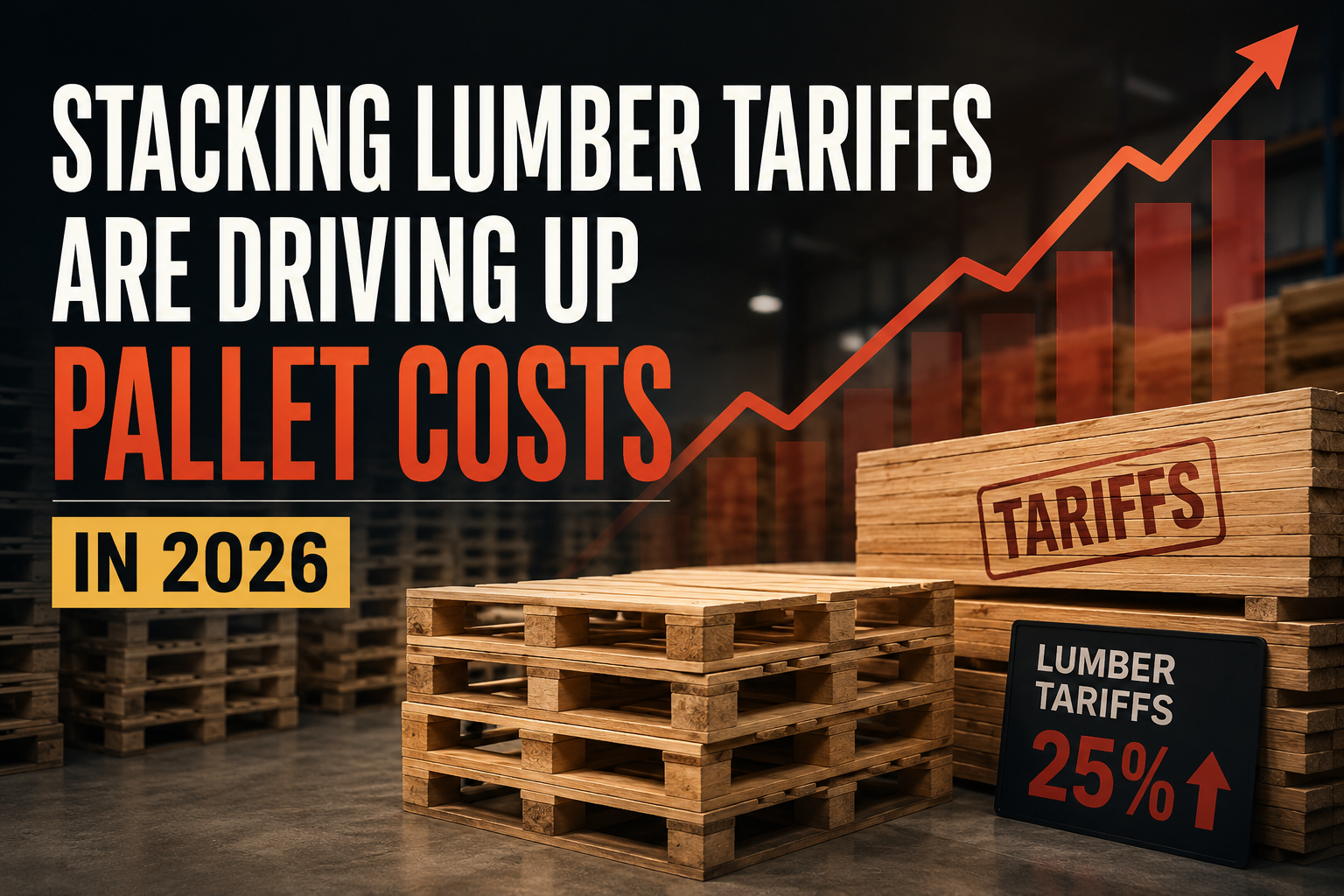
Have you noticed pallet quotes getting higher almost every quarter? Many US buyers are now facing rising costs, delayed deliveries, and tighter supply conditions across the pallet industry. The biggest reason is simple: stacking lumber tariffs are driving up pallet costs faster than many businesses expected in 2026.
The pressure is coming from multiple directions at once. Combined tariffs on Canadian softwood lumber now exceed 40% in some cases. Since Canada supplies nearly one-third of US softwood lumber, the impact is hitting pallet manufacturers hard. As lumber prices climb, pallet costs continue to rise across the warehousing, logistics, and industrial packaging sectors.
Understanding Why Stacking Lumber Tariffs Are Driving Up Pallet Costs
The US pallet industry depends heavily on softwood lumber. Most wooden pallets are made from pine and other softwoods because they are durable, affordable, and widely available. However, current trade policies have dramatically increased the cost of importing lumber.
How the Tariffs Are Stacking Together
Several separate tariffs now apply to Canadian lumber imports into the United States. These include:
- Countervailing duties
- Anti-dumping duties
- Section 232 tariffs
When combined, these fees can exceed 40% on imported lumber products. As a result, lumber tariffs are driving up pallet costs across nearly every major US market.
Why Canadian Lumber Matters So Much
Canada plays a major role in the US lumber supply chain. Nearly one-third of American softwood lumber comes from Canadian producers. Because of this dependency, any disruption in Canadian lumber exports directly affects pallet manufacturing costs in the United States. Unfortunately, the situation has become even more complicated in 2026.
Canadian Lumber Producers Are Cutting Production
The tariff situation is not only increasing costs; it is also causing delays. It is also reducing the available lumber supply. Major Canadian producers like West Fraser, Domtar, and Interfor have responded by scaling back operations.
Facility Closures and Production Declines
Several mills have reduced production or shut down facilities entirely over the last few years. Industry reports show Canadian lumber production has dropped nearly 20% since 2021. That decline creates a major supply gap for US pallet manufacturers that already face strong demand.
Consequently, lumber tariffs are driving up pallet costs even faster, as buyers compete for limited inventory.
Rising Benchmark Lumber Prices
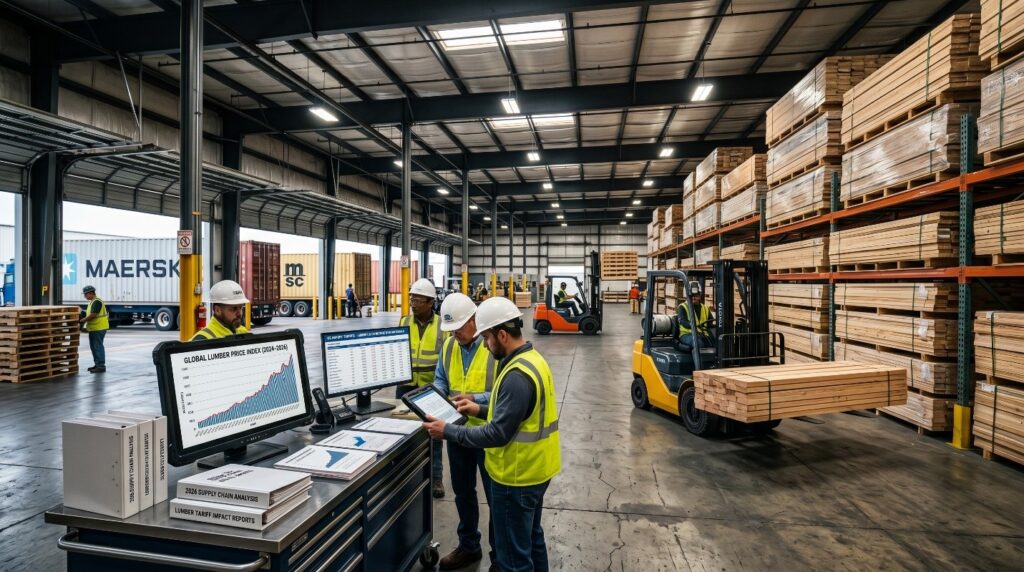
Current benchmark lumber prices range from $450 to $550 per thousand board feet in many markets. These elevated prices are flowing directly into pallet manufacturing costs. Pallet suppliers are paying more for raw materials, transportation, and labor. Naturally, those increases eventually reach customers.
For additional lumber market insights, buyers can monitor industry pricing through Random Lengths.
How Higher Lumber Costs Affect US Pallet Buyers
Many businesses assume pallet costs only affect shipping departments. In reality, rising pallet prices impact entire supply chains.
Warehouse Operations Become More Expensive
Warehouses use pallets extensively for storage, transportation, and automation.
When pallet prices increase, operating costs rise quickly across:
- Inventory handling
- Shipping operations
- Storage systems
- Product movement
Therefore, stacking lumber tariffs are driving up pallet costs far beyond the pallet industry itself.
Transportation Costs Continue Rising
Transportation inflation is already pressuring supply chains. Higher pallet prices add another layer of cost to logistics operations.
Some companies are delaying pallet replacements to reduce spending. However, damaged pallets often increase product loss and safety risks. As a result, businesses may actually spend more over time.
Smaller Buyers Face Greater Pressure
Large corporations often secure long-term supply contracts. Smaller buyers usually depend on spot purchasing. Unfortunately, spot buyers are experiencing the highest price volatility in 2026.
Without supplier relationships or forecasting strategies, reactive buyers may struggle to secure affordable inventory during peak demand periods.
Why Q3 2026 Could Become Even More Challenging
Most industry forecasts suggest pallet prices may continue climbing through the summer and early fall. This outlook is creating concern across logistics and warehousing sectors.
Mills Are Prioritizing Reliable Customers
Many pallet manufacturers and lumber mills are prioritizing stable customers with long-term agreements.
This means buyers placing last-minute orders may face:
- Longer lead times
- Reduced availability
- Higher pricing
- Limited customization options
Consequently, stacking lumber tariffs are driving up pallet costs most aggressively for businesses without procurement planning.
Seasonal Demand Is Increasing Pressure
Summer shipping activity typically increases pallet demand. At the same time, warehouse expansion and e-commerce growth continue driving higher consumption levels across North America. Because supply remains tight, even moderate demand increases can create significant pricing spikes.
Spot Market Buyers Face the Highest Risk
Reactive procurement strategies are becoming extremely risky in 2026. Companies that wait until inventory runs low often face sudden price jumps and supply shortages. This environment rewards businesses that plan ahead rather than rely on emergency purchases.
How US Buyers Can Protect Themselves From Rising Pallet Costs
Although market conditions remain difficult, businesses still have options. Smart procurement strategies can help reduce risk and stabilize supply costs.
Build Strong Supplier Relationships
Reliable supplier partnerships matter more than ever. Companies with stable purchasing histories often receive better pricing and priority access during supply shortages.
Businesses should communicate forecasts early and avoid unpredictable ordering behavior whenever possible.
Mix New and Recycled Pallets
Many companies are now blending new pallets with repaired or recycled alternatives. This strategy helps reduce overall pallet spending while maintaining operational performance. Recycled pallet programs also support sustainability goals and reduce material waste.
Move Away From Last-Minute Ordering
Waiting until inventory becomes critical is one of the biggest mistakes buyers can make in 2026. Forward planning enables businesses to secure inventory before seasonal demand spikes. As a result, companies gain more pricing stability and stronger supply reliability.
The Growing Importance of Pallet Lifecycle Management
As pallet prices rise, businesses are paying closer attention to pallet lifespan and efficiency. Instead of treating pallets as disposable items, companies now focus on maximizing long-term value.
Repair Programs Are Becoming More Important
Repairing damaged pallets often costs far less than purchasing new replacements. Because of this, pallet repair programs are expanding rapidly across warehouse operations. Businesses that manage pallet condition effectively can significantly reduce replacement expenses.
Reuse Strategies Improve Cost Control
Reusable pallet systems provide stronger long-term value in volatile pricing environments. Although upfront costs may be higher, reusable pallets often reduce total lifecycle spending over time. Therefore, companies focused on cost stability are investing more heavily in pallet lifecycle management strategies.
How Pallet Central Enterprises Helps Businesses Navigate Rising Costs
In today’s volatile market, businesses need more than just pallet suppliers. They need strategic partners that understand supply chain pressures and procurement challenges.
Pallet Central Enterprises helps companies manage rising costs through customized pallet solutions, repair programs, and long-term supply support designed for modern logistics operations.
Their team works with businesses to improve pallet sourcing strategies, optimize inventory planning, and reduce operational disruptions caused by supply volatility.
What US Procurement Teams Should Do Right Now
The companies best positioned in this market are not waiting for prices to stabilize. Instead, they are adjusting procurement strategies early, before conditions become even tighter. Since stacking lumber tariffs are driving up pallet costs, proactive planning has become essential for warehouse operators, manufacturers, and logistics teams.
Lock in Long-Term Supplier Relationships
Strong supplier relationships now matter more than ever. Mills and pallet manufacturers are prioritizing buyers who provide steady volume and consistent forecasting. Companies relying on emergency orders are often paying the highest prices in the market.
Businesses should communicate purchasing forecasts early and secure long-term agreements whenever possible. This improves pricing stability and reduces supply disruptions during peak demand periods.
Mix New, Recycled, and Repaired Pallets
Many companies are reducing costs by combining new pallets with recycled or repaired inventory. This strategy lowers dependence on expensive virgin lumber while supporting sustainability goals.
Repaired pallets also help extend the lifecycle value of pallets. Therefore, companies can reduce replacement frequency without sacrificing operational performance.
Move Away From Reactive Ordering
Last-minute purchasing is becoming extremely risky in 2026. Spot market buyers are facing longer lead times and sharp price spikes during seasonal demand surges.
Forward inventory planning gives buyers stronger negotiating power and a more consistent supply. Businesses that order proactively are protecting both budgets and operations more effectively.
Improve Pallet Lifecycle Management
Pallets are no longer viewed as disposable shipping tools. Companies now see them as operational assets that affect warehouse efficiency, transportation costs, and automation performance.
Because of this shift, more businesses are investing in pallet inspection, repair, and reuse programs to maximize long-term value.
Conclusion
The pallet market is entering one of its most challenging periods in years. With combined tariffs exceeding 40%, reduced Canadian lumber production, and rising logistics demand, lumber tariffs are driving up pallet costs across the United States rapidly.
Companies that continue to rely on reactive purchasing strategies may face higher prices, tighter supply, and operational disruptions throughout 2026. However, businesses that strengthen supplier relationships, diversify pallet sourcing, and improve lifecycle management will be in a far stronger position moving forward.
As market pressure continues rising, strategic planning will separate stable operations from costly disruptions. With support from experienced providers like Pallet Central Enterprises, businesses can build smarter procurement strategies that protect both supply continuity and long-term operational costs.