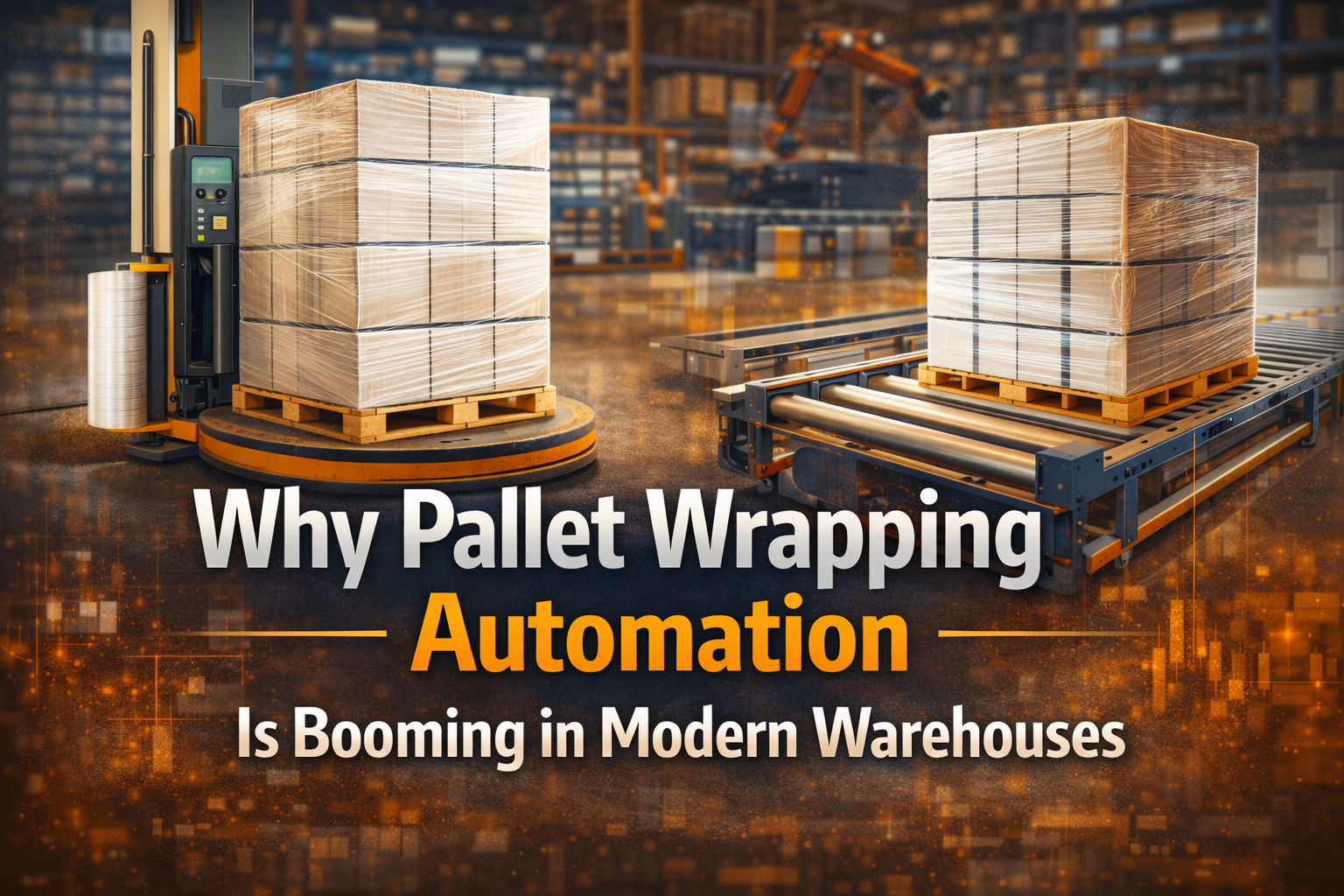
Have you ever wondered how modern warehouses manage to ship thousands of pallets every day without slowing down? The answer often comes down to one key upgrade: pallet wrapping automation.
As order volumes rise and delivery expectations tighten, warehouses can no longer rely on manual wrapping methods. Hand wrapping takes time, creates inconsistency, and increases labor costs. Therefore, businesses are rapidly shifting toward automated pallet wrapping systems to stay competitive.
In 2026, this shift is no longer optional. It is becoming a standard part of warehouse efficiency and supply chain automation.
What Is Pallet Wrapping Automation?
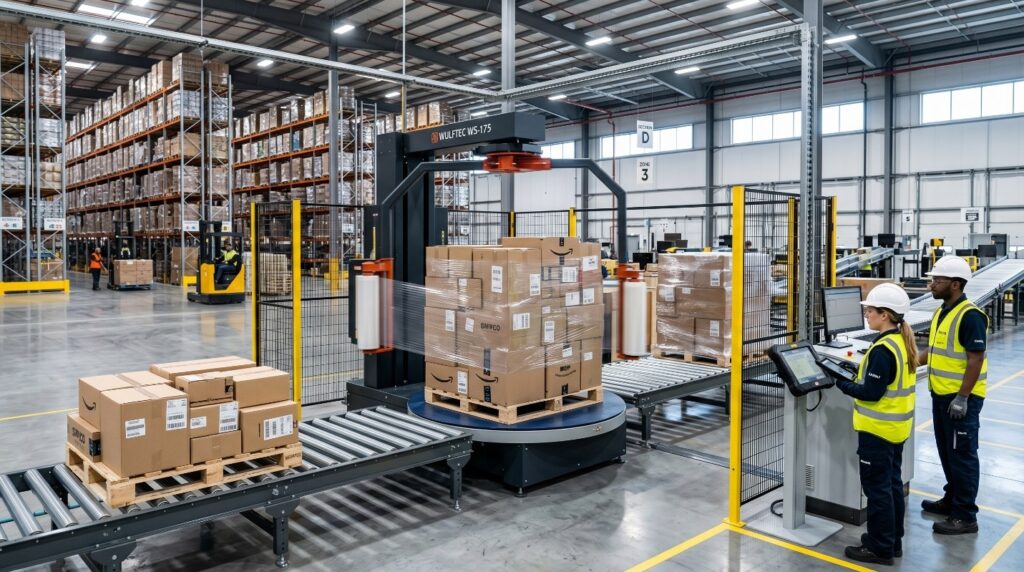
At its core, pallet wrapping automation uses machines to wrap pallets with stretch film rather than manual labor. These systems range from semi-automatic turntable wrappers to fully integrated robotic solutions.
Manual wrapping depends on human effort. Workers walk around pallets with stretch film, which often leads to uneven wrapping. In contrast, automated systems apply consistent tension and coverage every time.
Types of Automated Wrapping Systems
Different warehouses require different solutions. Common systems include:
- Turntable stretch wrappers for mid-volume operations
- Rotary arm pallet wrappers for high-speed environments
- Fully automated inline systems integrated with conveyors
Each system improves speed and consistency. However, fully automated setups deliver the highest throughput.
Why Warehouses Are Rapidly Adopting Automation
The surge in pallet wrapping automation is not random. It is driven by real operational pressures that warehouses face every day.
Increasing Throughput Demands
E-commerce growth continues to push warehouses to process more orders in less time. Manual wrapping cannot keep up with this demand. Automated pallet wrapping systems can wrap pallets in seconds. Therefore, they significantly increase throughput without adding labor.
Labor Shortages and Rising Costs
Finding and retaining warehouse workers has become more difficult. At the same time, labor costs continue to rise. Automation reduces dependency on manual labor. Instead of assigning workers to repetitive wrapping tasks, companies can reallocate them to higher-value roles.
Need for Consistency and Quality
Manual wrapping often leads to inconsistent results. Some pallets may be overwrapped, while others lack stability. In contrast, pallet wrapping automation ensures uniform wrapping every time. This improves load stability and reduces product damage during transit.
How Automated Pallet Wrapping Works
Understanding how these systems function helps explain their growing popularity. A typical automated pallet wrapping process follows a simple sequence. First, a pallet is placed on a turntable or conveyor. Next, the machine applies stretch film around the load using controlled tension. Finally, the system secures the film and prepares the pallet for shipment.
Because machines control every step, the process remains consistent. Therefore, warehouses achieve better performance and fewer errors.
Key Benefits of Pallet Wrapping Automation
The rise of pallet wrapping automation is largely driven by the measurable benefits it offers.
Improved Load Stability
Automated systems apply consistent film tension. This keeps products secure during handling and transport. As a result, businesses experience fewer damaged goods and returns.
Reduced Material Waste
Manual wrapping often uses more film than necessary. Workers may overwrap to ensure stability. Automated systems optimize film usage. Therefore, companies reduce material costs and support sustainability goals.
Faster Operations
Speed is one of the biggest advantages. Automated machines wrap pallets much faster than manual methods. This increase in speed improves overall warehouse throughput and efficiency.
Manual vs Automated Pallet Wrapping
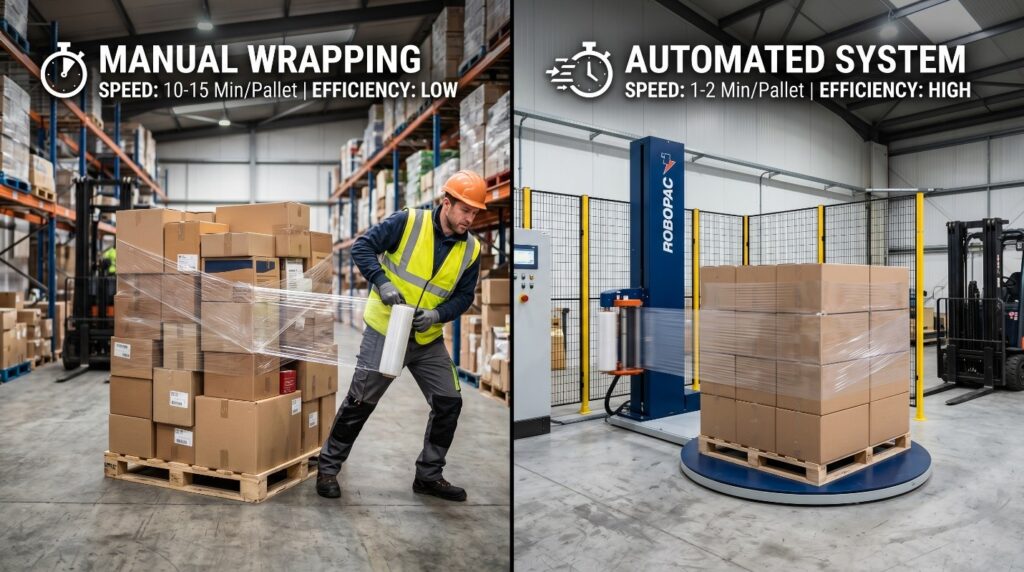
The difference between manual and automated wrapping becomes clear when you compare performance.
Key Differences
- Manual wrapping depends on the worker’s speed and consistency
- Automated systems deliver uniform results every time
- Automation reduces labor costs and improves efficiency
Although manual wrapping may seem cheaper initially, it often leads to higher long-term costs due to inefficiency and waste.
Integration with Modern Warehouse Systems
Modern warehouses rely on interconnected systems. Therefore, pallet wrapping automation must integrate seamlessly with existing operations.
Automated wrappers often connect with conveyor systems, robotic palletizers, and warehouse management systems. This creates a smooth workflow from packing to shipping. As a result, pallets move continuously without manual intervention. This improves speed and reduces bottlenecks.
The Role of Pallet Central Enterprises in Warehouse Automation
As automation becomes essential, businesses need reliable partners to support their transition. Pallet Central Enterprises provides pallet solutions designed to work with modern automated systems.
From durable pallet designs to solutions that support efficient wrapping and transport, Pallet Central Enterprises helps warehouses improve performance and reduce operational challenges. Their expertise ensures that pallets meet the demands of high-speed, automated environments.
Sustainability and Cost Optimization Through Automation
Sustainability is another reason behind the growth of pallet wrapping automation. Automated systems reduce stretch film waste by applying it precisely. This lowers material consumption and environmental impact.
Additionally, fewer damaged products mean less waste overall. Therefore, automation supports both cost reduction and sustainability goals.
ROI and Cost Savings of Pallet Wrapping Automation
One of the biggest reasons behind the growth of pallet wrapping automation is the clear return on investment. While the upfront cost of a pallet wrapping machine may seem high, the long-term savings often outweigh the initial expense.
First, labor costs drop significantly. Instead of assigning multiple workers to wrapping tasks, a single operator can manage automated systems. Therefore, businesses reduce payroll expenses over time.
Second, material savings add up quickly. Automated stretch wrap machines use precise tension control. This reduces film waste and lowers packaging costs.
Third, fewer damaged shipments mean fewer returns and replacements. As a result, companies save money while improving customer satisfaction.
When Should You Invest in Pallet Wrapping Automation?
Not every warehouse needs full automation immediately. However, certain signs indicate it’s time to upgrade.
If your operation struggles with slow throughput, inconsistent wrapping quality, or rising labor costs, automation becomes a practical solution. In addition, growing order volumes often push manual systems beyond their limits.
Signs Your Warehouse Is Ready
- Wrapping delays are slowing down shipping operations
- Labor costs for manual wrapping continue to increase
- Product damage occurs due to unstable loads
When these issues appear, investing in pallet wrapping automation can improve both efficiency and cost control.
Challenges and Considerations Before Implementation
Although the benefits are clear, adopting pallet wrapping automation requires careful planning.
Initial Investment and Setup
Automated systems require capital investment. In addition, installation may involve adjusting warehouse layouts or integrating with existing conveyor systems. However, these costs should be evaluated against long-term savings. In most cases, the investment pays off over time.
Space and Workflow Adjustments
Automated machines need a dedicated space. Warehouses may need to reorganize layouts to accommodate new equipment. Therefore, planning ahead ensures smooth implementation without disrupting operations.
Training and Maintenance
Even automated systems require oversight. Staff must understand how to operate and maintain the equipment. Proper training ensures consistent performance and reduces downtime.
The Role of Automation in High-Volume Distribution Centers
High-volume warehouses depend heavily on speed and consistency. Therefore, pallet wrapping automation plays a critical role in maintaining performance. Automated systems can wrap pallets in seconds. This allows facilities to handle large volumes without delays. In contrast, manual processes create bottlenecks during peak periods.
Additionally, automation ensures uniform wrapping across all shipments. This improves load stability and reduces errors. As distribution centers continue to scale, automation becomes essential rather than optional.
Future Trends in Pallet Wrapping Automation
Looking ahead, pallet wrapping automation will continue to evolve alongside broader warehouse automation trends. New systems are becoming more intelligent. Some machines now adjust wrapping patterns based on load size and weight. This improves efficiency and reduces material usage.
In addition, integration with AI and IoT technologies is growing. These systems provide real-time data on performance, maintenance needs, and efficiency levels. Sustainability will also remain a key focus. Companies will continue to look for ways to reduce packaging waste and improve environmental performance.
Why Pallet Wrapping Automation Is a Strategic Investment
At this point, it’s clear that pallet wrapping automation is more than just a convenience. It is a strategic investment that supports long-term growth. Automation improves speed, consistency, and cost efficiency. It also reduces reliance on manual labor and minimizes errors.
For warehouses aiming to scale operations, automation provides the foundation for future expansion. Therefore, businesses that invest early gain a competitive advantage.
Conclusion: The Future of Pallet Wrapping Automation in Warehousing
The rise of pallet wrapping automation is no coincidence. Warehouses today need speed, consistency, and cost control, and automation delivers on all three. As operations scale, manual wrapping simply cannot keep up with growing demand. By improving load stability, reducing labor dependency, and increasing throughput, automation helps businesses run smoother and more efficiently. It also supports long-term savings by cutting material waste and minimizing product damage.
At the same time, having the right pallet foundation matters just as much as the wrapping process itself. That’s where Pallet Central Enterprises adds value, offering pallet solutions designed to perform reliably in automated environments.
In the bigger picture, pallet wrapping automation is becoming a core part of modern warehouse strategy. It’s not just about wrapping pallets faster, it’s about building a smarter, more scalable operation that’s ready for the future.
FAQs
1. What is pallet wrapping automation?
It is the use of machines to wrap pallets with stretch film instead of manual labor, improving speed and consistency.
2. How much does a pallet wrapping machine cost?
Costs vary depending on the system type. Semi-automatic machines are more affordable, while fully automated systems require higher investment.
3. Is pallet wrapping automation worth it for small warehouses?
Yes, especially if labor costs are high or order volumes are increasing. Even small operations benefit from improved efficiency.
4. How does automation reduce pallet damage?
Consistent wrapping ensures load stability, which prevents shifting and damage during transport.
5. Can automated wrapping systems integrate with conveyors?
Yes. Most modern systems are designed to work with conveyor systems and other automated warehouse equipment.