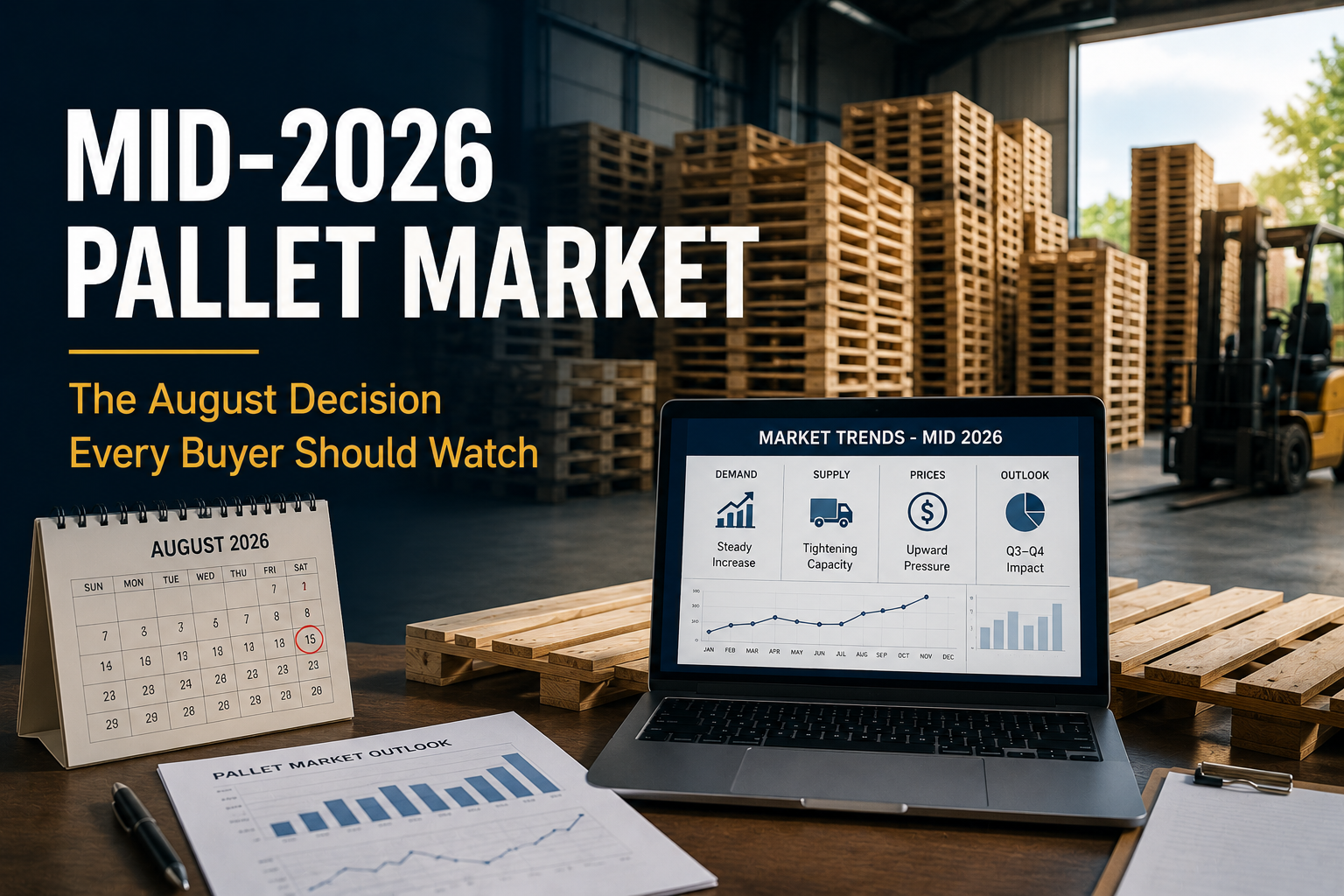
Have you checked your pallet sourcing strategy lately? If not, now is the time. The first half of 2026 has brought rising lumber costs, ongoing freight pressure, and tighter pallet availability across North America. Yet the biggest event of the year for buyers is still ahead. The Mid-2026 Pallet Market is approaching a turning point as the U.S. Commerce Department prepares to issue its final decision on Canadian softwood lumber duties, a move expected in August unless extended into October.
Many procurement managers hope the announcement will lower pallet prices. However, the reality is more complex. While preliminary duty rates have been reduced, other tariffs remain in place, and supply constraints continue to pressure the market. Understanding the Mid-2026 Pallet Market now can help businesses prepare before peak shipping season creates even more competition for available inventory.
Instead of reacting after prices move, smart buyers are reviewing procurement plans, strengthening supplier relationships, and securing supply early. Those actions will likely have a greater impact on long-term costs than waiting for a headline about tariff changes.
Understanding the Mid-2026 Pallet Market
Before looking ahead, it helps to understand where the market stands today. Several economic and supply chain factors are simultaneously affecting pallet pricing, creating one of the most challenging purchasing environments in recent years.
Lumber prices remain elevated, transportation costs continue to fluctuate, and pallet manufacturers face ongoing pressure from material availability. Consequently, the Mid-2026 Pallet Market remains highly competitive as businesses prepare for late-summer and fall shipping demand.
These market conditions mean buyers should evaluate procurement strategies based on long-term supply stability rather than short-term price movements.
Where the Market Stands Mid-Year
The pallet industry has experienced steady pressure throughout 2026. Unlike in previous years, today’s market is being shaped by multiple challenges rather than a single issue.
Lumber Prices Continue to Pressure Pallet Costs
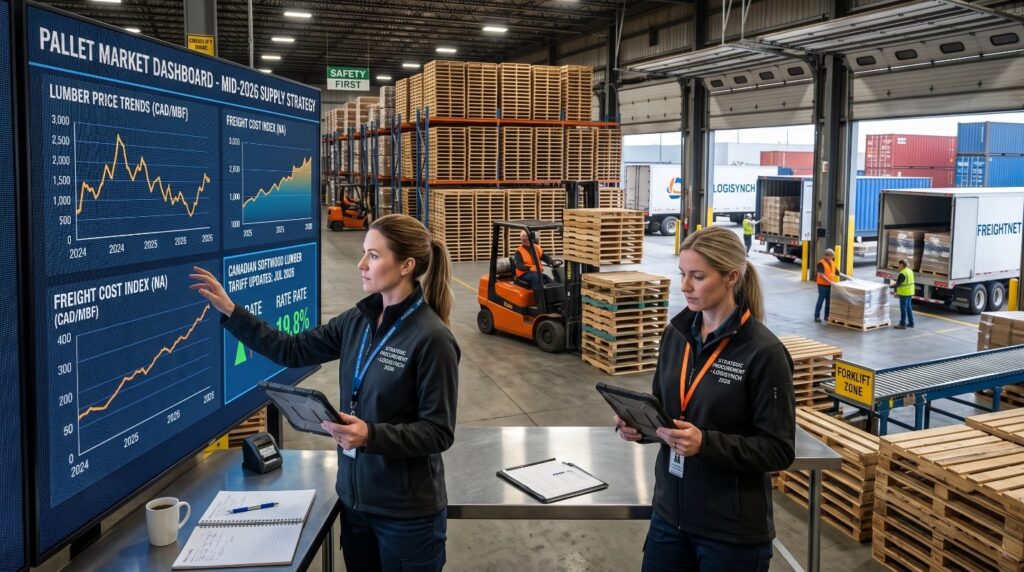
Softwood lumber remains one of the largest cost drivers for pallet production. Although benchmark framing lumber prices have stabilized in some regions, lower-grade pallet lumber has continued climbing due to sustained industrial demand.
Manufacturers also face higher transportation expenses and labor costs. As a result, the 2026 pallet market continues experiencing upward pricing pressure despite expectations that lumber costs might ease.
Freight Costs and Peak Season Add More Pressure
Summer traditionally marks the beginning of a busy shipping period. Warehouses increase inventory levels, retailers prepare for seasonal demand, and manufacturers move larger volumes of product.
At the same time, freight rates and fuel costs remain unpredictable. Therefore, businesses purchasing pallets during peak season often encounter longer lead times and higher transportation expenses. These combined factors continue shaping the Mid-2026 Pallet Market as demand accelerates.
The August Lumber Tariff Decision Everyone Is Watching
The most significant development for pallet buyers is the upcoming August decision on the lumber tariff. Many businesses expect this announcement to determine whether pallet prices will finally begin to fall.
However, buyers should avoid assuming that lower duties will immediately translate into lower pallet costs.
Why the Headlines May Be Misleading
The U.S. Commerce Department is expected to issue its final determination on Canadian softwood lumber duties in August. However, the decision could be delayed to October if additional review time is needed.
Preliminary estimates indicate that combined anti-dumping and countervailing duties may decrease from roughly 35% to approximately 25%. On the surface, that appears to be positive news.
However, an additional 10% Section 232 tariff is expected to remain in effect. Consequently, the overall effective tariff rate may still approach 35%, leaving imported Canadian lumber significantly more expensive than historical levels.
Therefore, businesses should not assume a “duty reduction” automatically means cheaper pallets during the second half of 2026.
Why Lower Tariffs May Not Bring Immediate Relief
Even if tariff rates decline, structural supply issues will likely continue affecting pallet availability.
Canada remains one of the largest suppliers of softwood lumber to the United States. Domestic production cannot expand fast enough to replace that supply in the short term. Industry analysts estimate U.S. lumber production grows only about 4% to 5% annually, making rapid supply expansion unlikely.
As a result, the Mid-2026 Pallet Market continues facing long-term supply constraints rather than temporary disruptions.
These conditions reinforce the importance of proactive procurement planning instead of waiting for prices to stabilize.
What Smart Buyers Should Do Before August
Waiting for the final tariff decision may seem like the safest strategy. However, delaying procurement could expose businesses to tighter supply and higher prices if demand increases during peak shipping season. Instead, buyers should focus on building flexibility into their sourcing strategy.
Taking proactive steps now can reduce uncertainty and improve supply continuity regardless of how the Mid-2026 Pallet Market evolves over the coming months.
Lock in Supply Before Peak Season
The weeks leading up to August often coincide with increased shipping activity. Warehouses begin preparing for fall demand, while manufacturers ramp up production. Consequently, pallet demand typically rises across many industries.
Rather than waiting for the market to react, businesses should secure inventory early whenever possible. Forward purchasing and accurate inventory forecasting help reduce exposure to sudden price spikes and extended lead times. This approach strengthens both the pallet procurement strategy and overall business continuity.
Blend New and Recycled Pallets
Many companies are reducing procurement costs by combining new pallets with high-quality recycled options. This strategy lowers dependence on newly manufactured pallets while supporting sustainability goals.
Businesses can improve cost control by:
- Blending new and recycled pallets where appropriate
- Forecasting pallet demand several months ahead
- Reducing emergency spot-market purchases
- Reviewing the pallet lifecycle and reuse opportunities
- Working with experienced supply partners
A balanced sourcing strategy helps organizations maintain reliable operations without sacrificing pallet quality.
Why Supplier Diversification Matters More Than Ever
Many procurement teams continue purchasing from several regional suppliers in hopes of finding the lowest available price. While this approach may appear cost-effective, it often creates inconsistent quality, separate contracts, and greater administrative complexity.
Instead of chasing short-term pricing, businesses should focus on supplier relationships that deliver long-term value. Working with a trusted national pallet broker provides access to broader sourcing options, stronger pallet supply resilience, and better coordination across multiple facilities.
This approach also improves flexibility when regional shortages or transportation issues affect individual suppliers. As market conditions remain uncertain, diversified sourcing has become a key part of successful pallet sourcing strategies.
Why Businesses Partner with Pallet Central Enterprises
Market uncertainty requires more than competitive pricing. Businesses need dependable supply, consistent quality, and a partner that can adapt as conditions change.
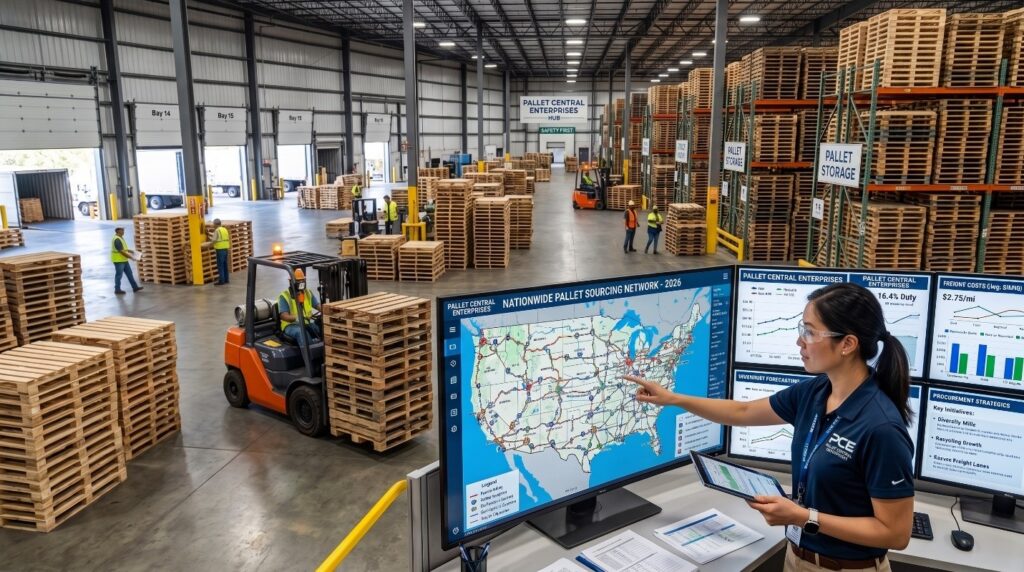
As a leading national pallet broker, Pallet Central Enterprises (PCE) helps companies strengthen their procurement strategies through a nationwide network of more than 800 partner mills and over 500 carriers. Instead of relying on a single production source, PCE provides flexible sourcing solutions that support multi-location operations and improve supply continuity.
Whether businesses need new pallets, recycled pallets, pallet management programs, or logistics support, PCE helps customers reduce procurement risk while maintaining reliable service. Learn more about their nationwide pallet solutions atPallet Central Enterprises (PCE).
For additional insights into lumber pricing, market conditions, and forestry trends, buyers can visit Fastmarkets Forest Products.
Conclusion
The Mid-2026 Pallet Market has already challenged procurement teams with higher lumber costs, freight pressure, and tighter supply. Now, the upcoming August decision on the lumber tariff adds another layer of uncertainty. While lower duties may generate optimistic headlines, structural supply constraints and additional tariffs mean buyers should not expect immediate price relief.
Instead of reacting after the market changes, businesses should strengthen their pallet procurement strategy, secure supply before peak season, diversify sourcing, and build relationships with dependable partners. These steps will provide greater stability regardless of how the market develops.
The Mid-2026 Pallet Market is approaching a critical turning point, not a finish line. Companies that plan ahead will be better positioned to manage volatility, protect their operations, and control long-term costs. Partnering with an experienced national pallet broker like Pallet Central Enterprises can help businesses stay ahead of changing market conditions with reliable supply and nationwide sourcing support.
FAQs
1. What is happening in the Mid-2026 pallet market?
The Mid-2026 Pallet Market is experiencing higher lumber prices, freight pressure, tight pallet supply, and uncertainty surrounding the upcoming August decision on Canadian softwood lumber duties.
2. Will pallet prices decrease after the August tariff decision?
Not necessarily. Although preliminary duties may decline, additional tariffs and ongoing supply constraints could keep pallet prices elevated.
3. How do Canadian lumber tariffs affect pallet prices?
Canadian softwood lumber is a major source of raw material for pallet manufacturing. Higher duties increase lumber costs, which often lead to higher pallet prices.
4. What is the best pallet procurement strategy for 2026?
Businesses should forecast demand early, secure supply before peak season, blend new and recycled pallets, and work with a reliable national pallet broker.
5. Why should companies work with a national pallet broker?
A national pallet broker provides broader sourcing options, improved supply resilience, consistent quality, and nationwide coverage, helping businesses reduce procurement risk during volatile market conditions.