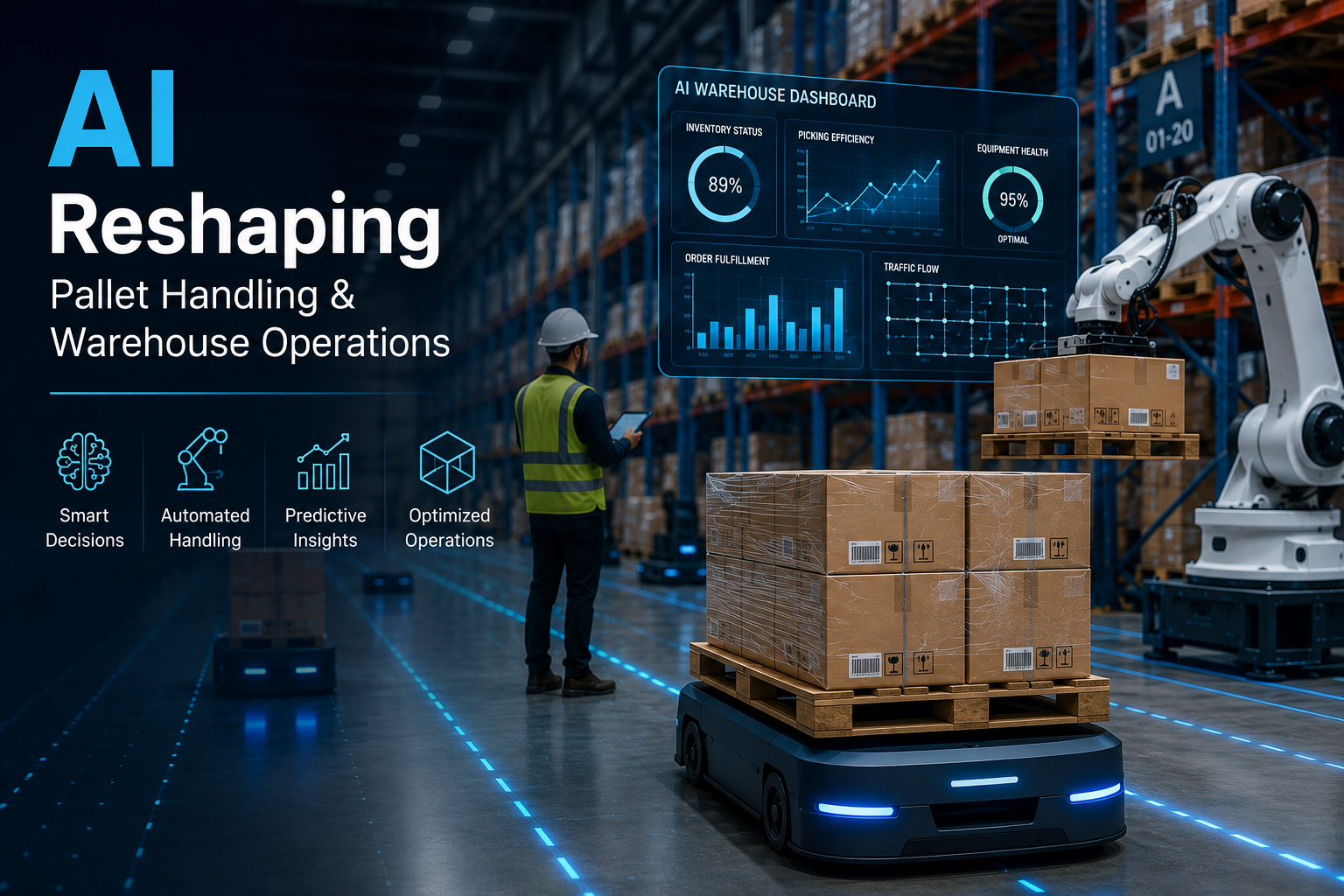
Have you ever wondered how warehouses process thousands of pallet movements every day faster and with fewer errors? The answer lies in AI-powered automation and intelligent logistics systems that are transforming pallet handling and warehouse operations worldwide.
From robotic pallet movers to predictive inventory systems, artificial intelligence is changing how warehouses operate. Businesses now rely on smart technologies to improve efficiency, reduce labor pressure, and increase operational visibility. As supply chains grow more complex, AI-driven systems are helping warehouses stay faster, smarter, and more scalable than ever before.
The Evolution of Modern Warehouses
Warehouse operations have changed dramatically over the last decade. Traditional warehouses once depended heavily on manual labor and paper-based tracking systems. Today, AI-driven automation is replacing outdated processes with intelligent workflows.
This transformation is especially visible in modern pallet handling and warehouse operations, where speed and precision matter more than ever. Warehouses now use smart software, robotics, and connected systems to handle large volumes with minimal disruption.
As e-commerce and global logistics continue to grow, businesses need warehouses that can adapt quickly. Therefore, AI has become a major driver of operational efficiency.
From Manual Processes to Smart Automation
Older pallet handling systems relied on forklifts, manual counting, and human coordination. Although these methods still exist, they often create delays and increase operational costs.
AI-powered systems solve many of these issues. Automated systems can now identify pallets, track inventory movement, and optimize storage locations without constant human input. As a result, companies improve workflow consistency while reducing costly mistakes.
Why AI Adoption Is Accelerating
Several factors are pushing warehouses toward AI adoption:
- Rising labor shortages
- Faster delivery expectations
- Increasing warehouse throughput demands
- Growth of automated logistics systems
Because of these pressures, businesses are investing heavily in technologies that support modern pallet handling and warehouse operations.
How AI Improves Pallet Movement Efficiency
Efficient pallet movement is critical in busy distribution centers. Delays in handling often slow down the entire supply chain. AI helps solve this problem by improving how pallets move through warehouse environments.
Intelligent Route Optimization
AI systems analyze warehouse traffic in real time. They identify the fastest routes for forklifts, AGVs, and robotic systems. This reduces congestion and improves throughput. Consequently, warehouses can move more pallets in less time.
AI also minimizes unnecessary travel distances. Therefore, businesses save energy while increasing productivity.
Automated Guided Vehicles and AMRs
Autonomous mobile robots (AMRs) and automated guided vehicles (AGVs) are becoming essential in modern pallet handling and warehouse operations.
These machines transport pallets with minimal human involvement. They use sensors, AI mapping, and obstacle detection to move safely across warehouses.
Benefits include:
- Faster pallet transport
- Reduced labor dependency
- Improved workplace safety
- Better operational consistency
Many large fulfillment centers now rely on robotic pallet systems to maintain continuous operations.
Smarter Load Distribution
AI systems can analyze pallet weight distribution before transportation or storage. This prevents unstable loads and improves warehouse safety.
Proper load balancing also reduces product damage during shipping. As a result, businesses lower replacement and return costs.
AI-Powered Inventory Tracking Systems
Inventory visibility is one of the biggest advantages of AI-driven warehouse technology. Traditional inventory systems often struggle with inaccuracies. Missing pallets, misplaced products, and delayed updates create operational challenges. AI improves inventory management through real-time tracking and predictive analytics.
Real-Time Pallet Tracking
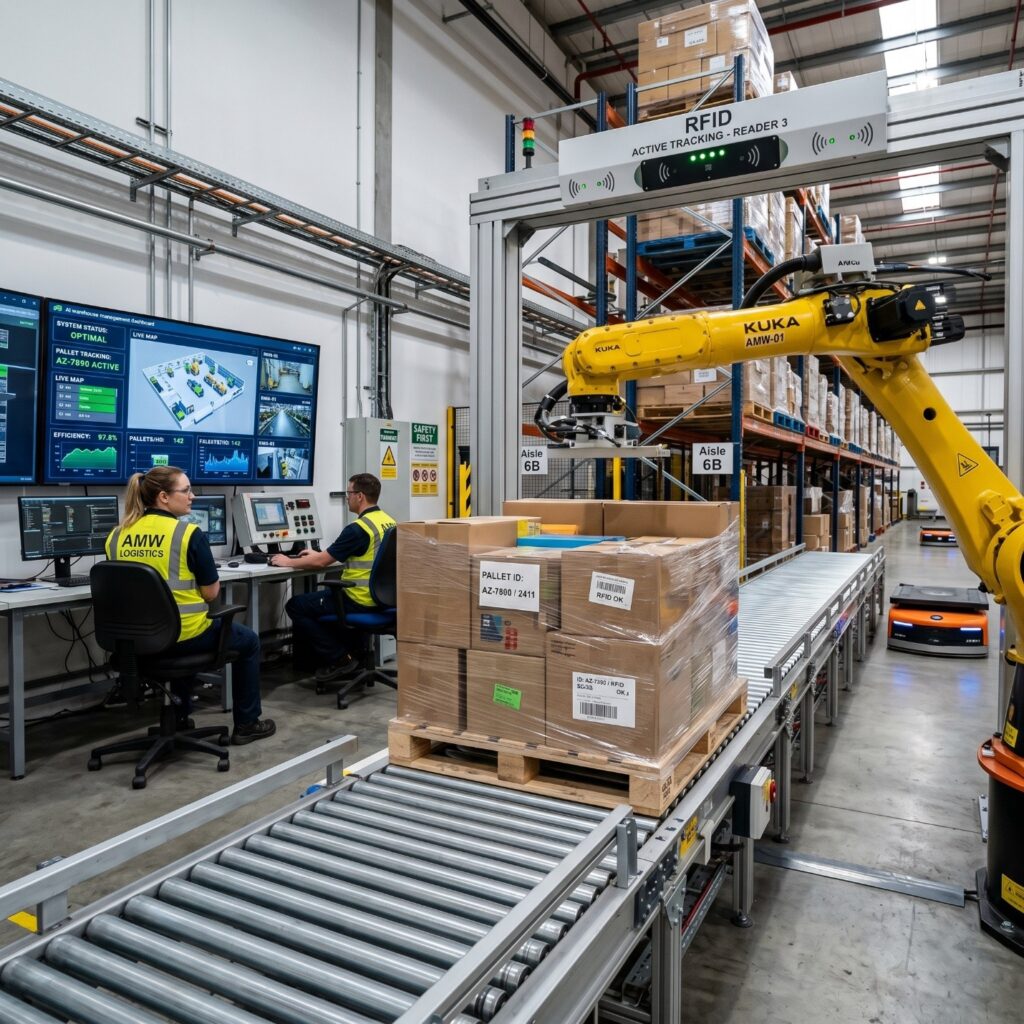
Modern tracking systems use RFID tags, IoT sensors, and AI software to continuously monitor pallet locations. This creates complete visibility across warehouse operations.
Instead of searching manually, warehouse managers can instantly locate products and pallets. Therefore, workflows become faster and more reliable.
For example, smart tracking systems support:
- Accurate inventory counts
- Faster order fulfillment
- Reduced pallet loss
- Better inventory forecasting
These technologies are reshaping modern pallet handling and warehouse operations by improving operational control.
Predictive Inventory Management
AI does more than track inventory; it also predicts future inventory needs. By analyzing historical data and demand patterns, AI systems help businesses prepare for fluctuations in inventory volume.
This reduces stock shortages and prevents overstocking. As a result, warehouses improve storage efficiency while lowering carrying costs.
Improved Order Accuracy
Order fulfillment errors can damage customer relationships and increase operational costs. AI systems verify inventory movement automatically. They identify inconsistencies before products leave the warehouse. Consequently, businesses improve shipping accuracy and customer satisfaction.
Robotics and Smart Warehousing Are Changing Logistics
Robotics now plays a central role in modern pallet handling and warehouse operations. Warehouses are becoming smarter, more connected, and increasingly autonomous.
Robotic Pallet Handling Systems
Robotic arms can now stack, sort, and move pallets with impressive precision. Unlike manual systems, robots operate continuously with consistent performance. This improves warehouse throughput significantly. Additionally, robotic systems reduce workplace injuries caused by repetitive lifting.
Conveyor Automation and AI Coordination
AI-driven conveyor systems automatically optimize pallet flow. Sensors monitor movement speed, congestion levels, and operational bottlenecks in real time. Therefore, warehouses maintain smoother workflows with fewer disruptions.
Modern conveyor systems also integrate with warehouse management software for centralized operational control.
Smart Decision-Making Through Data
AI continuously collects operational data from warehouse systems. This data helps managers make better decisions related to staffing, inventory placement, and transportation scheduling. Over time, warehouses become more efficient because AI identifies patterns that humans might overlook.
How AI Supports Scalability in Warehouse Operations
One major benefit of AI is scalability. As businesses grow, warehouse complexity increases. Manual systems often struggle to handle higher volumes efficiently. AI-powered systems make scaling operations easier.
Handling Higher Throughput
AI systems manage larger workloads without dramatically increasing labor costs. Automated pallet handling systems can process high volumes quickly and consistently. Therefore, businesses can expand operations while maintaining efficiency.
Reducing Operational Bottlenecks
Warehouse bottlenecks slow down fulfillment and increase delays. AI identifies workflow disruptions early and recommends corrective actions. This proactive approach improves overall warehouse performance.
Enhancing Workforce Productivity
AI does not completely replace human workers. Instead, it helps employees work more efficiently. Workers spend less time on repetitive tasks and more time managing higher-value operations. As a result, businesses improve productivity without overburdening staff.
The Role of Pallet Central Enterprises in Smarter Warehouse Operations
As AI continues transforming logistics, businesses need pallet solutions that support automation and operational efficiency. Pallet Central Enterprises helps companies optimize modern pallet handling and warehouse operations through engineered pallet solutions designed for today’s fast-moving supply chains.
Their pallet systems support automation compatibility, durability, and consistent performance in advanced warehouse environments. Businesses looking to improve efficiency can explore customized pallet solutions through Pallet Central Enterprises.
The Future of AI in Warehouse Logistics
AI adoption is still growing. What seems advanced today may soon become standard across the logistics industry. Businesses that invest early in intelligent systems will likely gain a major competitive advantage in the coming years.
As customer expectations continue rising, warehouses must process orders faster while maintaining accuracy. This is why AI will play an even larger role in modern pallet handling and warehouse operations moving forward.
Smarter Predictive Analytics
Future AI systems will become even better at predicting operational needs. They will analyze weather patterns, transportation delays, seasonal demand, and warehouse capacity in real time. This level of predictive intelligence will help warehouses avoid disruptions before they happen.
For example, AI could automatically redirect pallet movement during congestion or recommend inventory repositioning based on demand forecasts. As a result, warehouse operations will become more proactive instead of reactive.
Greater Integration Between Systems
Modern warehouses already connect multiple technologies together. However, future AI systems will create even deeper integration between robotics, conveyors, pallet tracking, and warehouse management software.
This means every part of the warehouse will communicate seamlessly. Consequently, businesses will gain stronger operational visibility and better workflow coordination across facilities.
AI and Sustainability Goals
Sustainability is also influencing modern pallet handling and warehouse operations. AI helps reduce waste by improving route efficiency, optimizing pallet usage, and minimizing product damage.
Smarter inventory planning also lowers unnecessary storage and transportation costs. Therefore, businesses can reduce both operational expenses and environmental impact simultaneously.
Many companies now view AI not only as a productivity tool but also as part of their long-term sustainability strategy.
Challenges Businesses Must Consider Before AI Adoption
Although AI provides major benefits, implementation still requires careful planning.
High Initial Investment
Advanced warehouse automation systems often require high upfront costs. Robotics, smart software, and infrastructure upgrades can be expensive for smaller businesses.
However, many companies recover these investments over time through improved efficiency and lower labor costs.
System Integration Complexity
Older warehouses may struggle to integrate AI with existing systems. Legacy software and outdated equipment can create compatibility issues.
Because of this, businesses should evaluate their infrastructure before investing in automation technology.
Workforce Training Requirements
Employees must learn how to work alongside AI systems and robotic technologies. Proper training is essential for successful implementation.
Fortunately, most AI tools are becoming easier to use. As a result, training processes are improving across the logistics industry.
Why Businesses Are Investing in Smart Pallet Systems
Pallet systems are no longer viewed as simple shipping tools. Instead, they are becoming intelligent operational assets within automated warehouses.
Smart pallets equipped with sensors and tracking technology provide valuable operational data. This helps businesses improve inventory accuracy and monitor pallet conditions in real time.
Key Benefits of Smart Pallet Systems
Businesses adopting smart pallet technologies often experience:
- Better inventory visibility
- Faster warehouse workflows
- Lower pallet loss rates
- Improved shipping accuracy
- Stronger supply chain control
These benefits explain why smart pallet technologies are becoming central to modern pallet handling and warehouse operations.
How AI Improves Customer Satisfaction
Warehouse performance directly impacts customer experience. Delayed shipments, incorrect orders, and damaged products all reduce customer trust. AI helps eliminate many of these issues through improved operational accuracy.
Faster Order Fulfillment
AI systems process warehouse tasks quickly and efficiently. Automated workflows reduce delays during picking, packing, and pallet movement. Consequently, businesses deliver products faster and more consistently.
Reduced Shipping Errors
AI verifies inventory movement in real time. This minimizes mistakes during order preparation and shipment processing. As a result, customers receive the correct products more often.
Better Supply Chain Reliability
Reliable warehouse performance strengthens customer relationships. Businesses that invest in AI-driven logistics systems often gain a reputation for consistency and operational excellence.
Why Modern Warehouses Need AI-Driven Flexibility
Market conditions change rapidly. Seasonal demand spikes, labor shortages, and supply chain disruptions can create serious operational challenges. AI provides the flexibility needed to adapt quickly.
Smart systems can adjust workflows automatically based on operational conditions. Therefore, warehouses maintain performance even during periods of disruption.
This flexibility is one of the biggest reasons AI adoption continues to accelerate across the logistics industry worldwide.
Conclusion: The Growing Impact of Modern Pallet Handling and Warehouse Operations
Artificial intelligence is transforming the logistics industry at an incredible pace. From robotics and predictive analytics to smart inventory tracking, AI is redefining how warehouses manage pallet movement and operational efficiency.
Today, modern pallet handling and warehouse operations rely heavily on automation, intelligent workflows, and connected technologies to stay competitive. Businesses that adopt AI-driven systems gain better scalability, stronger inventory control, and improved operational accuracy.
As warehouses continue evolving, smart pallet systems and automation-ready infrastructure will become essential for long-term success. Companies that invest in these technologies now will be better prepared for future supply chain demands.
Businesses looking to optimize modern pallet handling and warehouse operations can benefit from working with experienced providers like Pallet Central Enterprises, which offers engineered pallet solutions designed for modern automated environments.
FAQs
1. How is AI improving warehouse pallet handling?
AI improves pallet handling through automation, route optimization, predictive analytics, and smart tracking systems, thereby increasing efficiency and accuracy.
2. What are smart pallet systems?
Smart pallet systems use technologies such as RFID and IoT sensors to track pallet movement, monitor inventory, and enhance operational visibility.
3. Are AI-powered warehouses replacing human workers?
No. AI mainly supports workers by automating repetitive tasks and improving operational efficiency rather than completely replacing employees.
4. Why are AGVs and AMRs important in warehouses?
AGVs and AMRs automatically transport pallets, reduce labor dependency, improve safety, and increase warehouse productivity.
5. How does AI reduce warehouse operational costs?
AI reduces costs by improving workflow efficiency, minimizing errors, optimizing inventory management, and lowering labor-related expenses.