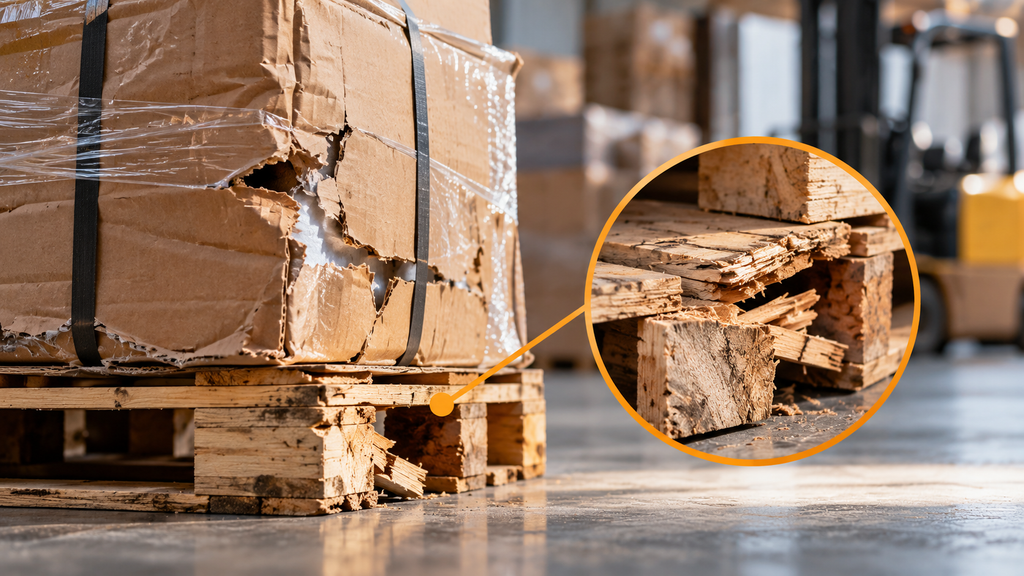
What happens the moment a customer sends over photos of a crushed pallet load at the receiving dock? In almost every shipping department, the exact same reflex kicks in. The warehouse team blames the trucking company, accounting files the paperwork, and everyone moves on to the next order. Nobody asks whether the wood platform underneath the product actually caused the collapse. When repeat damage claims pile up month after month, that blind spot gets expensive fast.
Why Nobody Looks Under the Damaged Box
Shippers are trained to treat transit loss as a handling problem. If cartons show up torn, leaning, or flattened, the easiest explanation is that a forklift driver hit a dock plate too hard or a driver braked sharply on the highway. Because the trailer is out of sight once the doors close, the carrier becomes the default suspect for every bad delivery.
That assumption ignores how loads actually ride inside a trailer. Every corrugated box, stretch-wrap layer, and wood base moves through the supply chain as one connected structure. According to supply chain packaging analysis from Packaging Digest, preventing transit loss requires treating the boxes, wrap, and pallet as a single unit load rather than separate parts.
When the base underneath the load is weak, the boxes on top take a beating before the truck even hits the highway. Yet when receiving clerks snap photos of ruined inventory, they zoom in on the crushed cardboard and ignore the broken stringer or wide board spacing three inches below it. Nobody checks the wood.
How the Wrong Pallet Quietly Bleeds Your Claims Budget
A large share of freight damage starts right in the staging lane. It happens when a heavy SKU gets stacked onto the wrong pallet grade, when recycled platforms arrive with hairline splits in the stringers, or when wide deckboard gaps leave bottom cartons unsupported. A footprint mismatch of just an inch or two is often enough to crush lower boxes under stacked weight.
Because almost no one audits pallet condition against claim records, the exact same failures repeat every single month. Worse yet, LTL and truckload carriers know how to spot a bad unit load. Under standard freight liability rules, if an inspector sees a collapsed stringer or boxes hanging over the edge of a platform, the carrier frequently denies damage claims as improper shipper packaging.
Even when a carrier pays a fraction of the loss, your claims budget still takes a hit in hidden costs. You absorb replacement manufacturing runs, reshipping freight bills, retailer chargebacks, and hours of staff time chasing paperwork. Filing more damage claims never fixes a physical spec problem on your loading dock.
Four Failure Signatures That Point to the Pallet
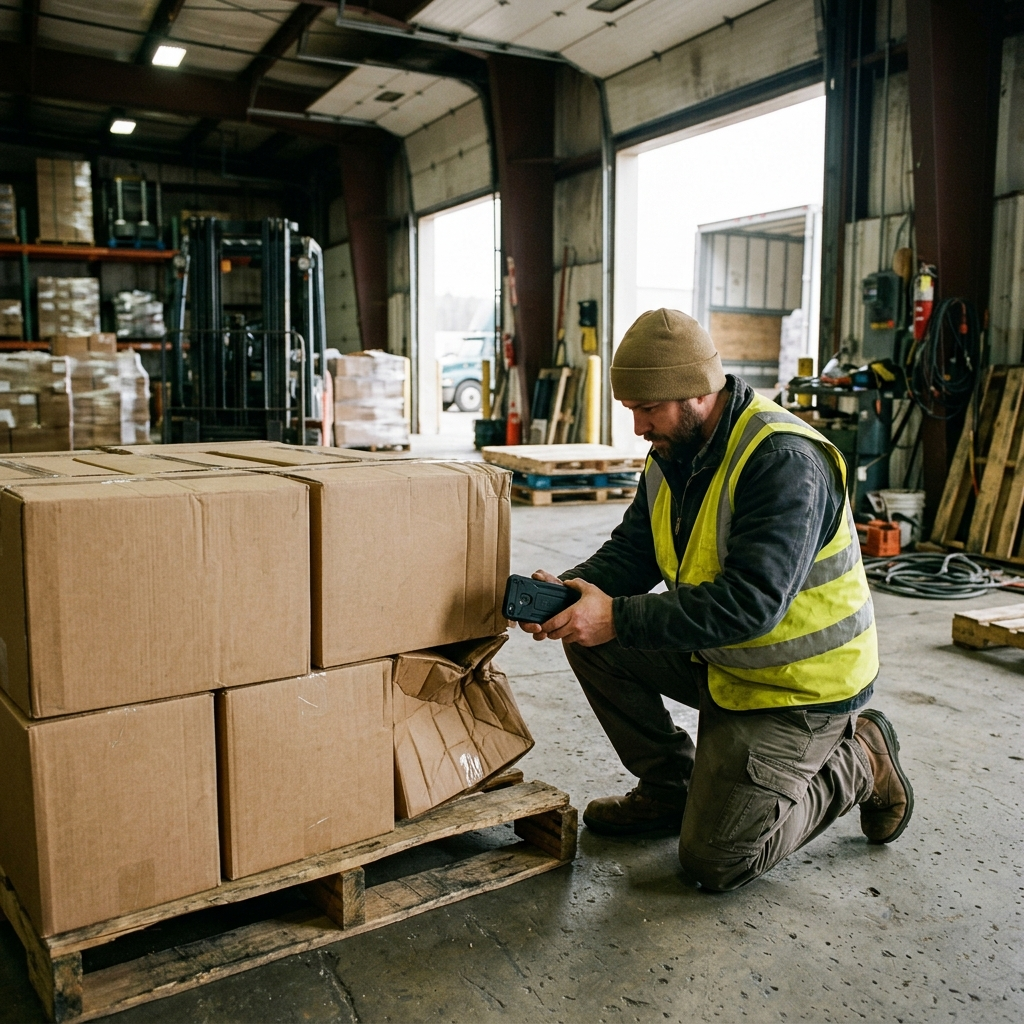
Damaged freight leaves physical clues behind. If you know how to read the wreckage at the receiving dock, the load itself will tell you whether a careless driver or a weak pallet caused the loss. Look closely at these four failure signatures the next time a shipment gets rejected.
Crushed Bottom Corners and Collapsed Lower Layers
When the bottom tier of cartons buckles while the top layers look fine, shippers usually blame double-stacking in the trailer. In reality, crushed bottom corners almost always point to a pallet flexing under stacked weight. When thin or low-grade deckboards bow downward between the stringers, the boxes tilt inward and shift the entire column’s weight onto two narrow edges.
Research from the Virginia Tech Center for Packaging and Unit Load Design shows that pallet top-deck stiffness directly controls how compression forces spread across the bottom layer of boxes. If the wood flexes even slightly under load, corner pressures spike and the bottom cartons cave in long before the cardboard reaches its rated stacking limit.
Punctures and Tears on the Bottom of the Load
Ripped bottom flaps, gouged bags, and punctured cases rarely come from rough forklift handling. Instead, they point straight to wide deckboard gaps or protruding nails on poorly repaired pallets. When the space between top boards is too wide for the box footprint, heavy product settles into the open void during highway vibration. Packaging engineers call this bridging.
At the same time, low-end recycled pallets often suffer from nail pops, where twisted wood fibers push metal fasteners a quarter-inch above the top deck. Every bump in the road grinds those exposed nail heads straight through slip sheets, poly bags, and corrugated bottoms, ruining the lower layer before the truck ever reaches the customer.
Tipped or Shifted Loads in Transit
When a stretch-wrapped load arrives leaning against the trailer wall, the first instinct is to blame aggressive cornering by the driver. However, tipped or shifted loads usually trace back to pallet overhang or a pallet footprint that is simply too small for the product. Corrugated boxes get up to 80 percent of their vertical stacking strength from their four vertical corners.
When boxes hang over the edge of a 48×40 platform by even one inch, those load-bearing corners sit in midair. Packaging engineering studies published through California Polytechnic State University show that pallet overhang and wide board spacing can cut corrugated box compression strength by 32 to 50 percent. Once one unsupported side buckles, the entire load tips and shifts in transit.
Repeated Freight Damage on the Same Shipping Lane
One bad delivery on a route can easily be a driver mistake. Five damaged shipments on the exact same lane over six weeks is a pattern. When freight damage repeats on a specific SKU or customer lane, even after you switch carriers or add extra stretch wrap, you are looking at a pallet spec problem rather than a handling problem.
Longer lanes, rough regional highways, and cross-dock transfers expose weak wood specs that might survive a short local delivery. If the pallet underneath the load cannot handle the vibration of that specific route, changing trucking companies will not stop the losses.
The 30-Day Dock Tracking Test: Is It the Carrier or the Pallet?
Guessing costs money. Before you fire a reliable carrier or spend thousands on thicker cardboard boxes, run a simple 30-day tracking test on your shipping dock. The goal is not to let carriers off the hook. Sometimes it really is the carrier. The point is to find out with hard data instead of assuming.
For the next 30 days, ask your dock crew to log four simple details for outgoing loads and incoming damage claims:
- Snap Two Photos at Loading: Take one photo of the empty pallet before stacking and a second photo of the finished unit load showing corner alignment.
- Record the Pallet Type and Grade: Note on the dock log whether the order shipped on a new pallet, a #1 Grade A recycled pallet, or a #2 Grade B pallet.
- Log Deck Condition and Footprint Fit: Mark down any visible splits, patched stringers, wide deckboard gaps, or pallet overhang past the leading edge.
- Match Every Claim Against the Log: Whenever damage claims come back during that 30-day window, pull the departure photos and compare the failure signature against the pallet it rode on.
After one month, the pattern will be clear. If crushed loads happen across three different carriers whenever heavy SKUs ship on #2 recycled pallets with wide board spacing, you have found your culprit. On the other hand, if loads leave on solid, properly fitted #1 pallets and arrive speared by forklift tines on a single carrier’s route, you have the photo proof needed to hold that carrier accountable.
What to Do When the Audit Points to Your Pallets
When your 30-day log shows that damage claims follow specific pallet grades or footprints, fixing the problem is straightforward. Best of all, upgrading a pallet spec almost always costs a fraction of what you are currently losing in ruined inventory and rejected claims.
Match Pallet Grade to Actual Load Weight
Stop treating all 48×40 pallets as interchangeable commodities. A #2 recycled pallet with plated stringer repairs may work fine for light paper goods moving one way on a floor-loaded trailer. Put 2,200 pounds of bottled liquids or dense industrial parts on that same repaired frame, and the deck will flex enough to crush your bottom cartons. Matching your pallet grade and lumber thickness to your true unit weight, including whether the load gets racked or double-stacked, stops bottom-layer collapse right away.
Eliminate Pallet Overhang With the Right Footprint
If your boxes hang over the edges of a standard pallet, extra layers of stretch film will not save the bottom corners. Either adjust your box stacking pattern so the cartons sit flush inside the edges, or switch to a custom pallet footprint built to fit the load. Eliminating pallet overhang keeps every box corner 100 percent supported on solid wood and restores the full stacking strength of your corrugated packaging.
Put Your Pallet Spec in Writing
Verbal orders like “send us a truckload of good used 48x40s” invite trouble. Whenever lumber gets tight, vague orders result in mixed loads with wider deckboard gaps, thinner boards, and higher nail-pop rates. Put your exact requirements in writing:
- Maximum Deckboard Spacing: Specify the exact maximum gap allowed between top boards, such as two inches or less for small or heavy cartons, so bottom layers never bridge.
- Lumber Thickness and Stringer Integrity: Define minimum board thickness and state clearly whether companion stringers or metal repair plates are acceptable for each weight class.
- Fastener and Repair Standards: Require flush or countersunk fasteners with zero protruding nail heads and intact lead boards on both ends.
Using engineering tools like the Pallet Design System removes the guesswork from this step. The software models exact load weight, wood species, and board spacing to predict deck deflection before a single pallet hits your dock.
Stop Repeat Damage Claims Before They Leave Your Dock
Working with a reliable national pallet supplier turns pallet buying from a daily gamble into a steady part of your quality control. At Pallet Central Enterprises, we help shippers across the country audit their unit loads, match the right pallet grade and custom footprint to every SKU, and lock in written specifications across single or multi-site operations.
When every shipment leaves your dock on a pallet built for the load it carries, freight damage drops, carriers stop rejecting claims over base failures, and your products arrive the way they left the line. Ready to find out whether your pallets are quietly driving your damage claims? Request a Quote from Pallet Central Enterprises today to review your pallet specs and protect every load you ship.
Frequently Asked Questions (FAQs)
Can the wrong pallet really cause freight damage claims?
Yes, weak deckboards, wide board spacing, and overhanging boxes put uneven pressure on bottom cartons, causing load collapse in transit.
Why do freight carriers deny damage claims caused by pallet failure?
Carriers classify broken stringers, weak pallet grades, and overhanging cartons as improper shipper packaging, which exempts the carrier from standard liability.
How much does pallet overhang reduce box stacking strength?
Just one to two inches of pallet overhang leaves box corners unsupported and reduces corrugated vertical stacking strength by 32 to 50 percent.
What pallet failure signature causes crushed bottom-row cartons?
Crushed bottom corners and buckled lower layers almost always point to top-deck deflection, where thin or low-grade pallet boards flex under stacked weight.
How can a national pallet supplier help reduce repeat damage claims?
A national pallet supplier like Pallet Central Enterprises audits your load weights, tightens board-gap and grade specs in writing, and delivers consistent pallets across every facility.