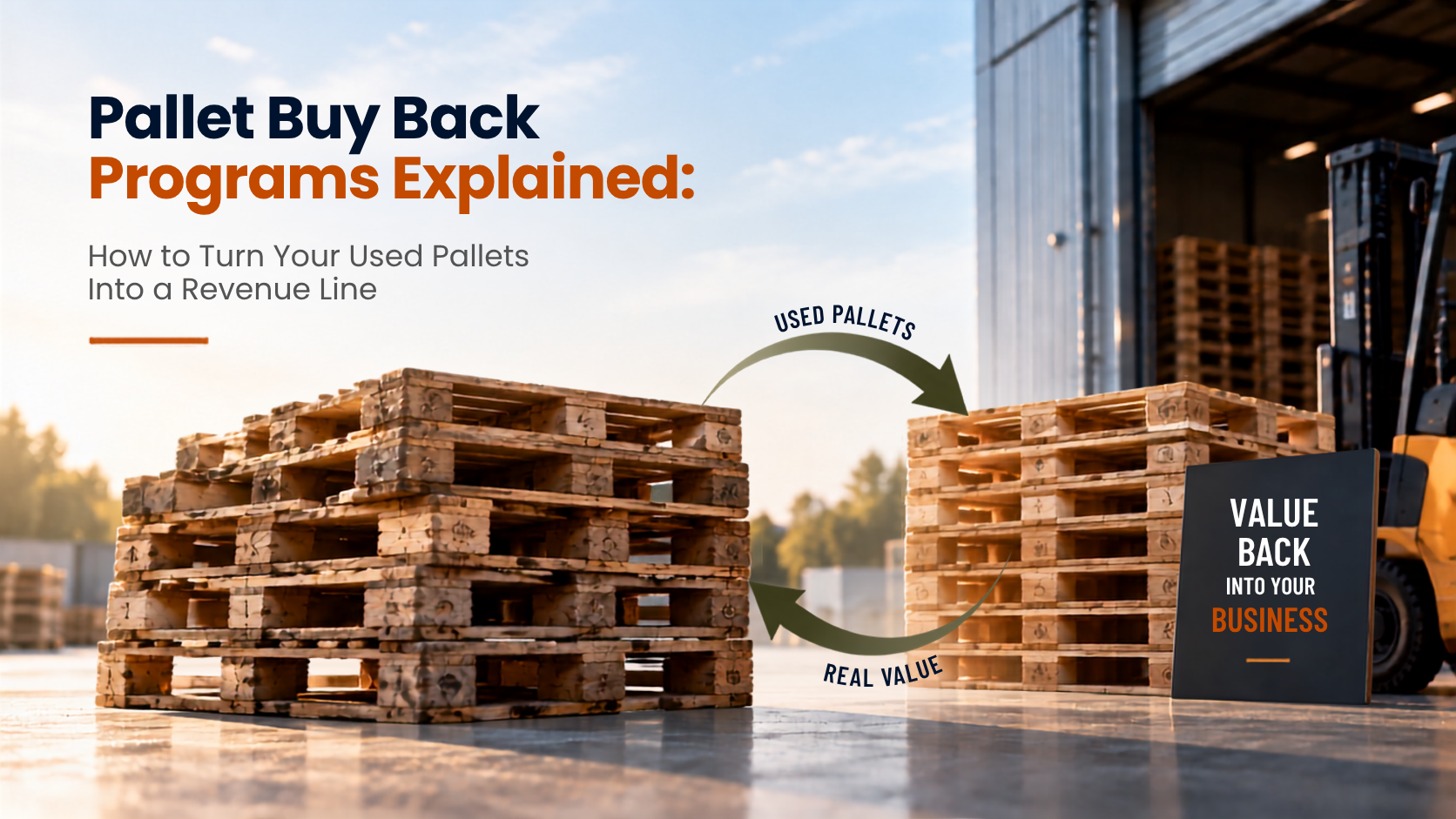
Did you know that the stack of empty wooden skids taking up space behind your warehouse could generate consistent income rather than waste disposal bills? Many manufacturing and distribution facilities pay municipal waste haulers hundreds of dollars every month to empty roll-off dumpsters filled with discarded wood. Meanwhile, commercial pallet recyclers actively look for those exact platforms and will pay cash to collect them. That wooden stack sitting near your loading dock represents either a recurring expense or a profitable income source based entirely on one phone call.
Discarding repairable wooden platforms into waste bins drains company resources and clutters valuable dock yard space. Instead of treating used platforms as rubbish, forward-thinking operations treat them as marketable assets. Every distribution center receives vendor freight daily, which naturally creates a continuous supply of empty wooden bases. When you partner with reputable pallet recyclers, you establish an organized recycling pipeline that pays your business for every qualified unit. Exploring sustainable warehouse operations on epa.gov demonstrates how recycling commercial timber eliminates disposal fees while supporting national supply chain circularity.
Understanding How Pallet Buy Back Programs Operate
In basic operational terms, pallet buy back programs connect commercial shippers that generate empty platforms with pallet re-builders who need raw materials. Understanding this supply chain relationship helps procurement teams negotiate fair compensation for their retired wood inventory.
Rather than allowing valuable timber to end up in local landfills, these commercial agreements create a continuous loop where spent wood returns directly into active industrial shipping networks.
Why Recyclers Pay for Used Pallet Cores
Commercial pallet recyclers rely on steady inflows of used wooden platforms, known across the industry as cores, to sustain their daily operations. Cores represent the primary raw material input required to manufacture reconditioned pallets for outbound shippers. Purchasing freshly sawn virgin lumber costs substantially more than acquiring and repairing used wooden bases.
For this reason, pallet remanufacturers willingly purchase repairable cores from warehouses, distribution centers, and retailers. This continuous commercial demand ensures that your discarded warehouse platforms retain tangible market value.
What Makes a Pallet Valuable to a Recycler
Not every wooden platform sitting behind your loading dock commands the same market price. Recyclers evaluate collected inventory based on dimension standardization, wood condition, and general repairability. Understanding how commercial recyclers grade cores allows warehouse operations teams to separate premium units from low-value scrap wood before scheduled carrier pickups arrive at your facility dock doors for loading onto outbound trailers:
- Standard 48×40 GMA Pallets: The standard Grocery Manufacturers Association four-way entry base commands the highest commercial value because consumer supply chains use this dimension universally.
- Repairable Structural Cores: Units with broken deckboards or minor stringer cracks still fetch solid payouts since automated repair lines can patch them quickly.
- Odd Sizes and Scrap Units: Custom dimensions or shattered skids hold limited resale value, though recyclers frequently take them away to grind into wood mulch, offsetting hauling expenses.
Industry data published by Woodpack Global demonstrates that standard 48×40 dimensions constitute over ninety percent of all commercial pallet recycling volume nationwide. Warehouses that regularly generate these standard footprints capture the greatest financial return from their core recycling agreements. Maintaining clean sorting practices prevents unusable debris from mixing with high-value reusable platforms, protecting your bottom line and speeding up dock pickups.
Illustrative Pricing Ranges and Market Variations
Core pricing is never a single fixed dollar figure across the entire country. Instead, compensation rates fluctuate based on platform grade, regional timber supply, and seasonal buyer demand.
For example, clean #1 Grade A cores might earn anywhere from $2.50 to $5.00 per unit in competitive regional markets. Meanwhile, rougher #2 Grade B cores typically fetch between $1.00 and $2.50. High-volume distribution centers that generate thousands of undamaged GMA cores monthly command premium rates through organized recovery agreements.
Logistics and Practical Collection Workflows
Running a successful core recovery initiative requires setting up organized collection routines that match your facility layout and dock volume. Pallet recyclers provide tailored transport options designed to keep your yard clear without disrupting daily shipping operations.
Establishing predictable collection schedules prevents wood accumulation hazards while ensuring your accounting department receives timely payment credits for all released inventory. Clear logistics coordination keeps warehouse docks uncluttered and operations running safely.
Drop Trailers versus Scheduled Live Dock Pickups
Facilities that produce heavy pallet volumes generally prefer dedicated drop trailer arrangements. Under this setup, your pallet partner spots a 53-foot dry van trailer in one of your open dock bays. Your warehouse staff loads empty pallets directly into the trailer as deliveries unpack. Once the trailer reaches capacity with four hundred to five hundred units, the hauler swaps it for an empty van. Smaller warehouses with limited dock doors instead schedule live pickups where a flatbed truck arrives weekly to load accumulated stacks directly.
Sorting Expectations and Manifest Reporting
Recyclers do not expect busy warehouse employees to spend hours grading wooden boards by hand before collection. Your team simply stacks empty platforms onto the trailer in neat, uniform columns. Once the truck arrives at the processing depot, automated sorting lines count, inspect, and classify every platform by grade.
The recycler then issues an itemized receiving manifest verifying the total count of Grade A, Grade B, and odd scrap units. This transparent manifest serves as the formal accounting record verifying your compensation under active core recovery agreements.
Choosing Between Cash Payouts and Invoice Credits
Companies can choose how they receive financial compensation for their collected cores. Many corporate accounting departments prefer direct ACH deposits or monthly checks that credit miscellaneous operating income directly.
Alternatively, companies that purchase substantial quantities of reconditioned pallets choose invoice credits instead. Under an invoice credit arrangement, core earnings automatically subtract from your incoming pallet bill. This billing structure lowers your monthly packaging cash outlays while simplifying vendor bookkeeping across regional operations.
Step-by-Step Guide to Establishing a Core Recovery Setup
Setting up an internal pallet recovery workflow requires minimal initial effort from your warehouse operations team. Following a few practical operational rules ensures your facility captures maximum value from every empty shipping base. With clear staging areas and dedicated partner alignment, your team can turn discarded wood into an ongoing revenue generator within a few business days. Establishing simple operational habits prevents wood scrap accumulation while streamlining daily loading dock activities.
Audit Monthly Pallet Generation and Stop Paying Disposal Fees
Begin by tracking your inbound freight volume for thirty days to calculate how many empty wooden platforms your facility unloads. Many warehouse supervisors discover that their docks generate hundreds or even thousands of usable platforms every month.
Once you establish your average monthly volume, immediately instruct your team to stop pitching wooden pallets into general waste dumpsters. Diverting wood from municipal landfill containers immediately cuts your monthly hauling bills while setting the stage for steady secondary revenue.
Designate a Clean Staging Area and Consolidate Buyers
Select a designated, dry area in your warehouse yard to stack empty pallets safely. Grouping platforms into uniform stacks fifteen to twenty units high keeps forklift traffic moving smoothly while protecting dry wood from ground moisture rot.
Next, avoid selling pallets haphazardly to informal pickup truck collectors who offer erratic prices and skip scheduled appointments. Instead, enter a formal written partnership with a reputable national pallet partner. Securing a steady corporate agreement ensures consistent collection schedules, insured transport liability, and reliable monthly financial payouts.
Partnering with Pallet Central Enterprises for Pallet Recovery
To establish an efficient core recovery arrangement across your distribution network, we recommend partnering with Pallet Central Enterprises. As a national pallet broker with an extensive network of recycling depots and freight carriers nationwide, they manage both new supply and core recovery under one coordinated relationship.
Their logistics experts help your team analyze monthly pallet output, position drop trailers at your dock doors, and negotiate competitive return values for all your wooden cores. Integrating supply and recovery with Pallet Central Enterprises turns scrap wood into substantial cost savings on both sides of your packaging ledger.
Transform Empty Wooden Pallets into Real Financial Value
Allowing empty wooden platforms to sit idle behind your warehouse wastes valuable storage space and ignores easy revenue. By establishing structured pallet buy back programs, corporate procurement managers turn recurring trash bills into profitable income streams.
Whether your facility produces five hundred or five thousand empty platforms every month, commercial recyclers stand ready to collect and pay for your inventory. Contact Pallet Central Enterprises today to request a quote, evaluate your facility core volume, and begin turning your used wooden pallets into a dependable revenue line.
Frequently Asked Questions (FAQs)
What are pallet buy back programs?
Pallet buy back programs are commercial recycling services where pallet recyclers purchase used wooden shipping platforms from businesses to repair and resell them.
How much money can businesses make selling used pallets?
Payouts vary by condition and region, but standard 48×40 GMA cores typically earn between $1.00 and $5.00 per unit depending on grade and local demand.
What types of pallets earn the most money in buy back programs?
Standard 48×40 four-way GMA wooden pallets earn the highest return because consumer goods and manufacturing supply chains use this specific size universally.
Do recyclers take damaged or odd-sized wooden pallets?
Yes, recyclers accept repairable damaged units for reconditioning, while severely broken or custom-sized wood is ground into mulch, frequently offsetting pickup fees.
How does Pallet Central Enterprises handle pallet buy back programs?
Pallet Central Enterprises coordinates nationwide core recovery programs, providing drop trailers, transparent grading manifests, and direct payouts or supply credits for your used pallets.