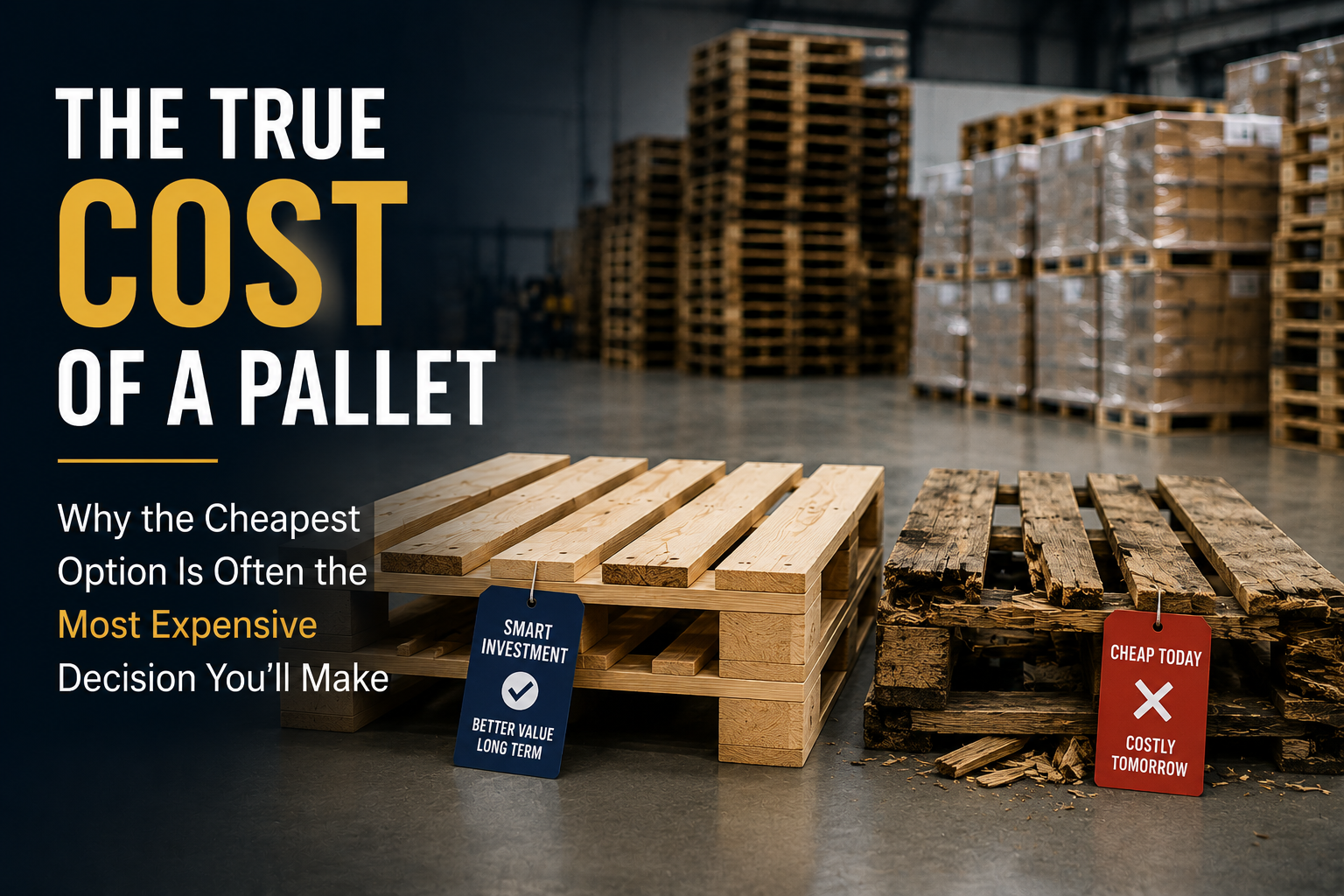
Have you ever looked at your pallet budget and thought it was the easiest place to cut costs? It’s a common reaction, especially when material prices and operating expenses keep rising. A lower-priced pallet may seem like a smart purchasing decision. However, that initial saving often disappears once hidden costs begin affecting your operations.
Understanding the true cost of a pallet means looking beyond the purchase price. The pallet you choose influences product protection, warehouse efficiency, workplace safety, and supply chain reliability. A pallet is not simply a shipping platform. It is an operational asset that supports every stage of your logistics process.
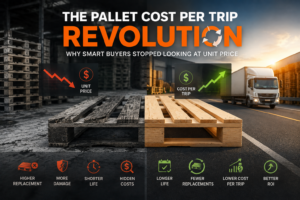
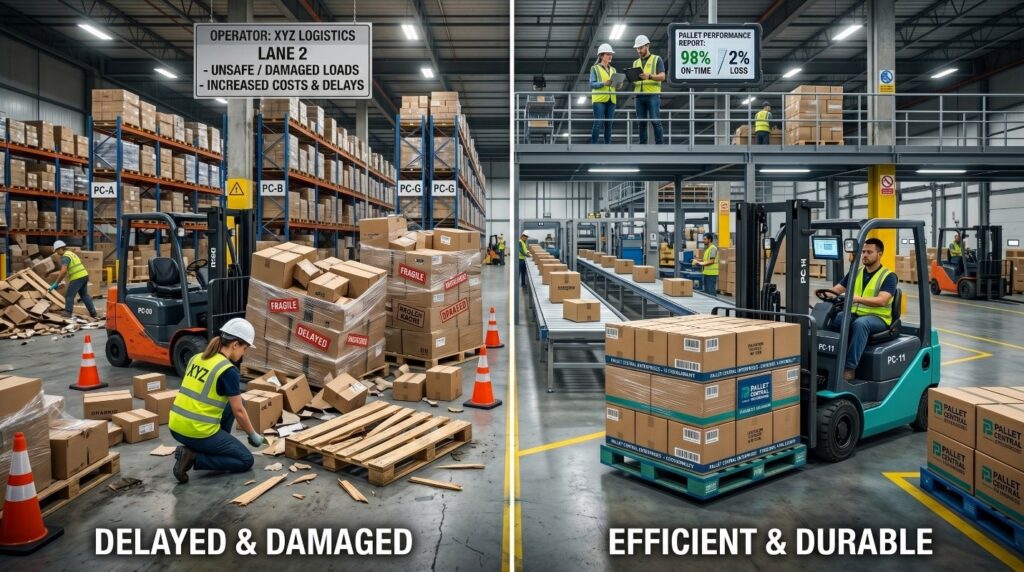
In 2026, this mindset matters more than ever. Lumber tariffs, tighter supply, and transportation costs have encouraged many businesses to buy the cheapest pallets available. Unfortunately, the cost of cheap pallets often shows up later through damaged products, rejected shipments, equipment downtime, and higher replacement costs. Instead of focusing only on price per unit, businesses should evaluate the total cost of pallet ownership to make smarter long-term procurement decisions.
What Is the True Cost of a Pallet?
The purchase price only tells part of the story. The true cost of a pallet includes every expense that occurs throughout its lifecycle, from the moment it enters your facility until it is repaired, recycled, or replaced.
A quality pallet supports efficient material handling, protects valuable products, and performs consistently during storage and transportation. A low-quality pallet may cost less upfront, yet it can increase logistics expenses in ways that are not immediately visible. Therefore, successful procurement teams focus on long-term value instead of short-term savings.
This approach is commonly known as the total cost of pallet ownership. It considers durability, compliance, maintenance, freight performance, and operational efficiency rather than just the purchase price.
The Hidden Costs of Choosing Cheap Pallets
Saving a few dollars on each pallet may seem beneficial. However, those savings can quickly disappear when low-quality pallets cause unexpected problems throughout the supply chain.
Product Damage Can Cost Far More Than the Pallet
One of the biggest hidden expenses comes from damaged products. Weak or poorly constructed pallets are more likely to fail under heavy loads, increasing the risk of freight damage during storage and transportation.
Even a single pallet failure can result in damaged inventory, delayed deliveries, customer complaints, and replacement costs. Consequently, the small savings gained from purchasing inexpensive pallets can turn into thousands of dollars in avoidable losses.
Businesses focused on preventing shipping damage often discover that investing in high-quality pallets protects both products and profit margins.
Equipment Downtime Reduces Warehouse Efficiency
Modern warehouses rely heavily on automation. Conveyors, automated storage systems, forklifts, and robotic equipment all perform best when pallets meet consistent quality standards.
Damaged or poorly built pallets can jam conveyor systems, disrupt automated workflows, and slow material-handling operations. As a result, businesses lose valuable productivity while increasing maintenance expenses.
Reliable pallets improve warehouse efficiency by reducing interruptions and supporting smoother operations. For facilities using automated warehouse systems, pallet consistency has become more important than ever.
Compliance Failures Create Expensive Problems
Pallet compliance is another factor that many buyers overlook. Different industries, retailers, and international shipping regulations all require specific pallet standards.
A pallet that fails to meet these requirements can create costly delays long after it leaves the warehouse.
Retailer and Export Requirements Matter
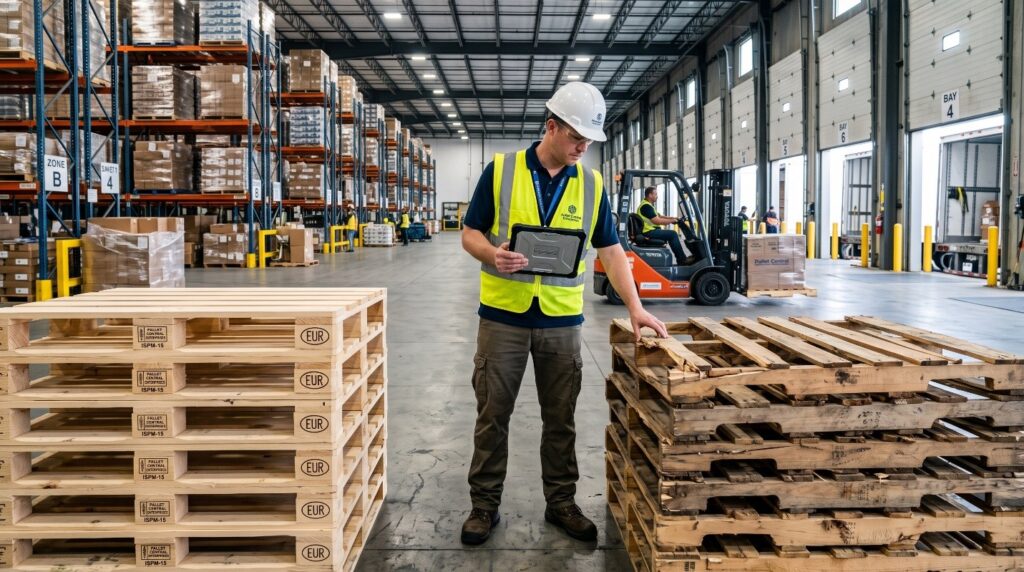
Large retailers often enforce strict pallet specifications for dimensions, construction, and durability. Likewise, international shipments require ISPM-15 compliant pallets to prevent the spread of pests across borders.
Using pallets that fail these standards may result in rejected shipments, customs delays, additional freight charges, or expensive product returns.
Common compliance risks include:
- Retail distribution center shipment rejections
- Customs delays caused by non-compliant pallets
- Additional transportation and handling costs
- Disruptions to customer delivery schedules
Meeting pallet specifications from the beginning helps businesses avoid these unnecessary expenses while supporting stronger supply chain performance.
Worker Safety Is Part of the Total Cost of Ownership
Safety should never become a secondary consideration when purchasing pallets. Broken boards, loose fasteners, and structural weaknesses increase the likelihood of workplace accidents during loading, unloading, and material handling.
A damaged pallet can collapse unexpectedly, placing employees and products at risk. Beyond the human impact, workplace incidents often lead to higher insurance costs, operational delays, and lost productivity.
Therefore, the true cost of a pallet also includes protecting the people who handle it every day. Businesses that invest in durable, well-built pallets reduce safety risks while improving operational reliability.
Why 2026 Is the Wrong Time to Buy on Price Alone
Market conditions have changed significantly over the past few years. Lumber tariffs, higher freight costs, and tighter raw material supplies have increased pallet prices across the industry. As a result, many procurement teams feel pressure to reduce spending wherever possible.
However, chasing the lowest quote often creates larger problems later. Cheap pallets may require frequent replacement, increase product damage, or disrupt warehouse operations. Therefore, businesses should view pallets as operational assets instead of disposable expenses. Investing in the right pallet today can reduce overall logistics costs throughout the year.
The Right Pallet Delivers Long-Term Value
The best purchasing strategy focuses on value rather than unit price. Matching the right pallet to the product, shipping method, and warehouse environment improves performance across the supply chain.
High-quality pallets last longer, protect inventory, and reduce unexpected operational issues. They also support smoother material handling and help businesses meet retailer and export requirements. Consequently, organizations achieve lower pallet lifecycle cost while improving overall supply chain efficiency.
What to Look for in a Reliable Pallet Supplier
Choosing the right supplier is just as important as selecting the right pallet. A dependable partner helps businesses maintain consistent quality and reliable supply throughout changing market conditions.
A reliable pallet supplier should provide:
- Consistent pallet quality and specifications
- Reliable nationwide supply and delivery
- Custom pallet solutions for specific applications
- Compliance with retailer and ISPM-15 requirements
- Support for long-term pallet procurement strategies
Working with the right supplier helps businesses reduce risk while improving operational efficiency.
Why Businesses Choose Pallet Central Enterprises
Reducing the true cost of a pallet requires more than buying quality products. It requires working with a partner that understands procurement, logistics, and supply chain performance.
As a leading national pallet broker, Pallet Central Enterprises (PCE) helps businesses source the right pallet for every application through its nationwide network of more than 800 partner mills and 500+ carriers. Rather than offering a one-size-fits-all solution, PCE provides customized pallet sourcing, recycling programs, pallet management services, and dependable nationwide supply.
This approach helps customers reduce the total cost of pallet ownership by improving pallet quality, minimizing disruptions, and maintaining a consistent supply across multiple facilities. Businesses looking for a trusted pallet supply partner can learn more about PCE’s solutions at Pallet Central Enterprises (PCE).
For additional pallet standards and industry guidance, visit the Woodpack Global.
Conclusion
The true cost of a pallet extends far beyond its purchase price. While inexpensive pallets may reduce upfront spending, they often increase costs through product damage, equipment downtime, compliance issues, safety risks, and frequent replacement.
Instead of focusing only on price, businesses should evaluate the total cost of pallet ownership and choose solutions that improve reliability, durability, and operational performance. In today’s challenging market, quality pallets protect products, support warehouse efficiency, and strengthen supply chain resilience.
As companies continue refining their pallet procurement strategies in 2026, the smartest investment is often not the cheapest pallet but the right one. Partnering with an experienced national pallet broker like Pallet Central Enterprises helps businesses build a pallet program that reduces costs where they matter most while delivering dependable performance year after year.
FAQs
1. What is the true cost of a pallet?
The true cost of a pallet includes its purchase price, as well as expenses for durability, product protection, compliance, maintenance, and operational performance throughout its lifecycle.
2. Are cheap pallets worth buying?
Cheap pallets may lower upfront costs, but they often lead to higher expenses through freight damage, replacements, downtime, and safety issues.
3. How do damaged pallets affect supply chains?
Damaged pallets can cause product loss, shipment delays, equipment disruptions, and workplace safety incidents, all of which increase operational costs.
4. Why is the total cost of pallet ownership important?
The total cost of pallet ownership helps businesses evaluate the long-term value of pallets rather than focusing only on the initial purchase price.
5. How can businesses reduce pallet costs without sacrificing quality?
Partnering with a reliable pallet supplier or national pallet broker, selecting the right pallet for each application, and implementing effective pallet management programs can reduce overall costs while maintaining performance.