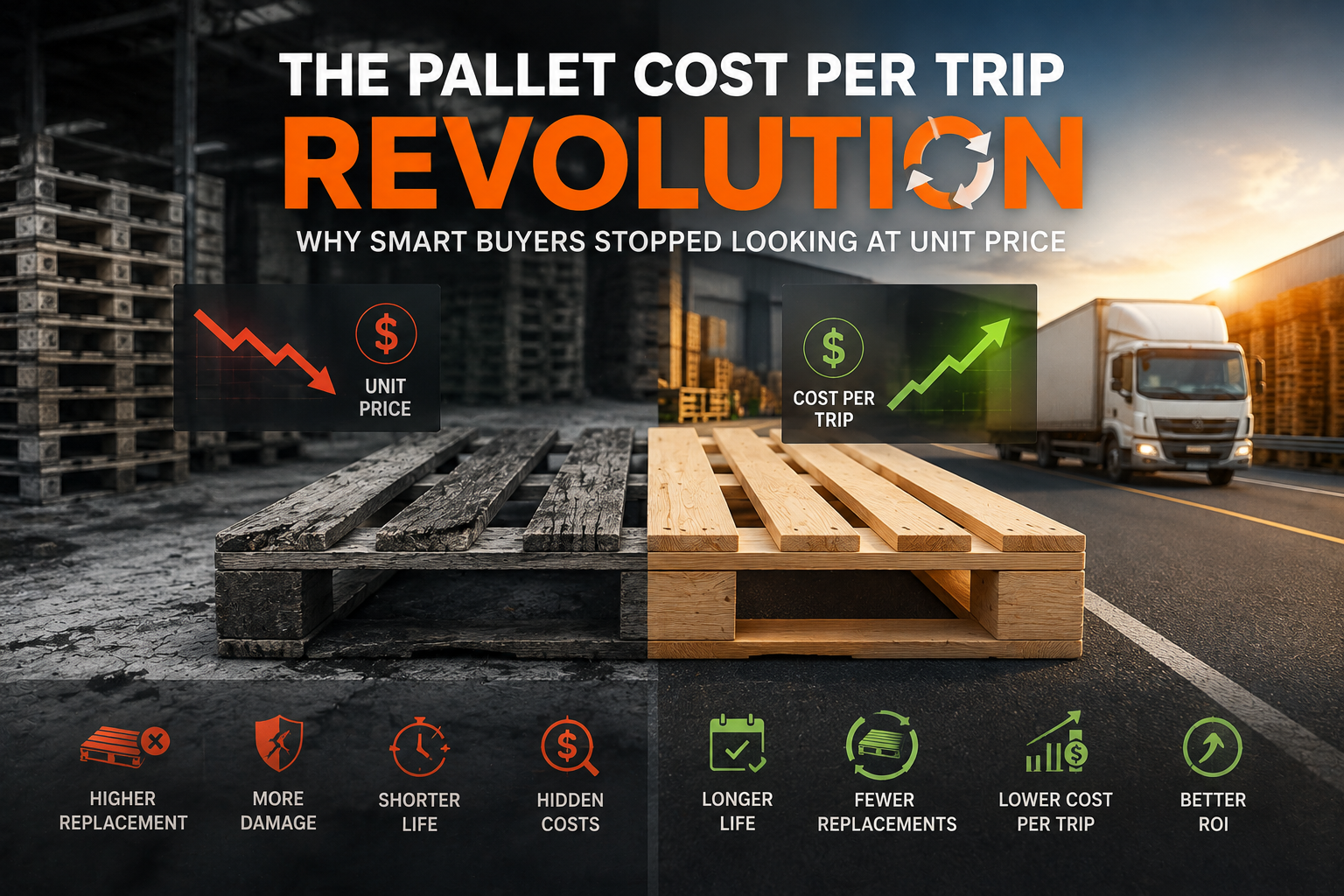
Have you ever sat at your desk comparing two vendor quotes for wooden pallets, picked the lower sticker price, and assumed you saved your company money? It is a trap that almost every corporate purchasing agent falls into early in their career. On paper, buying a cheaper shipping pallet feels like an immediate financial win for your quarterly budget. Yet by the end of the year, that budget option often costs two or three times more than the higher-priced alternative. That initial discount disappears the moment boards split or stringers snap under heavy loads. This guide lays out the math that reveals the truth about pallet purchasing under your overall pallet cost per trip strategy.
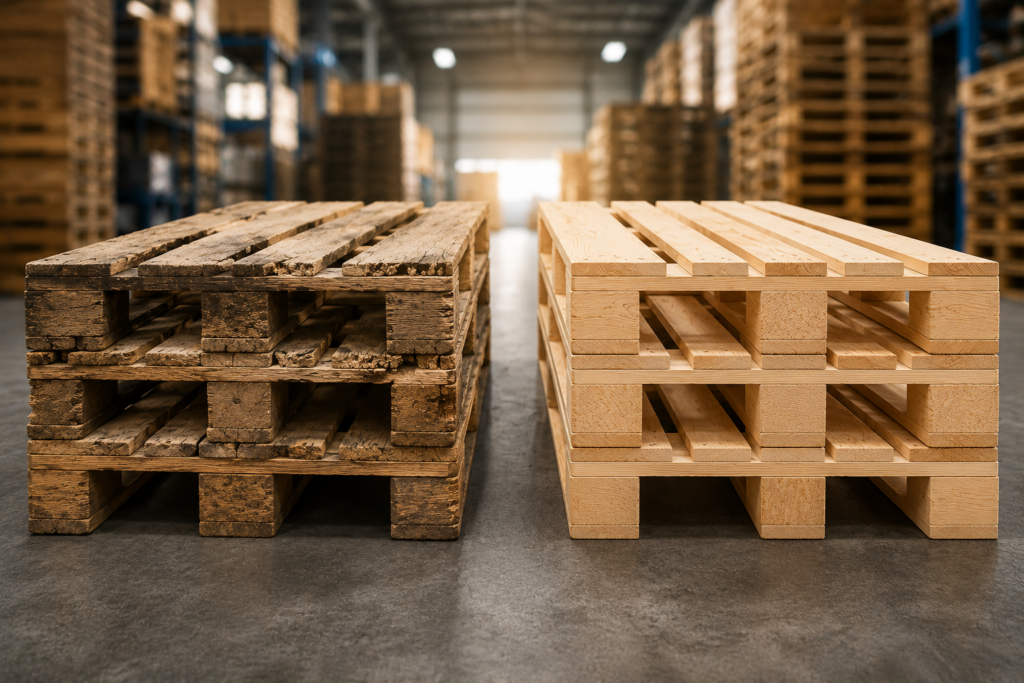
Shifting your buying habits away from sticker prices changes how you evaluate shipping pallet expenses across your distribution network. A pallet is not a disposable paper cup that you throw away after one use. Instead, it is an active piece of material handling equipment designed to perform multiple freight movements. Comparing shipping pallets by unit price alone is like picking a delivery truck based only on the down payment while ignoring fuel economy and repair bills. When you calculate your total expense over time, the real financial picture becomes crystal clear. Exploring modern procurement strategies on Logistics Management shows how top supply chains cut waste by tracking lifetime performance.
The Math Behind Pallet Cost Per Trip
Uncovering your real expense requires a straightforward math formula that any buyer can run in minutes. Instead of looking at initial invoice totals, you measure what every shipment movement costs your business. Calculating lifetime value requires tracking how many trips a pallet survives across your active shipping lanes. Furthermore, adding maintenance costs into your equation gives you an accurate financial metric to present to your finance team. Establishing this standardized metric across your regional warehouses brings full visibility to your material handling budget and eliminates unexpected freight expenses.
The Standard Calculation Formula
The math behind this framework is simple enough to run on a basic calculator during vendor meetings. You take the initial purchase price, add any maintenance expenses incurred during its service life, and divide that total by the number of completed freight runs:
Cost Per Trip = (Purchase Price + Repair Expenses) / Total Completed Trips.
Running this basic equation cuts through vendor sales pitches and reveals your true operational cost. It forces buyers to evaluate pallet durability alongside initial invoices.
When you track pallet lifespan across actual freight lanes, unit prices lose their hold on your procurement decisions. Procurement officers who implement this calculation quickly discover that upfront discounts often hide substantial long-term maintenance costs. Furthermore, analyzing pallet wear across different operational routes enables your team to eliminate recurring handling damages and lower annual replacement purchasing.
A Worked Example with Real Numbers
Let’s look at two quotes sitting on a purchasing manager’s desk to see how the numbers play out in practice. Option A is a lightweight recycled pallet priced at $10. Option B is a heavy-duty new pallet priced at $18. At first glance, Option A looks like an obvious $8 savings per unit. However, examining how long each option lasts across actual shipping runs changes the financial picture entirely. Evaluating true lifetime value prevents your facility from wasting capital on fragile pallets that fail after just a few runs:
- Option A (Economy Pallet): Purchase price of $10. It survives 3 freight runs before severe board damage forces you to scrap it. Maintenance cost is $0. Your calculation is $10 divided by 3 trips, which equals $3.33 per trip.
- Option B (Quality Engineered Pallet): Purchase price of $18. It completes 15 freight runs over its service life, requiring one minor board repair costing $3. Total expense is $21 ($18 purchase + $3 repair). Your calculation is $21 divided by 15 trips, which equals $1.40 per trip.
The math shows that Option B delivers a $1.93 savings on every single freight movement. That represents a 58% savings. For a business running 10,000 pallet trips a year, that adds up to $19,300 in annual savings. Buying the $10 pallet felt smart on day one, but it drained your operating budget every week after that.
Hidden Expenses That Never Show Up on an Invoice
Focusing strictly on unit prices hides catastrophic operational expenses that hit your bottom line when weak pallets break. Unplanned pallet failures create ripple effects across your entire logistics chain. Unexpected equipment breakdowns, safety hazards, and customer chargebacks quickly eliminate whatever initial savings you gained from purchasing budget inventory. Establishing strict quality standards across your warehouse network prevents these hidden operational expenses from eroding your annual operating margins and hurting your overall freight efficiency.
Production Line Disruptions and Dock Failures
Shipping pallets do not break in quiet empty parking lots where repairs are easy and cheap. They fail inside busy automated production lines, on forklift tines, or inside high-bay racking systems where downtime costs money fast. A single broken deckboard can jam an automated conveyor line, halting plant operations for hours while crew members clear crushed boxes. When weak wood splits on a dock, falling freight destroys valuable product and creates immediate workplace safety hazards. Those unexpected downtime bills dwarf whatever small discount you got on the initial pallet invoice.
Retailer Rejections and Freight Replacement Scrambles
Major retail distribution networks enforce strict incoming pallet quality standards for vendor deliveries. When your freight arrives on cracked stringers or sagging deckboards, retail receiving docks reject the entire shipment on the spot. You suddenly face emergency re-docking fees, round-trip freight charges, and penalty fines for missed delivery windows. Worse yet, when pallet supply tightens across regional markets, scrounging for emergency replacement units costs double the normal market rate. Factoring these risk variables into your buying framework protects your margins against hidden supply chain disruptions.
How the Framework Changes Real Procurement Decisions
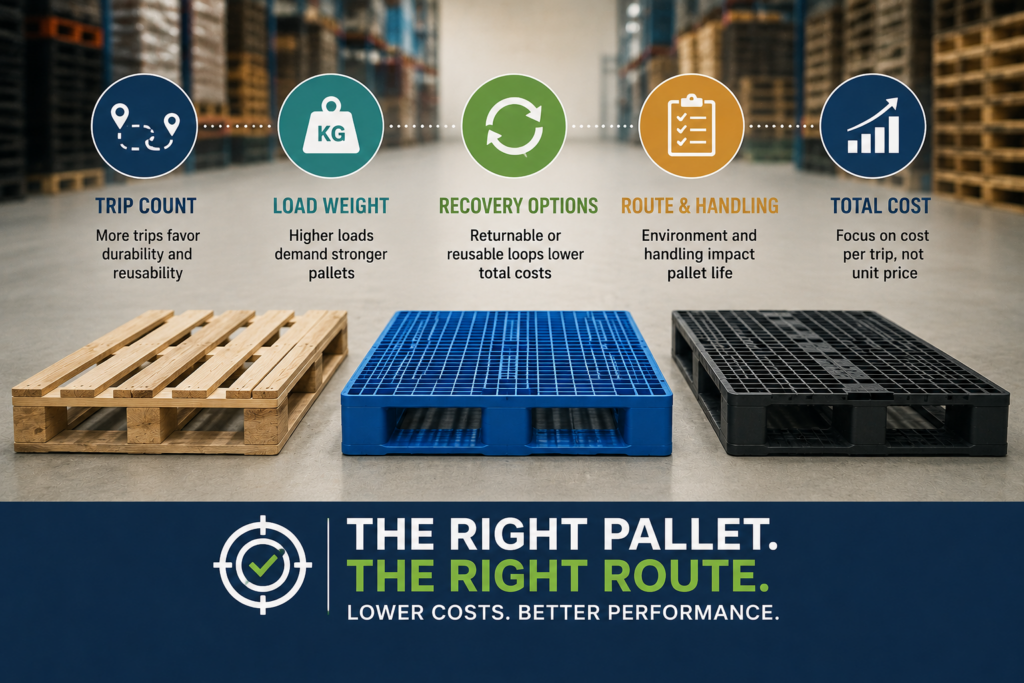
Applying this analytical mindset transforms standard buying choices across different pallet materials and freight loops. The right choice shifts based on trip counts, load weights, and pallet recovery options. Understanding these operational variables allows procurement teams to tailor their purchasing strategy for each distribution route. Evaluating total operating performance ensures that every facility receives shipping pallets engineered to withstand specific handling stresses without incurring unnecessary upfront costs or risking freight damage.
New versus Recycled and Wood versus Plastic Choices
Choosing between new wood, recycled timber, or heavy plastic comes down to matching pallet specs with your specific freight loop. Analyzing trip recovery rates determines whether lightweight or premium builds yield the lowest operating expenses over time. Procurement managers must weigh initial unit costs against expected lifespan to maximize return on packaging investments across diverse regional shipping lanes. Establishing customized pallet specifications protects product shipments while maximizing long-term budget efficiency across every distribution route:
- New versus Recycled Wood: Recycled pallets work great for single-use outbound shipping lanes where you never get the pallet back. However, new heavy-duty wood wins on multi-trip closed loops where pallets return to your plant.
- Wood versus Plastic Pallets: Plastic pallets carry higher upfront purchase prices, often costing $45 to $70 each. Yet in clean closed-loop food or pharmaceutical networks where plastic survives 50 or more trips, the math drops under $1.00 per run.
- Heavy-Duty versus Lightweight Builds: Thicker stringers and denser hardwood cost more upfront but prevent flex damage during transit, expanding total trip counts.
Industry guidelines published by Woodpack Global (formerly NWPCA) show how matching wood density to load weight extends pallet life. There is no single best pallet for every business. The right choice depends on your specific shipping lane, load profile, and recovery capabilities under your overall cost per shipment goals. Matching structural specifications to load stress prevents structural failures during transit and lowers long-term handling expenses across regional routes while safeguarding your supply chain against unexpected breakage.
Matching Pallet Grade to Specific Shipping Lanes
Smart buyers stop ordering one standard pallet grade for every department in their company. Instead, they separate their shipping lanes into distinct operational categories based on recovery rates and load stress. Heavy manufacturing items moving through closed-loop regional hubs get premium multi-trip pallets built to last years. Lightweight regional transfers use economical recycled pallets that match shorter service spans. Matching pallet grades to specific operational lanes eliminates over-specifying on single-use runs while stopping under-specifying on heavy internal loops.
Operational Habits of Top Procurement Leaders
Leading supply chain directors build practical routines to track pallet performance and drive down their expenses over time. They turn raw shipping data into actionable procurement rules. Establishing structured management habits ensures long-term operational efficiency and prevents budget creep across regional facility networks. Procurement officers who track active pallet inventories consistently uncover opportunities to streamline handling processes, optimize maintenance schedules, and reduce annual replacement purchasing costs across all operational centers.
Tracking Actual Lifespans and Repair Programs
Top logistics operations track pallet movements just like they track fleet vehicles or warehouse tools. They log how many trips different pallet grades complete before requiring maintenance or disposal. Establishing a structured repair and reconditioning program extends the active working life of your existing pallet inventory. Replacing two damaged deckboards for a few dollars gives an $18 pallet another five freight runs. That simple maintenance step drops your operational expense per run even lower while keeping good wood out of landfills.
Blending Pallet Types for Maximum Savings
Proactive buyers mix new, reconditioned, and custom pallets within their broader supply chain strategy. They partner with national suppliers who offer flexible inventory options across different regional facilities. Blending pallet types lets you adapt quickly when lumber prices fluctuate or shipping volumes spike unexpectedly. Rather than getting locked into rigid single-spec contracts, top buyers adjust their pallet mix to keep operational costs low across every facility under their control. Flexible supply partnerships protect your operations from market shortages.
Recommending Pallet Central Enterprises for Low Cost Per Trip
To lower your operational pallet expenses across every shipping lane, we strongly recommend partnering with Pallet Central Enterprises. As a trusted national pallet broker, Pallet Central Enterprises supplies new wood, recycled timber, and durable plastic pallets tailored to your exact load requirements. Their team helps you analyze your shipping loops, select the ideal pallet grades, and run accurate cost-per-trip calculations for every facility in your network. Partnering with them gives your business nationwide access to verified pallet inventory and professional reconditioning programs that protect your margins under your pallet cost per trip strategy.
Conclusion: Making the Switch to Value Procurement
Buying pallets based on sticker price is a habit that costs businesses thousands of extra dollars every year. The cheapest pallet on quote day is rarely the pallet that saves you money over twelve months of shipping. By running a simple calculation that factors in trip counts, repair options, and hidden downtime risks, you take control of your logistics budget. Partnering with an experienced national broker like Pallet Central Enterprises ensures your business gets the right pallet specs for every shipping lane under your pallet cost per trip strategy.
Frequently Asked Questions (FAQs)
What is pallet cost per trip?
Pallet cost per trip is a procurement calculation that divides a pallet’s total purchase price and repair expenses by the total number of freight trips it completes.
Are cheap pallets worth it for shipping operations?
Cheap pallets often cost more over time because they break after 2 or 3 trips, whereas quality pallets complete 15 or more trips at a much lower cost per run.
How long does a wooden pallet last in warehouse operations?
A standard wooden pallet lasts anywhere from 1 single trip to over 15 trips, depending on wood grade, load weight, handling care, and timely board repairs.
Is it cheaper to buy new or recycled pallets?
Recycled pallets are cheaper for one-way shipping lanes, while new or heavy-duty wood pallets are cheaper for closed-loop systems where pallets return for repeated use.
How does Pallet Central Enterprises help buyers lower pallet cost per trip?
Pallet Central Enterprises analyzes your shipping lanes, supplies certified new, recycled, and plastic pallets nationwide, and designs custom procurement strategies that lower your pallet cost per trip.