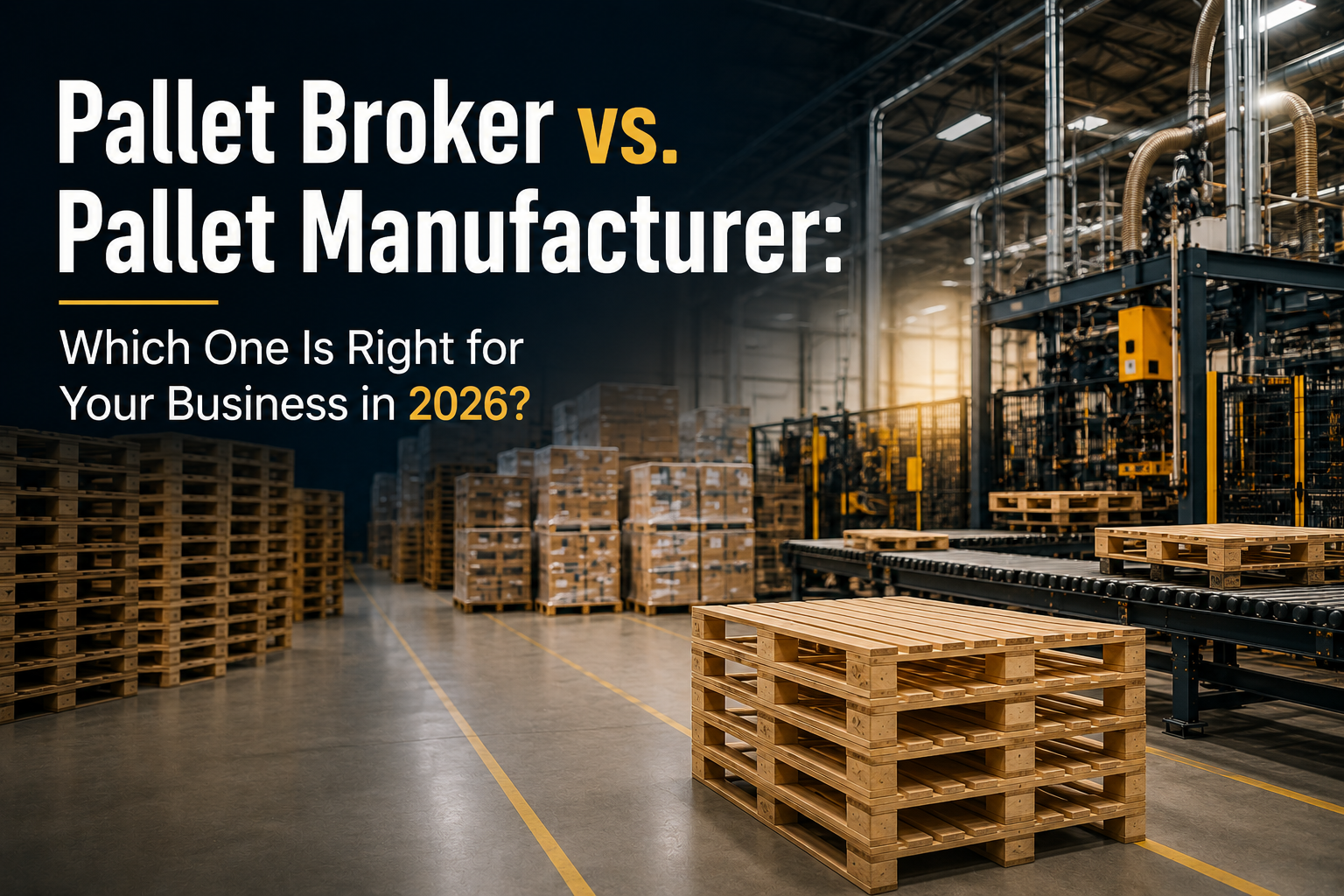
Have you ever wondered why some businesses rarely face pallet shortages while others constantly deal with delayed deliveries, inconsistent pricing, and supply disruptions? The answer often comes down to a critical sourcing decision. Many companies do not realize there are two very different types of pallet providers in the market. Choosing the wrong one can increase costs, reduce flexibility, and create unnecessary supply chain risks.
The Pallet Broker vs. Pallet Manufacturer debate has become increasingly important in 2026. Rising material costs, ongoing logistics challenges, and growing demand for reliable pallet supply have forced procurement teams to rethink their sourcing strategies. While both providers play important roles in the industry, they serve businesses in different ways.
Understanding the differences between these models can help you improve procurement efficiency, strengthen supply security, and build a more resilient supply chain. Whether you operate a single warehouse or manage a nationwide distribution network, the right choice can have a lasting impact on your operations.
Understanding the Difference Between a Pallet Broker and a Pallet Manufacturer
Before comparing the advantages of each option, it is important to understand what separates them. Although both provide pallets, their business models are very different.
A pallet manufacturer produces pallets within its own facilities. These companies purchase lumber, manage production equipment, oversee labor, and control manufacturing processes. Many manufacturers also offer custom pallet manufacturing services for businesses requiring specialized pallet designs.
A pallet broker, on the other hand, acts as a sourcing and supply chain partner. Rather than relying on a single production facility, brokers coordinate supply through networks of manufacturers, recyclers, and logistics providers. These pallet broker services give customers access to multiple sourcing options through a single relationship.
As a result, the core distinction is simple. Manufacturers make pallets. Brokers manage pallet supply across broader networks.
Pallet Broker vs. Pallet Manufacturer: Pricing and Flexibility
Cost remains one of the biggest factors in pallet purchasing decisions. However, pricing involves much more than the price printed on a quote. Businesses should also consider sourcing flexibility and long-term supply stability.
Manufacturer Pricing Advantages
Manufacturers often offer competitive pricing to customers near their production facilities. Since they control production directly, they can streamline certain costs and maintain oversight throughout the manufacturing process.
This model works particularly well for businesses operating from a single location with predictable pallet requirements. Local relationships can also simplify communication and order management. For companies that require highly specialized pallet designs, working directly with a manufacturer may offer additional customization benefits.
However, pricing flexibility can become limited when production capacity is stretched or market conditions change rapidly.
Broker Pricing Advantages
The Pallet Broker vs. Pallet Manufacturer discussion becomes more interesting when businesses require greater sourcing flexibility. Brokers are not limited to a single production source. Instead, they can evaluate multiple suppliers and identify the most competitive options available within their network.
This broader approach allows brokers to respond quickly to changing market conditions. If one supplier experiences shortages or price increases, alternative sources may still be available. Therefore, businesses gain access to stronger pallet sourcing solutions that support cost control and procurement stability.
For organizations managing large purchasing volumes, this flexibility often creates significant long-term value.
National Coverage and Multi-Location Support
As companies grow, pallet procurement becomes more complex. What works for one warehouse may not work for a national distribution network.
A regional manufacturer can often provide excellent service within its operating area. However, businesses with facilities across multiple states frequently face challenges maintaining a consistent supply from multiple independent suppliers.
Why Multi-Location Operations Need Greater Flexibility
Managing multiple pallet vendors often creates administrative burdens. Different pricing structures, quality standards, billing systems, and delivery schedules can quickly become difficult to coordinate.
Many procurement teams discover that fragmented supplier management increases complexity as operations expand. Consequently, businesses begin searching for more centralized pallet procurement services that support nationwide operations.
How Brokers Simplify Nationwide Supply
This is where brokers frequently provide a major advantage. Through extensive supplier networks, brokers can coordinate sourcing across multiple facilities while maintaining consistent standards.
Instead of negotiating separate contracts for every location, businesses gain a single point of contact for pallet sourcing, logistics coordination, and inventory planning. As a result, organizations improve efficiency while strengthening overall pallet supply chain management.
For companies seeking reliable pallet sourcing for businesses across several markets, this centralized approach often becomes a key competitive advantage.
Supply Resilience During Market Disruptions
Supply disruptions have become a major concern for procurement professionals in recent years. Lumber shortages, transportation bottlenecks, labor challenges, and severe weather events can all affect pallet availability. This is where the Pallet Broker vs. Pallet Manufacturer comparison becomes especially important.
Why Manufacturers Face Supply Limitations
Manufacturers depend on their own production facilities, workforce, equipment, and raw material supply. While many manufacturers operate efficiently, their capacity remains tied to a specific location or group of facilities.
If production slows because of labor shortages, machinery breakdowns, or material constraints, customers may experience longer lead times and reduced availability. Businesses that rely heavily on a single supplier can find themselves scrambling for alternatives when disruptions occur.
For companies with strict production schedules or high shipping volumes, these risks can quickly affect broader operations.
Why Brokers Offer Greater Supply Security
Brokers offer greater flexibility because they are not tied to a single production facility. If one supplier experiences delays or shortages, brokers can often source pallets from another partner within their network. This helps businesses maintain a steady supply even during market disruptions.
Key benefits of working with a pallet broker include:
- Access to multiple manufacturing partners
- Reduced dependence on one supplier
- Faster response to supply disruptions
- Greater sourcing flexibility
- Improved supply continuity across locations
As supply chains become more unpredictable, many businesses view these advantages as essential for maintaining reliable operations.
The Value of a Single Point of Contact
As businesses grow, procurement processes often become more complicated. Managing multiple suppliers may seem manageable at first. However, complexity increases rapidly as operations expand.
Working with separate vendors often means dealing with different contracts, billing systems, delivery schedules, quality standards, and service contracts. Over time, this administrative burden can consume valuable resources.
Simplifying Procurement Management
A broker helps eliminate much of this complexity by acting as a centralized partner. Instead of coordinating with numerous manufacturers and recyclers, businesses work through one organization that manages sourcing and supplier relationships on their behalf.
This streamlined approach improves communication and reduces administrative workload. Procurement teams can focus more on strategic planning and less on day-to-day supplier management.
Consequently, many companies seeking stronger pallet logistics solutions and better operational efficiency choose broker-based sourcing models.
When a Pallet Manufacturer May Be the Right Choice
Manufacturers remain a strong option for certain businesses, particularly those with localized operations and consistent pallet demand. Direct relationships with nearby manufacturers can provide reliable service and support for specialized requirements.
A pallet manufacturer may be the right choice when:
- Operations are concentrated in one region
- Demand remains predictable
- Custom pallet designs are required
- Local supplier relationships are preferred
- Transportation distances are short
For businesses with straightforward regional needs, a manufacturer can be an effective sourcing solution. However, companies planning future expansion should also consider how their pallet requirements may evolve over time.
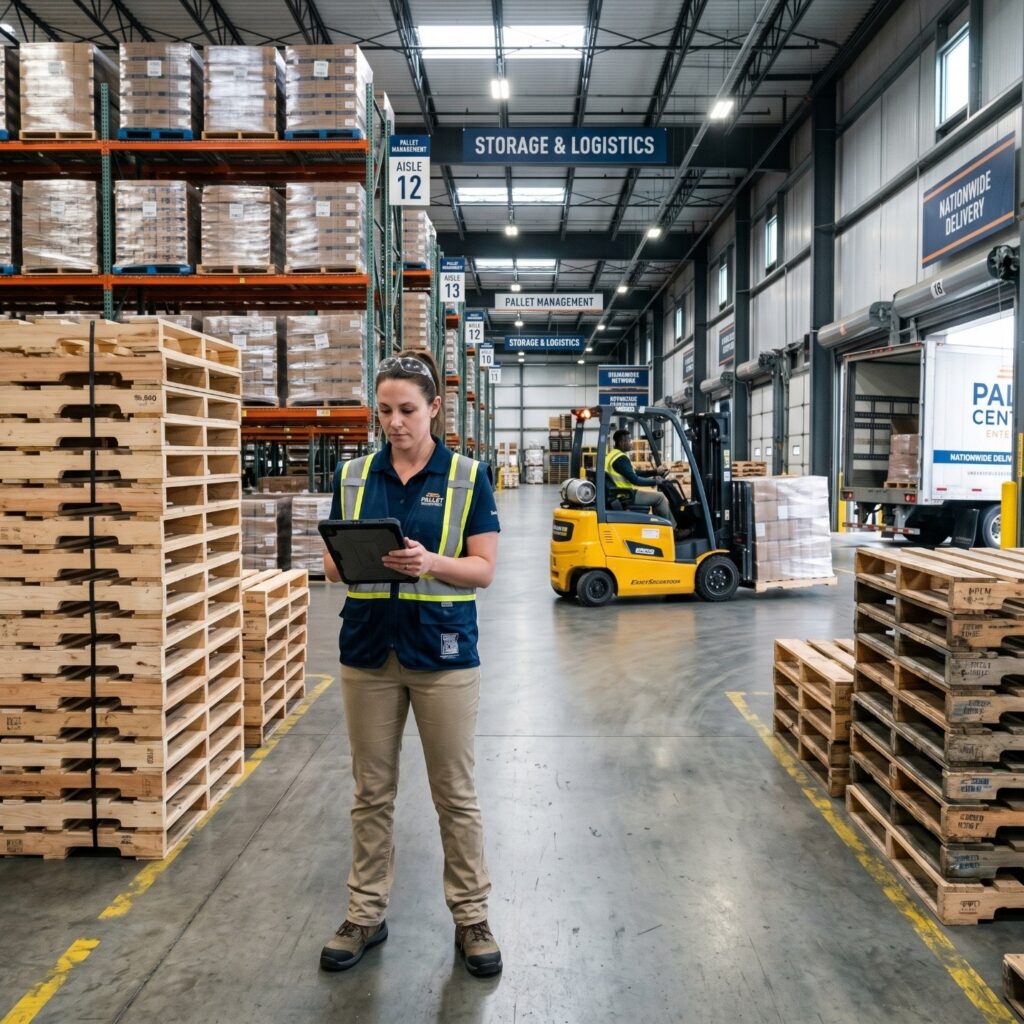
Why Many Businesses Choose Pallet Central Enterprises
Companies with regional needs may succeed with a local manufacturer. However, organizations managing multiple locations often require broader capabilities and stronger sourcing flexibility.
As one of the nation’s leading pallet brokers, Pallet Central Enterprises (PCE) helps businesses simplify pallet procurement through a nationwide network of more than 800 partner mills and over 500 carriers. Rather than depending on a single production source, PCE provides access to extensive sourcing options, recycling programs, logistics support, and pallet management solutions.
Their nationwide reach helps customers maintain supply continuity while supporting consistent quality standards across multiple facilities. This approach allows businesses to improve efficiency, reduce sourcing risk, and strengthen long-term procurement performance.
Companies looking for scalable pallet sourcing solutions can learn more at Pallet Central Enterprises (PCE).
For additional pallet industry resources and best practices, visit the National Wooden Pallet & Container Association (NWPCA).
Conclusion
The Pallet Broker vs. Pallet Manufacturer decision is not simply about where pallets come from. It is about how effectively your business can secure supply, manage costs, and support future growth.
A manufacturer may be the right fit for companies operating from a single location with stable demand and localized requirements. However, businesses seeking competitive pricing, nationwide coverage, stronger supply resilience, and simplified procurement often gain greater value from a broker model.
As supply chains become more complex, the Pallet Broker vs. Pallet Manufacturer comparison increasingly favors flexibility, scalability, and sourcing strength. For organizations that prioritize reliability and long-term operational efficiency, working with a national broker such as Pallet Central Enterprises can provide a significant strategic advantage.
FAQs
1. What is the main difference between a pallet broker and a pallet manufacturer?
A pallet manufacturer produces pallets in its own facilities. In contrast, a pallet broker sources pallets through a network of manufacturers, recyclers, and logistics partners.
2. Which option is better for businesses with multiple locations?
Businesses with multiple facilities often benefit from broker services because brokers can coordinate supply across different regions through a single point of contact.
3. Are pallet brokers more expensive than manufacturers?
Not necessarily. Brokers often leverage multiple suppliers to create competitive pricing and provide sourcing flexibility during market fluctuations.
4. When should a company choose a pallet manufacturer?
A manufacturer may be ideal for businesses operating from one location with consistent demand and specialized pallet design requirements.
5. Why do national companies often prefer pallet brokers?
National companies typically need broader coverage, supply resilience, centralized procurement, and multi-location support, all of which brokers are well positioned to provide.