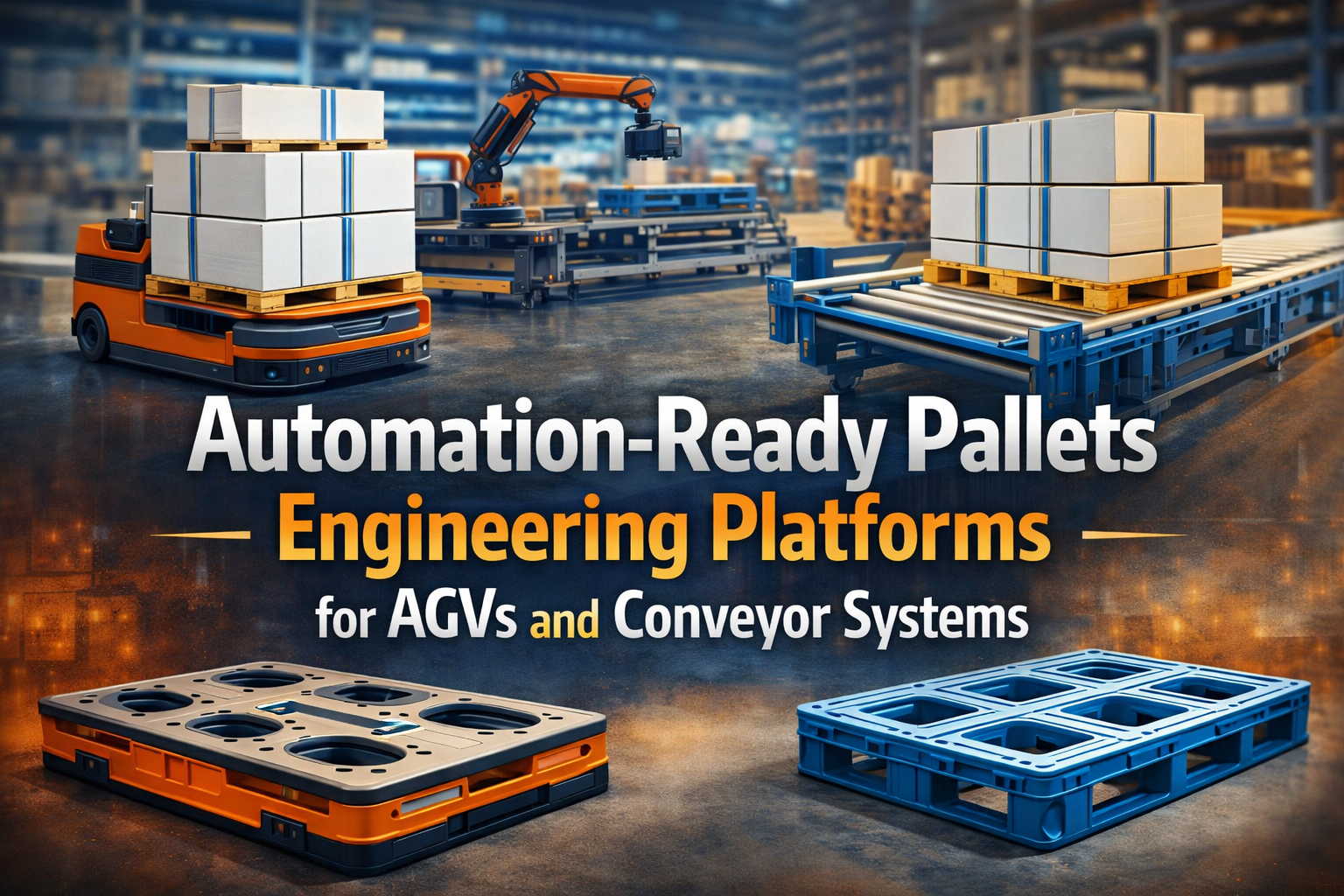
Have you ever wondered why some warehouses run smoothly with automation while others struggle with constant system disruptions? The answer often lies in something most people overlook, pallet design. Specifically, the shift toward automation-ready pallets is transforming how modern supply chains operate.
As warehouses adopt AGVs, AMRs, conveyor systems, and robotic handling, traditional pallets no longer meet performance expectations. Slight inconsistencies in size or structure can bring an entire automated system to a halt. Therefore, pallet engineering now plays a critical role in ensuring efficiency, safety, and reliability.
In this guide, we’ll break down what automation-ready pallets are, why they matter, and how they support high-performance automated environments.
What Are Automation-Ready Pallets?
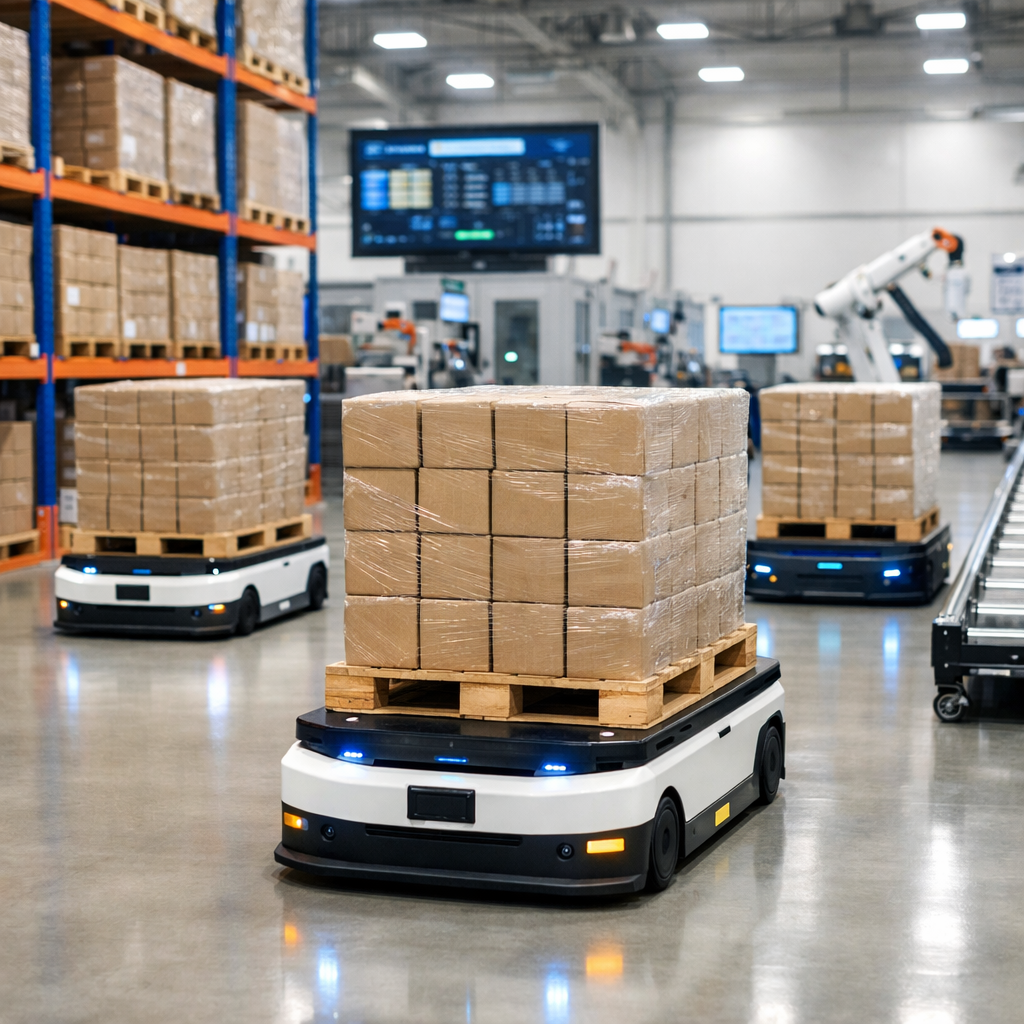
At a basic level, automation-ready pallets are engineered pallets designed for compatibility with automated material handling systems. Unlike standard pallets, they meet strict requirements for consistency, strength, and dimensional accuracy.
Traditional pallets often vary slightly in size, board spacing, or structural integrity. While this may not affect manual handling, it creates major problems in automated systems. For instance, conveyors rely on precise alignment, and AGVs depend on consistent pallet geometry for lifting and transport.
Key Characteristics of Automation-Ready Design
To function properly in automated environments, pallets must meet several critical criteria:
- Consistent dimensions across every unit
- High structural integrity to handle repeated movement
- Smooth bottom surfaces for conveyor compatibility
These features ensure that pallets move seamlessly through automated systems without causing delays or breakdowns.
Why Traditional Pallets Fail in Automated Warehouses
Many facilities attempt to use standard pallets in automated environments. However, this approach often leads to inefficiencies and costly disruptions.
Inconsistent Dimensions and Tolerances
Even small variations in pallet size can create alignment issues. Conveyor systems require tight tolerances. If a pallet is slightly warped or uneven, it may jam or misalign. As a result, operations slow down. In high-speed distribution centers, even a minor delay can ripple across the entire system.
Structural Weakness Under Repeated Stress
Automation increases handling frequency. AGVs and robotic systems move pallets more often than manual operations. Therefore, pallets experience higher wear and tear. Traditional pallets may crack, loosen, or fail under repeated cycles. This leads to downtime and safety risks.
Impact on Warehouse Efficiency
When pallets fail, automation systems stop. Workers must intervene manually. This defeats the purpose of automation. Therefore, switching to automation-ready pallets becomes essential for maintaining a consistent workflow and maximizing system efficiency.
Engineering Requirements for Automation-Ready Pallets
Designing automation-ready pallets requires a different approach compared to standard pallet manufacturing. Engineers must focus on precision, durability, and compatibility.
Dimensional Consistency and Precision
Automation systems rely on uniformity. Every pallet must match exact specifications. Even slight deviations can disrupt robotic handling. Therefore, manufacturers use controlled production processes to ensure consistent dimensions across all pallets.
Structural Integrity and Load Stability
Automation increases dynamic load stress. Pallets must handle repeated lifting, transport, and stacking without failure. Engineered pallets often include reinforced structures and optimized load distribution. This ensures stability during movement.
Conveyor System Compatibility
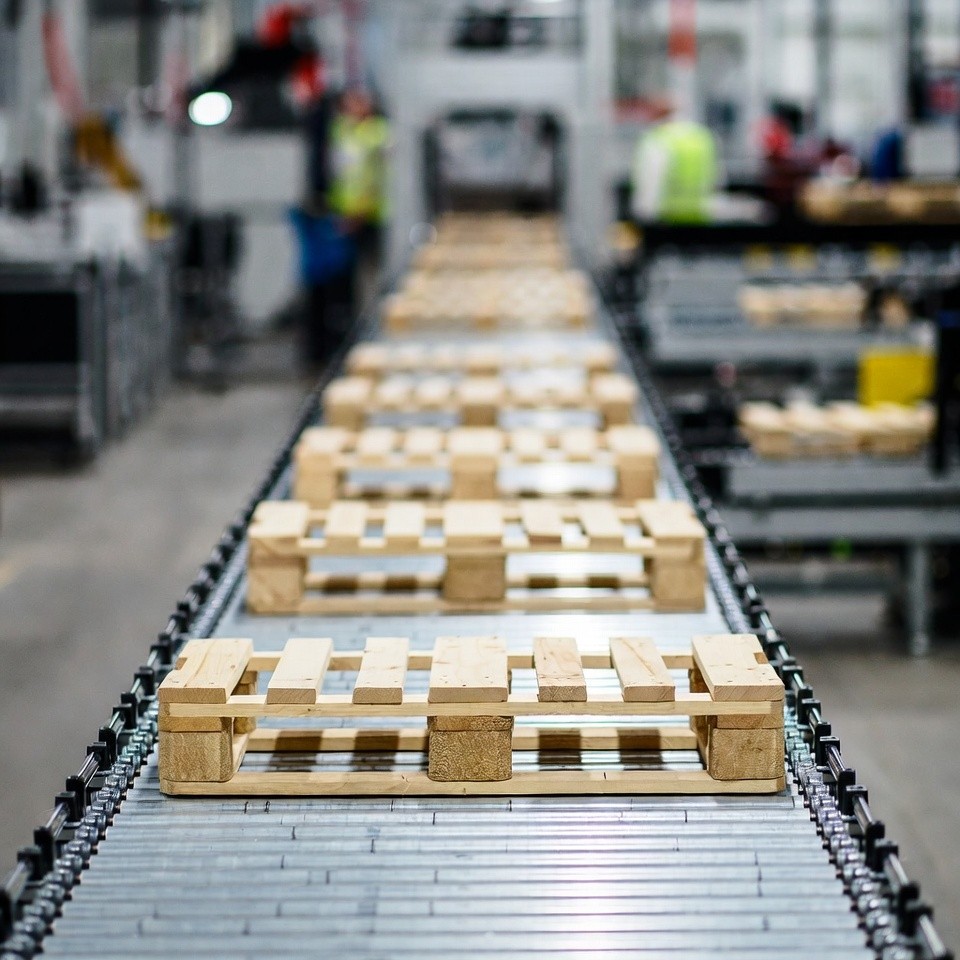
Conveyor systems require smooth bottom deck surfaces. Broken boards or uneven edges can interrupt movement. Additionally, pallets must support consistent weight distribution to prevent tipping or shifting during transit.
Pallet Design for AGVs and Robotic Handling
AGVsand AMRs require specific pallet features to function effectively. Automation-ready pallets must align with these requirements.
Fork Entry and Positioning Accuracy
AGVs rely on precise positioning to lift pallets. Inconsistent entry points can cause misalignment or failed lifts. Therefore, pallet design must ensure uniform fork openings and alignment across all units.
Weight Distribution for Stability
Uneven loads create instability during robotic transport. Pallets must support balanced weight distribution to maintain safe movement. This reduces the risk of dropped loads and improves system reliability.
How Automation-Ready Pallets Improve Supply Chain Performance
The benefits of automation-ready pallets extend beyond equipment compatibility. They directly impact overall supply chain efficiency.
Reduced Downtime and System Interruptions
Consistent pallets move smoothly through automated systems. This reduces jams, misalignment, and the need for manual intervention. As a result, operations run faster and more reliably.
Improved Safety in Automated Environments
Stable pallets reduce the risk of product damage and workplace incidents. Automation already minimizes human interaction, and reliable pallets further enhance safety.
Better Long-Term Cost Efficiency
Although engineered pallets may cost more upfront, they reduce repair, replacement, and downtime expenses. Therefore, they deliver strong long-term value.
The Role of Pallet Central Enterprises in Automation Solutions
As automation reshapes logistics, choosing the right partner becomes critical. Pallet Central Enterprises specializes in designing automation-ready pallets tailored for modern distribution centers.
Their team evaluates system requirements, including AGV compatibility, conveyor performance, and load specifications. By combining engineering expertise with real-world supply chain experience, Pallet Central Enterprises delivers pallet solutions that improve efficiency and reduce operational risk.
Advanced Materials and Engineering Innovations
As automation grows, pallet materials are evolving. automation-ready pallets now use advanced materials to meet higher performance demands.
Engineered wood remains a popular choice because it offers consistent strength and uniform structure. However, plastic pallets are gaining traction in highly automated environments. They provide precise dimensions and resist moisture, which improves long-term reliability.
In addition, hybrid pallets combine materials to balance durability and cost. These designs support high-speed movement without sacrificing structural integrity. Therefore, material selection plays a key role in automation compatibility.
Manufacturers also use precision cutting and controlled assembly techniques. These processes ensure that every pallet meets the exact dimensional requirements of automated systems.
Common Challenges When Transitioning to Automation-Ready Pallets
Switching to automation-ready pallets is not always straightforward. Many facilities face challenges during the transition phase.
Compatibility with Existing Systems
Older warehouses often use equipment designed for traditional pallets. Introducing engineered pallets may require adjustments to conveyors or AGV settings. Therefore, it is important to evaluate system compatibility before making changes.
Cost Concerns and ROI Justification
Some operations hesitate due to higher upfront costs. However, focusing only on the purchase price can be misleading. Downtime, product damage, and manual intervention create hidden expenses. Over time, automation-ready pallets significantly reduce these costs. As a result, return on investment becomes clear.
Change Management and Training
Employees must understand how new pallet systems work. Although automation reduces manual handling, teams still need to manage exceptions and monitor performance. Proper training ensures a smooth transition and prevents operational disruption.
Custom Pallet Solutions for High-Speed Warehouses
Not every facility has the same requirements. Therefore, custom engineering plays a major role in developing effective automation-ready pallets.
Tailored Design for Specific Applications
High-speed distribution centers often require pallets designed for unique workflows. For instance, e-commerce operations may need lighter pallets for faster movement. Heavy manufacturing may require reinforced designs. Custom pallets align with specific operational goals. This improves efficiency and reduces system strain.
Integration with Conveyor and Robotic Systems
Engineers must consider how pallets interact with every part of the system. Conveyor belts, robotic arms, and AGVs all have specific handling requirements. Custom designs ensure seamless movement across these systems. This reduces friction, misalignment, and delays.
The Future of Automation-Ready Pallets
Warehouse automation continues to evolve. Therefore, automation-ready pallets will also advance.
Future designs will focus on lighter, higher-strength materials. This reduces energy consumption while maintaining durability. In addition, smart pallets with tracking technology may become more common. These pallets could provide real-time data on location, load conditions, and usage cycles.
Sustainability will also play a major role. Reusable and recyclable pallet designs will support environmentally responsible supply chains. As automation expands, pallet engineering will remain a critical factor in system performance.
Why Choosing the Right Partner Matters
Selecting the right pallet provider is just as important as choosing the right design. Automation-ready pallets require expertise in both engineering and real-world logistics.
Pallet Central Enterprises helps facilities design and implement automation-compatible pallet solutions. Their team evaluates system requirements, load conditions, and workflow challenges before recommending the right approach.
By working with Pallet Central Enterprises, businesses gain access to engineered pallets that improve reliability, reduce downtime, and support long-term efficiency.
Conclusion: The Role of Automation-Ready Pallets in Modern Logistics
As warehouses continue to adopt robotics and automated systems, pallet design can no longer be an afterthought. automation-ready pallets provide the consistency, strength, and compatibility required for high-performance operations.
From reducing downtime to improving safety and efficiency, these engineered pallets play a critical role in supply chain success. Facilities that invest in the right pallet solutions position themselves for smoother operations and long-term growth.
Ultimately, automation-ready pallets are not just a product upgrade. They are a strategic investment in the success of automation.
FAQs
1. What are Automation Ready Pallets?
They are engineered pallets designed to meet the requirements of automated systems like AGVs, conveyors, and robotic handlers.
2. Why do traditional pallets fail in automated warehouses?
They often lack dimensional consistency and structural strength, which leads to system disruptions and downtime.
3. Are plastic pallets better for automation?
Plastic pallets offer consistent dimensions and durability, making them suitable for many automated environments.
4. Do Automation Ready Pallets reduce costs?
Yes. They reduce downtime, product damage, and maintenance expenses over time.
5. How can Pallet Central Enterprises help?
They design custom pallet solutions tailored to automation systems, improving efficiency and reliability.