Ever thought to yourself how many of the wonders of the world are on pallets? Whether it is smartphones supplied out of Asia or fresh fruit on their way to an ever-growing South and Central America, it is the humble pallet that has figuratively and literally, the weight of the global economy. Indeed, in the without pallets in global trade, it is a real risk that the modern supply chains would come to a halt. Pallets are such an unimportant object, yet one of the most important tools that allow efficient, standardized, and safe transfer of goods all over the globe.
This guide will take an in-depth look at the importance of pallets in logistics, the way these structures have evolved over the decades, and why advances in design and materials will define the future of pallets in global trade. We will also consider the way in which companies such as Pallet Central Enterprises develop the evolution of sustainable, effective, and industry-specific solutions.
The Critical Role of Pallets in Global Trade
Wooden platforms are much more than pallets; they are the root of all contemporary trade. They are interchangeable with forklifts and pallet jacks as well as automated warehouse systems because of their standardized design. The fact that they offer an international standard in terms of stacking and transportation of goods also means their products can be loaded quicker, transported safely and less likely to be damaged.
Why Pallets Are Essential in Global Shipping
It’s undeniable that pallets support international trade:
- Standardization: Pallets follow global size and weight regulations, which streamline cross-border shipping.
- Efficiency: They enable faster transfer between transportation modes like trucks, ships, and planes.
- Safety: Products are less likely to be damaged during handling.
Without standardized pallets in global trade, it would create more delays at customs, higher shipping rates, and international business would come to a screeching halt.
The Evolution of Pallet Design Over Time
Though pallets have existed since the beginning of the 20th century, their design is far different nowadays due to the needs of a dynamically changing, globalized world.
From Wood to Modern Materials
Initially, hardwood or softwood was the material mostly used in preparing pallets. Wood used to be the most common, but the emergence of modern pallet materials such as high-density plastic, metal, and blends of composites has greatly revolutionized the industry. Better durability, lighter weight, as well as enhanced Pest and moisture resistance are also the critical factors in pallets in global trade with these alternatives.
Design Innovations for Efficiency
The current pallets are equipped with such features as non-skid surfaces, RFID tracking, and modularity that make them easier to repair. These innovations have increased the role of pallets in supply chain in supply chain optimization to guarantee shorter turnaround time and reduce waste.
Sustainable Pallet Solutions for a Greener Future
The pressure to cut down its environmental impact is falling on global trade. Sustainable solutions have become an unavoidable trend, with suppliers and manufacturers creating sustainable pallet solutions that have both durability and environmental friendliness.
Recycling and Reuse in the Pallet Industry
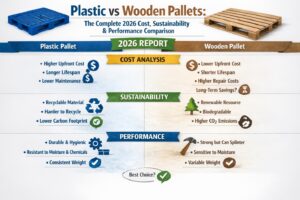
Plastic pallets are also recyclable several times without compromising on structural integrity, and refurbished wood pallets prolong their life cycle and decrease the waste. These sustainable alternatives reduce the expenses and also meet international environmental standards in the context of pallets in global trade.
How Pallet Central Enterprises Leads in Sustainability
Pallet Central Enterprises is involved in making environmental-friendly designs of pallets that suit various industries. Whether it is recycled plastic pallets or reconditioned wood models, they offer a solution that can enable the companies to achieve a sustainable responsibility without having to interfere with performance. At Pallet Central Enterprises, you may get to know more about their green initiatives.
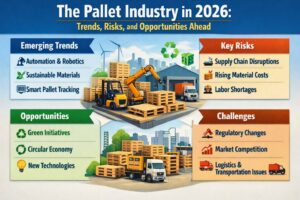
Pallet Industry Trends for 2025 and Beyond
Technology, automation and changing trade policy will determine the pallets in global trade.
Integration with Smart Supply Chains
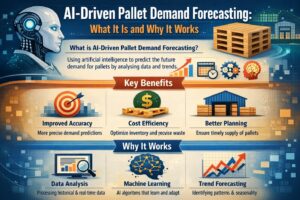
A larger portion of pallets now have IoT sensors and RFID chips that enable them to be tracked in real time, both by their location as well as their temperature and their load integrity. Such intelligent pallets allow businesses to see deeper into convoluted supply chains, lowering losses and enhancing efficiency.
Impact of Trade Regulations
Improvements or alterations in import/ export regulations, such as the ISPM-15 guidelines governing the preparation of wood pallets, influence the methods used to source pallets, treat pallets, and export pallets. Non-compliant companies face heavy delays and penalties, and thus must be considered an essential aspect of discussing pallets in global trade.
How Innovations Are Shaping the Future of Pallets in Global Trade
Pallets are an area where technology, sustainability, and efficiency are meeting to transform them. Gone are the days of the humble wooden platform. Pallets in global trade are smarter, lighter, and more flexible today than ever before.
Latest Innovations in Pallet Manufacturing
Makers are turning to 3D printing to achieve lightweight and rigid designs of pallets. High-value shipments and aerospace are undergoing testing of composites, including carbon-fiber composites. The new solutions are designed in such a way that they increase load competence without burdening the load with weight, which is vital in order to cut the cost of transporting goods internationally.
Another game-changer is automation. As automated warehouses have standardized pallet requirements, the pallets are constructed with smooth edges, RFID tagging and purely with automated handling in mind. This technology enables pallets in global trade that move faster in the logistics complex, reducing the time consumed and the cost of operation.
Benefits of Modern Pallet Technology
- Lower transportation costs due to lighter materials.
- Improved tracking with IoT sensors for better supply chain visibility.
- Increased durability reduces the need for frequent replacement.
The Role of Pallets in Supply Chain Resilience
The events of the past few years, such as pandemics and geopolitical tensions, have only confirmed that the resilient supply chain is essential. A large part of that equation is pallets.
How Pallets Support International Trade Stability
Pallets facilitate the rerouting of shipments when transport routes or ports are disrupted, since cargo handling has been standardized. They also ensure product integrity even at long distances and across numerous means of transport.
Smaller organizations that have invested in high-quality pallets in global trade would find it easier to respond faster in times like global crises, where losses in finances and inability to make timely deliveries affect them in lesser proportions.
Why Pallets Will Remain the Backbone of Global Commerce
Certain supply chain technologies will be developed, but pallets will not go anywhere. They provide a standard solution in terms of transportation of the goods that may vary in a location and industry.
Global Pallet Market Trends
There is an increasing market across the globe in the pallet industry, which is considered to drive the niche due to e-commerce growth, rising hygienic demand, and automation strategies. As sustainable production methods become the norm rather than the exception, the importance of pallets in global trade will only increase over the next ten years.
Conclusion: The Future of Pallets in Global Trade
As an international trading partner goes about their daily business, pallets have become an essential part of international business trading activities, from their crudely made form to the highly technical logistics systems. Pallets and their constant development in the aesthetic, materials and sustainability efforts continue to serve as an essential reflective product in the modern global supply chain.
Companies that adopt such innovations, particularly in the case of pallets in global trade, will have a smoother operation, reduced expenses, as well as competitive opportunities in international markets. The more trade, faster, smarter, greener, the more the silent backbone of the world’s goods will be pallets.
To get custom pallet solutions that can contribute to your success, it would be great to visit the experience of Pallet Central Enterprises and see how they are bringing the next-generation pallet to the global trade.
FAQs
1. Why are pallets so important in global trade?
They offer a conventional platform on which the transportation of products takes place, and it is accomplished in an efficient, safe and compliant manner, regardless of the geographical location of any country.
2. How have pallets evolved over the years?
They have left behind the plain and wood pallets for high-tech pallets made of plastic, composite and smart pallets tracked over technology.
3. Are sustainable pallets cost-effective for global shipping?
Yes. Although they might be more expensive initially, they are longer wearing, eliminate waste, and in most cases may reduce shipping and handling costs in the long run.
4. What are the biggest pallet industry trends for 2025?
The main ones include sustainability, tracking with the implementation of the IoT, compatibility with robots and automation, and lighter, more robust materials.
5. How can I choose the right pallet for my business?
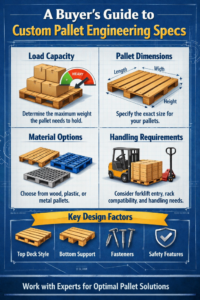
Think about your patterns of shipping, compliance laws and handling needs. When you have consultants such as Pallet Central Enterprises, you will obtain the most productive and compliant solution.