Have you ever wondered how much risk is just quietly lying under your products every day? A board with a crack or a loose nail could look insignificant. Nonetheless, broken pallets also lead to product losses, workplace injuries, and automation failures more frequently than most plants realize
This is the reason why the development of a systemic pallet inspection and repair program is not merely maintenance. It is a move that keeps your people, your products, and your bottom line safe. By taking pallet lifecycle management seriously, you avoid unnecessary replacement costs and, at the same time, enhance warehouse operational efficiency.
This guide teaches you to develop a workable system that ensures safety, prevents pallet failure, and supports long-term supply chain performance.
Why Every Facility Needs a Pallet Inspection and Repair Program
A pallet breakdown is not convenient. This usually happens during peak production, during shipping, or when a forklift is operating. Consequently, the effect goes viral.
Damaged pallets result in damaged products, on-the-job injuries, and expensive automation hitches. Thus, a planned pallet inspection and repair program mitigates these risks even before they surge. You avoid failure rather than respond to it.
The Hidden Costs of Ignoring Pallet Damage
Most warehouse managers are concerned with tangible costs such as freight or labor. Nevertheless, product damage caused by pallets is not always recorded. One bad pallet can ruin expensive products. It might even spoil racking systems or conveyor machinery.
In addition, the safety of OSHA pallets is raised when broken pallets are left in circulation. The Occupational Safety and Health Administration (OSHA) says that thousands of workers are injured on the job each year due to unsafe material-handling practices.
Furthermore, automated systems require standardized pallet sizes. The conveyor lines may be stopped immediately if a stringer is broken or a deck board is deformed. Thus, safety and productivity are ensured by preventing pallet failure in distribution centers.
Step 1: Define the Scope of Your Pallet Inspection and Repair Program
Define your objectives before you make a checklist. Consider whether you strive to minimize product damage, better manage pallet lifecycle, enable automation, and enhance cost control in the supply chain.
Clarity matters. An effective pallet inspection and repair program aligns with operational objectives rather than being a reactive activity.
Identify High-Risk Areas in Your Facility
Not every pallet is stressed equally. Outbound lanes tend to have higher turnover. Wood cracking could be accelerated by cold storage. Heavy loads put more pressure on deck boards and stringers than light goods.
To identify where pallet failure causes occur, conduct a walkthrough and record. Pay attention to loading docks, high bay racking, campuses, and automated conveyors. Mapping the risk zones lets you focus inspection resources on the areas that will benefit you the most.
Step 2: Create a Warehouse Pallet Inspection Checklist
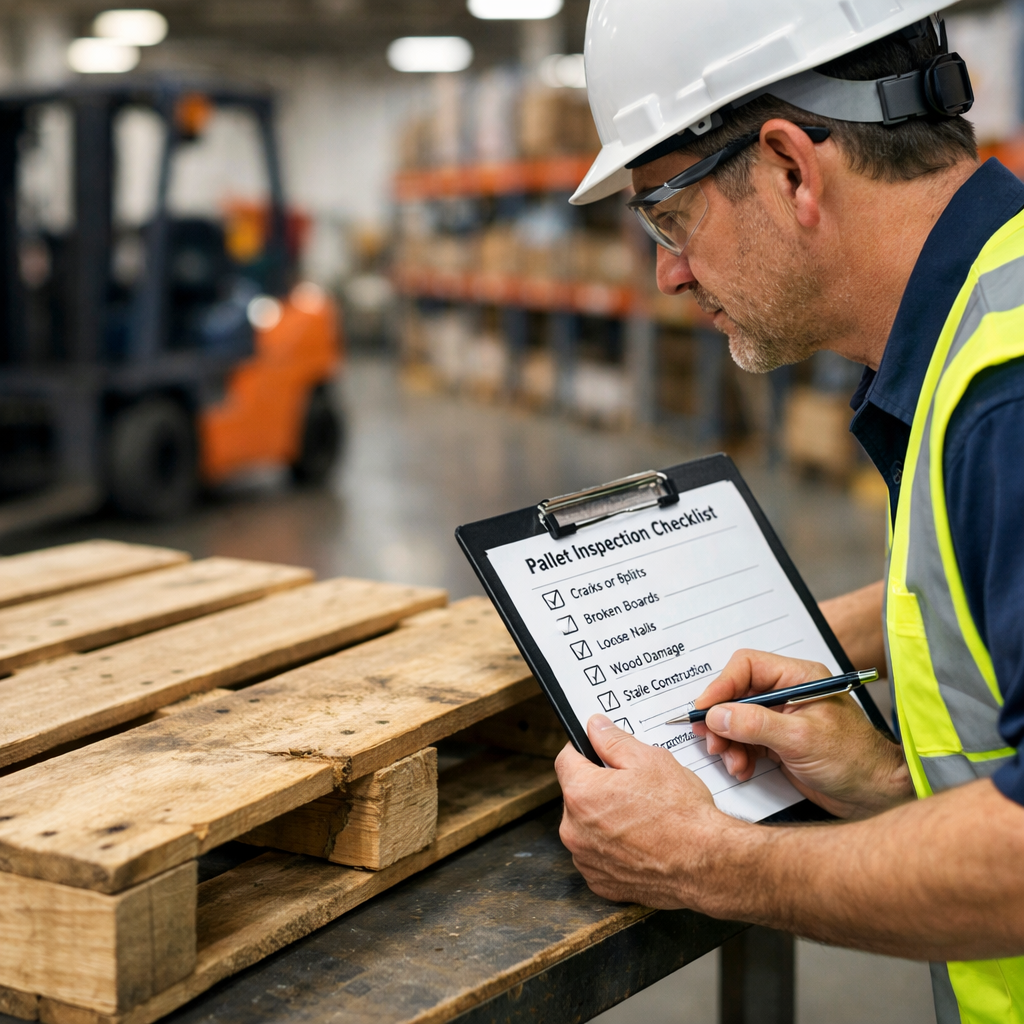
The key to a successful pallet inspection program of any warehouse is the standardized checklist. In its absence, inspections will be inconsistent.
Your checklist should focus on:
- Cracked deck boards or broken stringers
- Protruding nails or structural instability
- Warping, contamination, or moisture damage
Moreover, establish clear rejection criteria. Determine which pallets need to be removed now and which can be refurbished.
The consistency enhances the performance optimization of the pallets. It also undermines employee training.
Step 3: Train Teams on Pallet Safety and Risk Awareness
The best checklist is useless without proper implementation. That is why you should invest in practical training. Elaborate on how broken pallets fuel work-related injuries due to broken pallets. Demonstrate the impact caused by pallet-related product damages on customer satisfaction and revenue. Employees take it seriously when they realize the consequences.
An effective pallet safety program in warehouses must focus on visual inspection levels, safety handling requirements, and reporting procedures. The training also minimizes liability and fosters interdepartmental accountability.
Step 4: Establish a Structured Repair Workflow
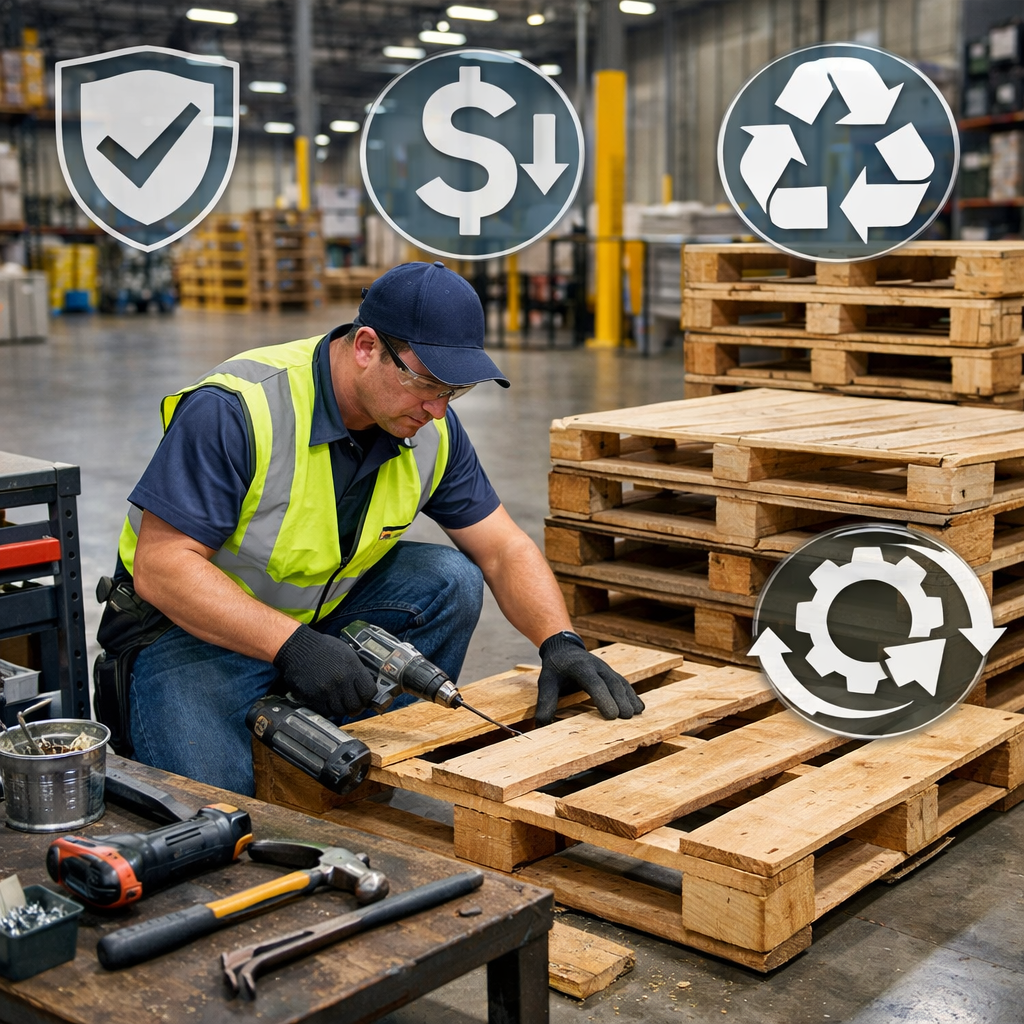
Insurance is not just sufficient. You have to develop a specified pallet repair procedure. First, assign a repair space, distinct from active inventory. The second step is to allocate trained staff who are aware of loading specifications and structural integrity. Ensure that ISPM-15 pallet requirements apply for export.
An orderly pallet inspection and repair program helps ensure the safety of the load capacity of repaired pallets before re-entry into circulation.
Step 5: Track Data for Continuous Improvement
The contemporary facilities benefit from data-based pallet management solutions. Hence, track inspection outcomes.
Measure:
- Number of pallets repaired
- Number of pallets rejected
- Common pallet failure causes
- Cost savings from pallet repair programs
Patterns will be formed over time. You will find that certain suppliers manufacture pallets of a lower quality. You could name the departments where pallets are not kept correctly.
Pallet risk management programs are supported with data. This also strengthens your argument for executive investment in lifecycle optimization.
Step 6: Integrate Pallet Lifecycle Management into Operations
Many facilities consider pallets disposable. Nevertheless, such an attitude increases the annual cost of replacing damaged pallets. Rather, change into pallet lifecycle management. Monitor acquisition through to repair, reuse, and recycling of track pallets. This will minimize waste and enhance visibility into the supply chain.
As an example, in case you see recurring cases of severe damage during the outbound shipping, you need to explore the issue of stacking techniques. If pallets in cold storage are failing more frequently, consider improved materials. Thus, your pallet inspection and repair program is to be developed based on actual data.
This strategy enhances the efficiency of warehouse operations over time. It also facilitates sustainability objectives, such as minimizing pallet waste.
Step 7: Protect Automation and Equipment Investments
Contemporary warehouses are dependent on conveyors, palletizers, automated storage systems, and robotics. Such systems require a uniform pallet size and stability. Nonetheless, production can halt due to automation disturbances caused by faulty pallets. Small warping can lead to misalignment or jamming.
To avoid this, incorporate pallet automation-compatibility tests into your pallet inspection and repair program. Verify:
- Pallet dimensions remain within tolerance
- Bottom deck boards are intact for conveyor travel
- Structural integrity supports dynamic loads
Despite their insignificance, these checks prevent excessively expensive downtime. Thus, equipment protection becomes one of the major returns on investment.
Step 8: Calculate Cost Savings from Repair vs Replacement
The question that warehouse managers frequently pose is, ” Does fixing pallets really save money? The solution lies in tracking.
Compare three metrics:
- Cost of purchasing new pallets
- Cost of internal or outsourced repairs
- Product damage losses tied to pallet failure
The value is evident when you record such figures. An organized pallet inspection and repair system saves on emergency purchasing. It also reduces the concealed expenses of product claims and employee injury cases.
Furthermore, the reduced failures imply reduced insurance risks. Over time, savings compound.
Step 9: Strengthen Safety and OSHA Compliance
Damaged pallets lead to workplace injuries, which expose the company to lawsuits and financial losses. Broken pieces of wood, loose nails, and loose loads are very dangerous. Thus, incorporate OSHA pallet safety considerations into your inspection standard.
Warehouse-specific pallet safety plans must align with the facility’s overall safety measures. For example, tie pallet inspection reporting to your existing safety management system.
Compliance comes naturally when safety and operations teams work together. An active pallet inspection and repair program will reduce injuries and foster a stronger safety culture.
Step 10: Consider Outsourced Pallet Management Solutions
Some facilities lack internal resources to support large-scale inspection systems. In that instance, it is rational to collaborate with professionals.
Pallet Central Enterprises provides total management of pallets, including inspection programs, pallet recycling and repair, and lifecycle analysis. They have a team that assists distribution centers in minimizing waste, eliminating causes of pallet failure, and maximizing pallet performance in supply chains.
Facilities can use Pallet Central Enterprises to convert a simple maintenance exercise into a pallet risk management program. Outsourcing does not involve a loss of control. Rather, it offers information insights, reporting systems, and cost-cutting measures that can be measured.
Building a Culture Around Prevention
A successful pallet inspection and repair system becomes a routine practice. Supervisors are encouraged to promote reporting. Dangerous pallets ought to be eliminated at once. Managers should regularly examine the inspection data.
It is always cheaper to prevent than to react. For example, it is much cheaper to replace a broken board than to replace damaged inventory. Similarly, avoiding an incident at work prevents medical bills, working hours, and legal investigations.
Hence, consider pallet maintenance an investment, not an expense.
Final Thoughts on Creating a Long-Term Pallet Inspection and Repair Program
Have you considered the risk your pallets face every day? Damage to products caused by pallets and automation shutdowns is only a portion of the damage that can accrue very quickly. A formal pallet inspection and repair system protects both workers and the product, reduces unnecessary replacement costs, and enhances safety compliance. It also enhances the operational stability in the distribution centers and warehouses.
Regular inspections, systematic repair procedures, lifecycle monitoring, and professional guidance from service provider Pallet Central Enterprises are all it takes to develop a system that helps you maintain supply chain efficiency in the long run. Finally, a proactive preventive pallet inspection and repair system does not constitute only maintenance. It is an economical, risk-prevention approach that ensures your facility is safe, productive, and competitive.
Frequently Asked Questions
1. How often should a pallet inspection and repair program be conducted?
Most facilities perform daily visual checks and weekly structured inspections. However, high-volume operations may require more frequent reviews.
2. What are the most common pallet failure causes?
Cracked deck boards, broken stringers, moisture damage, and improper forklift handling are leading causes.
3. Can a pallet repair program really reduce costs?
Yes. Repairing pallets extends lifecycle value and reduces emergency purchases and product damage losses.
4. How does pallet inspection improve warehouse safety?
Regular inspections remove damaged pallets before they cause workplace injuries or unstable loads.
5. Should we outsource pallet inspection services?
Facilities with high pallet volumes often benefit from professional pallet management solutions that provide reporting, compliance support, and lifecycle optimization.