Did you ever wonder why most businesses are moving to lighter pallets and how it will impact the future of logistics? It is the focal point of Lightweight Pallet Engineering, one of the rapidly developing spheres transforming the selection of materials and manufacturing approaches.
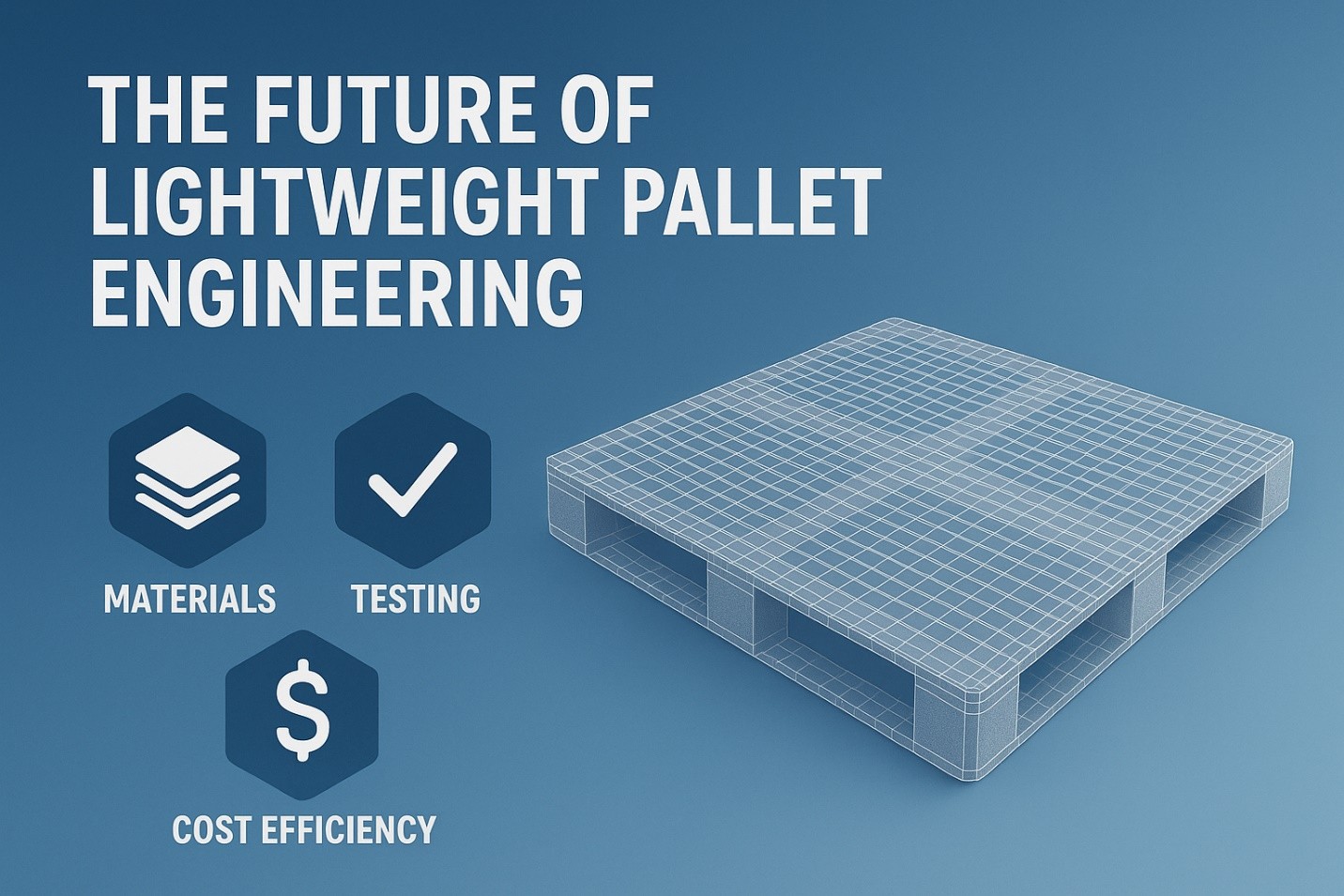
With increasing demand by supply chains to maximize the fuel efficiency, speed, and reduce operation costs of pallets, Lightweight Pallet Engineering is increasingly becoming the inspiration behind the contemporary pallet design. The innovations are reforming pallet manufacturing methods, testing, and optimization to provide enhanced performance with reduced weight. We will discuss the materials used in these designs, the testing that ensures their safety, and the cost benefits companies can realize by implementing lightweight solutions in this guide.
Why Lightweight Pallet Engineering Matters for Modern Logistics
The need for light, powerful pallets did not happen overnight. The increase in fuel prices, sustainability demands, and global competition has forced logistics teams to redefine every component of their processes. Lightweight Pallet Engineering provides the solution to this need by reducing unnecessary weight without compromising durability.
How Reduced Weight Improves Efficiency
Heavy pallets are associated with heavy loads. For example, replacing traditional wooden pallets with engineered, lightweight pallets can save hundreds of pounds per shipment through reduced transportation weight. Thus, businesses save on fuel, reduce emissions, and even enhance vehicle handling.
A Growing Industry Shift Toward Engineering-Driven Designs
Firms are no longer interested in having pallets that merely store goods. They desire performance-engineered pallets. This is why lightweight models are finding their way into the mainstream in food distribution, retail logistics, medical shipping, and export logistics.
Advanced Materials Powering Lightweight Pallet Engineering
The most crucial aspect of any modern pallet is the choice of material. Weight, durability, hygiene, and sustainability are defined by such materials. Lightweight Pallet Engineering uses a mix of old and new materials to achieve the ideal combination.
High-Strength Plastics
HDPE and PP plastics are often used by engineers because they are resistant to moisture, chemicals, and bacteria. These plastics carry heavy loads, though they weigh much less than wooden boards.
Composite Materials
Composite pallets consist of fibers, recycled plastics, and engineered resins. Thus, they possess superior strength-to-weight ratios, which are better than those of most conventional pallets in durability tests.
Sustainable Engineered Wood
Even heat-treated or laminated engineered wood can still be used in Lightweight Pallet Engineering. It is rigid and minimizes the pallet’s weight, making it best for exports and warehousing.
Testing Methods That Ensure Safety and Strength
Being lightweight does not imply being weak. In reality, the pallets of this type frequently pass through more rigorous examination as compared to conventional wood units. Lightweight Pallet Engineering is based on innovative testing to ensure its performance in the real world.
Drop Testing and Impact Resistance
Such tests simulate shocks in warehouses or during transportation. A series of tests that engineers conduct with loaded pallets involves dropping them from different heights and observing their response to sudden force.
Compression Load Testing
The tests determine the performance of a pallet under the vertical load during the stacking process. Distribution centers that stack products on multiple levels are necessary.
Environmental Stress Testing
For pallets used outdoors or stored in cold environments, engineers test their performance under extreme temperatures, moisture, and humidity. Hence, businesses are sure that their pallets will not fail under strenuous conditions.
Cost Efficiency Through Lightweight Design
Weight affects cost. Lighter pallets save money in freight costs, whether you are transporting domestically or internationally. That is why Lightweight Pallet Engineering is becoming a necessary cost-saving approach.
Lower Fuel Consumption
Transport companies usually calculate fuel consumption by weight. The heavier the pallets, the heavier the total shipments. This is multiplied by thousands of loads, resulting in long-term savings.
Reduced Material Use in Manufacturing
The fact that engineers can optimize the design with fewer or more efficient materials makes manufacturing more cost-effective. The savings are helpful to pallet producers and end users alike.
Longer Lifespan Means Lower Replacement Costs
Lightweight pallets, particularly composite pallets, can be more durable than wood pallets. Thus, companies purchase fewer units in the long run, thereby reducing operational waste and material costs.
The Role of Pallet Central Enterprises in Advancing Lightweight Innovation
Pallet Central Enterprises is a major player in helping businesses interested in converting to modern pallet design. Their emphasis on innovation, sustainability, and engineering makes them a reliable partner for companies that consider Lightweight Pallet Engineering.
They offer designed pallet solutions, bespoke designs, and advice to help logistics teams make decisions that save weight without compromising strength. You can visit their solutions at Pallet Central Enterprises.
How Lightweight Pallet Engineering Supports Automation
Warehouse automation is growing rapidly, and pallet designs should adapt to these changes. This is another reason why Lightweight Pallet Engineering is so significant. Smaller, smoother pallets minimize the burden on automated machinery, enhance movement precision, and decrease the risk of equipment jams.
Automation-Friendly Designs
Engineers create pallets that are light, rounded, uniform, and have strong entry points. Robotic arms, conveyors, and automated forklifts can be used with greater reliability when pallets are built to a standard design. Thus, lightweight pallets are associated with a smoother working process and reduced downtime in fast-paced automated settings.
Improved Handling and Safer Workflows
Lightweight pallets are easier for employees and machines to handle. Strain reduction reduces the risk of workplace injuries and enhances ergonomics. Lightweight Pallet Engineering in logistics operations will lead to fewer handling accidents and faster fulfillment.
Sustainable Engineering: The Future of Pallet Design
Lightweight Pallet Engineering is now focusing on sustainable materials and more environmentally friendly production methods. Businesses desire pallets that are functional and meet environmental requirements.
Eco-Efficient Material Choices
Recycled plastics, agricultural fibers, and engineered woods are becoming increasingly crucial in pallet production. These are environmentally friendly materials that do not add much weight. As world regulations on waste and carbon emissions become stricter, pallet purchasers are turning to products that support long-term sustainability objectives.
Circular Design Principles
Lightweight pallets support the circular supply chain. Since they have a longer lifespan and are less prone to breaking, they reduce the pallets manufacturers need to produce annually. Thus, businesses reduce their carbon footprint and ensure reliable logistics.
Innovative Pallet Designs Coming in 2025 and Beyond
The palette of tomorrow will not appear like that of today. Lightweight pallet engineering is an area undergoing dynamic developments in new technologies, new materials, and intelligent designs.
Smart Sensors and Integrated Tracking
Engineers are testing an embedded RFID chip and a low-cost sensor that measures pallet temperature, vibration, and movement. These systems help businesses monitor real-time situations and minimize losses. Combined with lightweight materials, they make a strong logistics instrument.
Composite Reinforcement Layers
Manufacturers are also upgrading pallets to layered composite ribs, which will increase strength but not weight. The automobile, food distribution, and pharmaceutical industries are supported by this design approach, as they require pallets to withstand thousands of cycles.
Energy-Efficient Production Methods
Manufactured lightweight pallets have a shorter manufacturing process. They are less resource-intensive as factories embrace greener materials and equipment and greater automation. What is produced is a pallet that ensures sustainable logistics, not only during manufacturing but also at the end of its life when it is recovered.
Why Lightweight Pallet Engineering Reduces Costs for Businesses
One of the largest motivations for implementing Lightweight Pallet Engineering is cost efficiency. Lightweight designs are saving companies in all sectors of logistics.
Transportation Savings Add Up Fast
Each pound cut from a shipment reduces transportation costs. Repeat that several thousand times in pallets per month, and the savings will be huge. The lighter pallets also extend vehicle life by reducing strain on engines and axles.
Lower Recycling and Disposal Costs
Traditional pallets are easily damaged, increasing disposal and recycling costs. Lighter constructions, particularly composite ones, are stronger. Hence, business enterprises can discard fewer pallets and achieve savings in waste management.
Fewer Repairs and Replacements
The lightweight materials have been designed to withstand cracking, moisture-related damage, and impact stress. Over time, businesses hold fewer pallets, and the cost of repairing them decreases significantly.
How Pallet Central Enterprises Helps Companies Upgrade to Lightweight Solutions
Pallet Central Enterprises assists companies in adopting engineering-based pallet solutions. They are also aware of their materials, testing, sustainability, and cost analysis, which enables companies to select the appropriate lightweight pallet model for their operations.
They provide solutions designed to be automated, to optimize logistics, heavy-duty warehouse operations, and sustainable supply chains. You can visit Pallet Central Enterprises to learn more about available products and custom engineering options.
Conclusion
Lightweight Pallet Engineering will ensure the future of logistics is lighter, stronger, and brighter. These pallets deliver high performance and functionality with minimal environmental impact by integrating high-quality materials, rigorous testing, and low-cost building designs. With the demand in the industry leading to safer, faster, and more sustainable transportation, Lightweight Pallet Engineering will be involved in the development of the new generation of pallets.
FAQs
1. What is Lightweight Pallet Engineering?
It is the act of planning pallets using superior materials and engineering methods to minimize weight while ensuring strength.
2. Why are lightweight pallets better for logistics?
They minimize shipping costs, enhance handling safety, and support automation.
3. Are lightweight pallets strong enough for heavy loads?
Yes. Many lightweight pallets use reinforced composite materials and engineered plastics, which are superior to traditional wood pallets.
4. What industries benefit most from lightweight pallet engineering?
Distribution of food, pharmaceuticals, retail, production, and any fast-flowing supply chain.
5. Does Pallet Central Enterprises offer lightweight pallet solutions?
Yes. They offer engineered pallets that are durable, sustainable, and inexpensive.